
人类阴道穹窿和宫颈口的发育。
The development of the human vaginal fornix and the portio cervicis.
机构信息
Institute of Clinical and Functional Anatomy, Department Anatomy, Histology and Embryology, Medical University of Innsbruck, Innsbruck, Austria.
University Hospital for Plastic, Reconstructive and Aesthetic Surgery, Department of Surgery, Medical University of Innsbruck, Innsbruck, Austria.
出版信息
Clin Anat. 2021 Oct;34(7):1059-1067. doi: 10.1002/ca.23729. Epub 2021 Feb 27.
INTRODUCTION
One of the transitional zones of the human body is situated in the cervix uteri. The developmental differentiation of epithelial and stromal characteristics in such a region is of high clinical interest. However, few studies have focused on the development of this region, and information in anatomical and clinical textbooks is limited. We therefore examined the development of the human vaginal fornix and the cervix uteri during prenatal development.
MATERIALS AND METHODS
We examined 29 female embryos and fetuses between 20 and 34 weeks and two newborns using histology and immunohistochemistry.
RESULTS
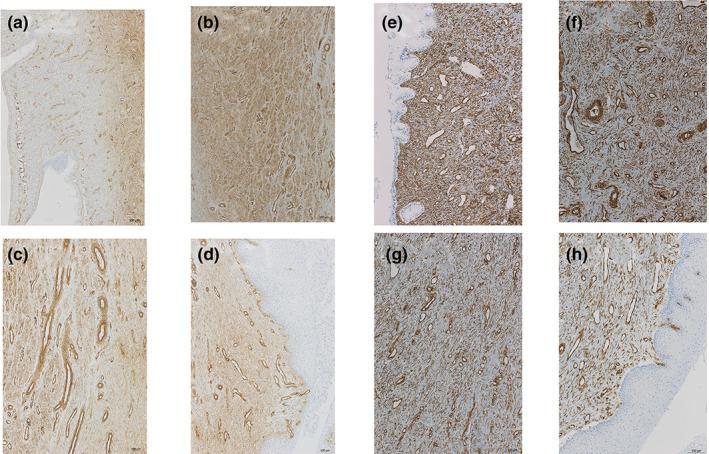
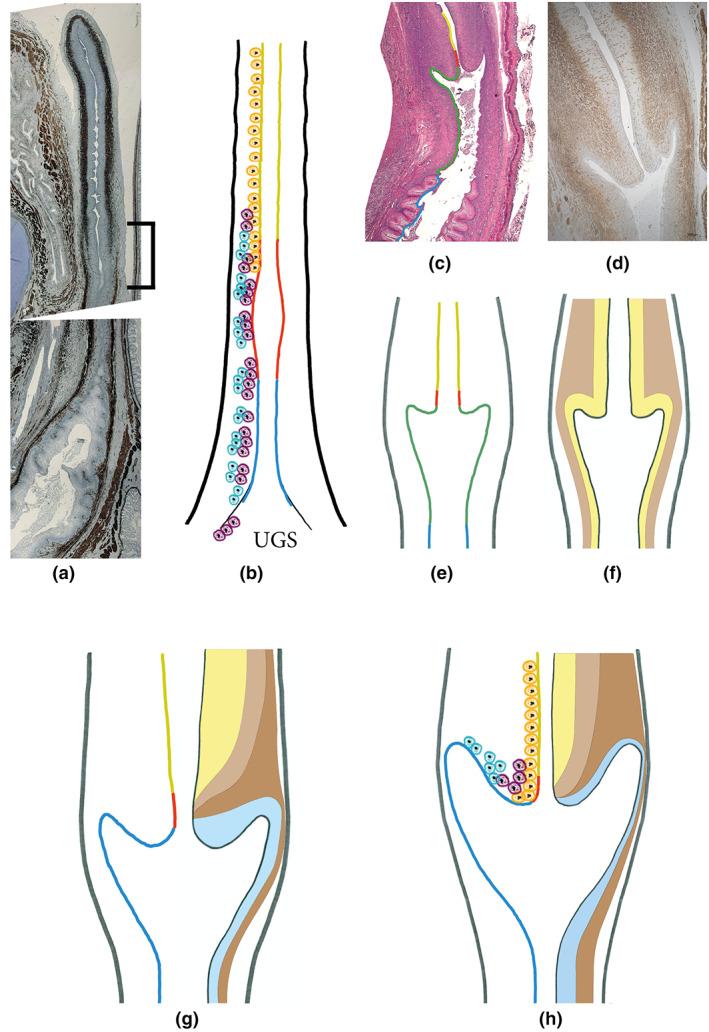
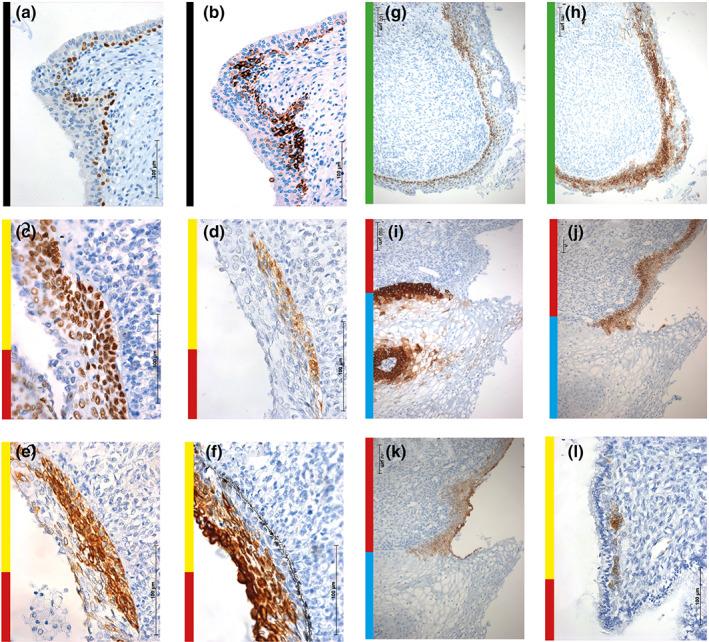
The characteristic shape of the portiocervicis and the vaginal fornix first became visible in mid-term fetuses because of the different muscular coats and of an uncategorized Müllerian-derived epithelium, which was rapidly replaced by a multilayered squamous epithelium. Only thereafter, in older fetuses, were there organogenetic differentiation of the epithelia and the underlying stroma of the cervical canal. UGS-derived p63/CK17-positive cells could be identified as precursor cells for the squamous epithelium, and Müllerian-derived CK7-positive cells for the columnar-type epithelium. Both cell types and different stromal zones were already present in a prenatal transformation zone. Initial functional differentiation could be observed in perinatal stages.
CONCLUSIONS
Our results on prenatal human development strongly support the view that two different cell lineages meet at the transitional zone of the cervix uteri and that these lineages depend on alternative signals from the underlying stromal compartment.
简介
人体的一个过渡区域位于子宫颈。该区域上皮和基质特征的发育分化具有重要的临床意义。然而,很少有研究关注这个区域的发展,解剖学和临床教科书中的信息也很有限。因此,我们研究了人类阴道穹窿和子宫颈在产前发育过程中的发育情况。
材料和方法
我们使用组织学和免疫组织化学方法检查了 29 名 20 至 34 周的女性胚胎和胎儿以及 2 名新生儿。
结果
由于不同的肌肉层和未分类的 Müllerian 衍生上皮,中期胎儿的子宫颈和阴道穹窿的特征形状首先变得可见,而这种上皮很快被复层鳞状上皮取代。只有在较老的胎儿中,宫颈管的上皮和下基质才会发生器官发生分化。UGS 衍生的 p63/CK17 阳性细胞可被鉴定为鳞状上皮的前体细胞,而 Müllerian 衍生的 CK7 阳性细胞则为柱状型上皮的前体细胞。两种细胞类型和不同的基质区都已存在于产前转化区。在围产期可以观察到初始功能分化。
结论
我们关于人类产前发育的结果强烈支持这样一种观点,即两种不同的细胞谱系在子宫颈的过渡区域相遇,并且这些谱系依赖于来自下基质隔室的替代信号。
 Zotero 插件