
L1和神经细胞黏附分子(NCAM)在突触修剪、可塑性和稳定性中的分子机制
Molecular Mechanisms of L1 and NCAM Adhesion Molecules in Synaptic Pruning, Plasticity, and Stabilization.
作者信息
Duncan Bryce W, Murphy Kelsey E, Maness Patricia F
机构信息
Department of Biochemistry and Biophysics, Neuroscience Research Center, Carolina Institute for Developmental Disabilities, University of North Carolina School of Medicine, Chapel Hill, NC, United States.
出版信息
Front Cell Dev Biol. 2021 Jan 28;9:625340. doi: 10.3389/fcell.2021.625340. eCollection 2021.
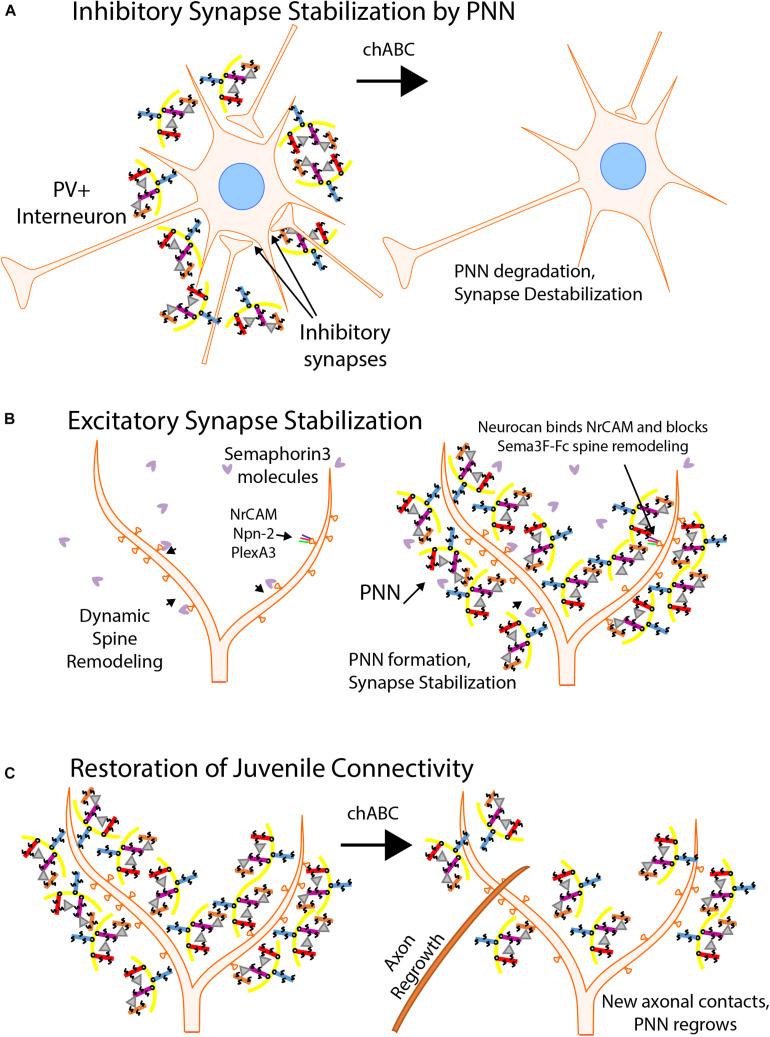
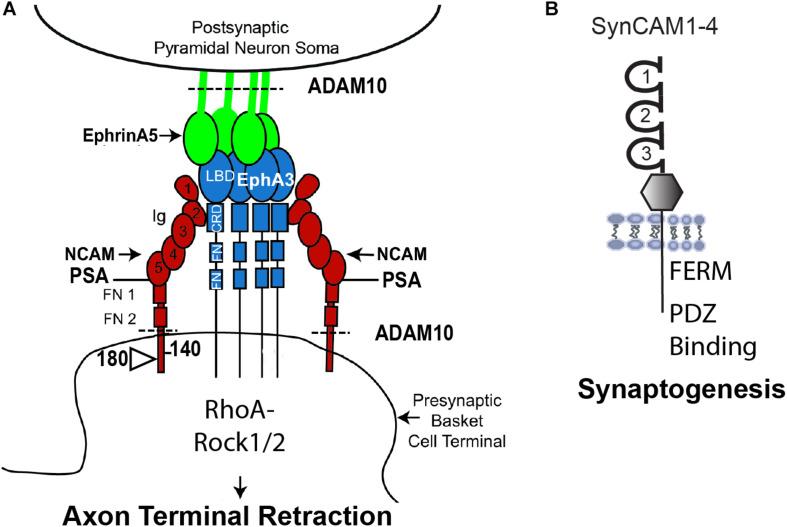
Mammalian brain circuits are wired by dynamic formation and remodeling during development to produce a balance of excitatory and inhibitory synapses. Synaptic regulation is mediated by a complex network of proteins including immunoglobulin (Ig)- class cell adhesion molecules (CAMs), structural and signal-transducing components at the pre- and post-synaptic membranes, and the extracellular protein matrix. This review explores the current understanding of developmental synapse regulation mediated by L1 and NCAM family CAMs. Excitatory and inhibitory synapses undergo formation and remodeling through neuronal CAMs and receptor-ligand interactions. These responses result in pruning inactive dendritic spines and perisomatic contacts, or synaptic strengthening during critical periods of plasticity. Ankyrins engage neural adhesion molecules of the L1 family (L1-CAMs) to promote synaptic stability. Chondroitin sulfates, hyaluronic acid, tenascin-R, and linker proteins comprising the perineuronal net interact with L1-CAMs and NCAM, stabilizing synaptic contacts and limiting plasticity as critical periods close. Understanding neuronal adhesion signaling and synaptic targeting provides insight into normal development as well as synaptic connectivity disorders including autism, schizophrenia, and intellectual disability.
哺乳动物的脑回路在发育过程中通过动态形成和重塑来构建,以产生兴奋性和抑制性突触的平衡。突触调节由一个复杂的蛋白质网络介导,包括免疫球蛋白(Ig)类细胞粘附分子(CAMs)、突触前膜和突触后膜的结构及信号转导成分,以及细胞外蛋白质基质。本综述探讨了目前对由L1和NCAM家族CAMs介导的发育性突触调节的理解。兴奋性和抑制性突触通过神经元CAMs和受体-配体相互作用进行形成和重塑。这些反应导致在可塑性关键期修剪无活性的树突棘和胞体周围接触,或增强突触。锚蛋白与L1家族的神经粘附分子(L1-CAMs)结合,以促进突触稳定性。硫酸软骨素、透明质酸、腱生蛋白-R以及构成神经元周围网的连接蛋白与L1-CAMs和NCAM相互作用,在关键期结束时稳定突触接触并限制可塑性。了解神经元粘附信号和突触靶向有助于深入了解正常发育以及包括自闭症、精神分裂症和智力残疾在内的突触连接障碍。


 Zotero 插件