
减少钠摄入对血压的影响:实验研究的剂量反应荟萃分析。
Blood Pressure Effects of Sodium Reduction: Dose-Response Meta-Analysis of Experimental Studies.
机构信息
Environmental, Genetic and Nutritional Epidemiology Research Center (CREAGEN), Department of Biomedical, Metabolic and Neural Sciences, University of Modena and Reggio Emilia, Modena, Italy (T.F., M.M., M.V.).
Department of Epidemiology, Tulane University School of Public Health and Tropical Medicine, and School of Medicine, Tulane University, New Orleans, LA (P.K.W.).
出版信息
Circulation. 2021 Apr 20;143(16):1542-1567. doi: 10.1161/CIRCULATIONAHA.120.050371. Epub 2021 Feb 15.
BACKGROUND
The relationship between dietary sodium intake and blood pressure (BP) has been tested in clinical trials and nonexperimental human studies, indicating a direct association. The exact shape of the dose-response relationship has been difficult to assess in clinical trials because of the lack of random-effects dose-response statistical models that can include 2-arm comparisons.
METHODS
After performing a comprehensive literature search for experimental studies that investigated the BP effects of changes in dietary sodium intake, we conducted a dose-response meta-analysis using the new 1-stage cubic spline mixed-effects model. We included trials with at least 4 weeks of follow-up; 24-hour urinary sodium excretion measurements; sodium manipulation through dietary change or supplementation, or both; and measurements of systolic and diastolic BP at the beginning and end of treatment.
RESULTS
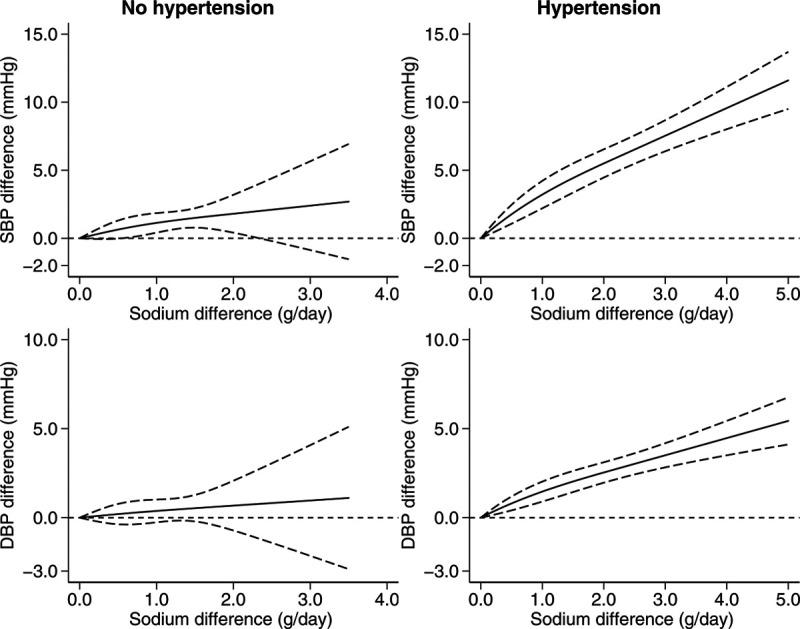
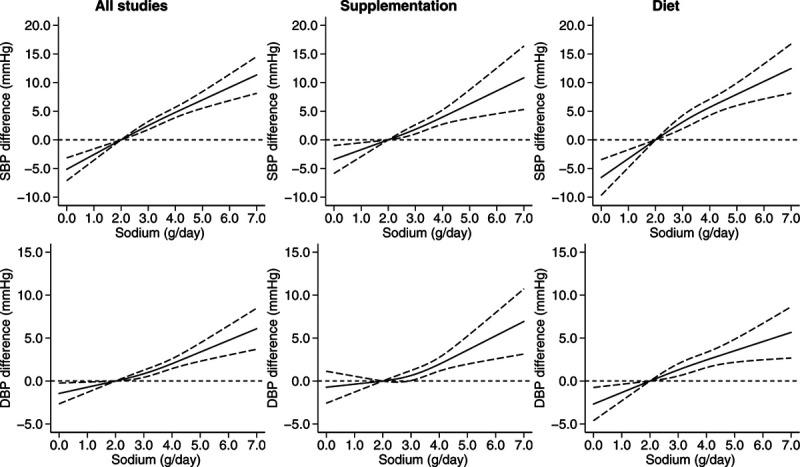
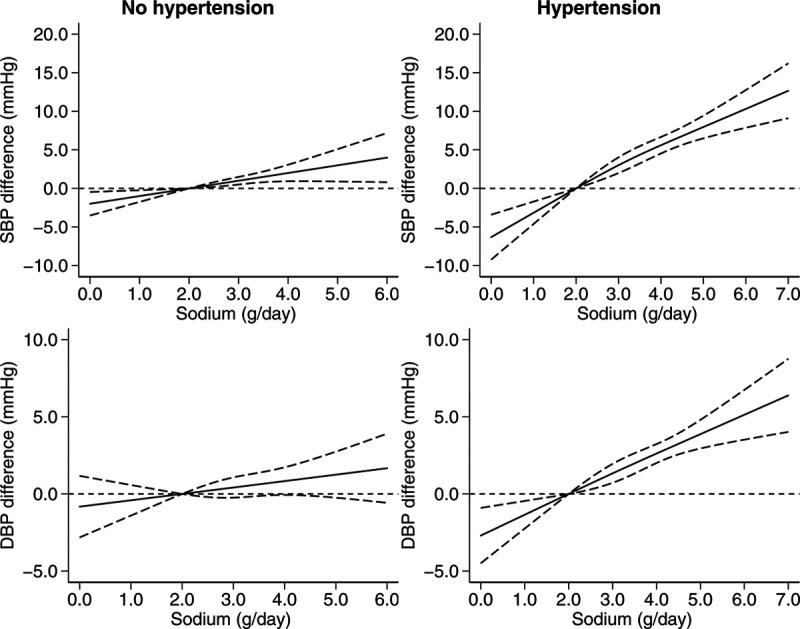
We identified 85 eligible trials with sodium intake ranging from 0.4 to 7.6 g/d and follow-up from 4 weeks to 36 months. The trials were conducted in participants with hypertension (n=65), without hypertension (n=11), or a combination (n=9). Overall, the pooled data were compatible with an approximately linear relationship between achieved sodium intake and mean systolic as well as diastolic BP, with no indication of a flattening of the curve at either the lowest or highest levels of sodium exposure. Results were similar for participants with or without hypertension, but the former group showed a steeper decrease in BP after sodium reduction. Intervention duration (≥12 weeks versus 4 to 11 weeks), type of study design (parallel or crossover), use of antihypertensive medication, and participants' sex had little influence on the BP effects of sodium reduction. Additional analyses based on the BP effect of difference in sodium exposure between study arms at the end of the trial confirmed the results on the basis of achieved sodium intake.
CONCLUSIONS
In this dose-response analysis of sodium reduction in clinical trials, we identified an approximately linear relationship between sodium intake and reduction in both systolic and diastolic BP across the entire range of dietary sodium exposure. Although this occurred independently of baseline BP, the effect of sodium reduction on level of BP was more pronounced in participants with a higher BP level.
背景
临床试验和非实验性人体研究已经检验了膳食钠摄入量与血压(BP)之间的关系,表明两者之间存在直接关联。由于缺乏能够包含 2 臂比较的随机效应剂量-反应统计模型,临床试验一直难以评估剂量-反应关系的确切形状。
方法
我们全面检索了实验性研究文献,以调查膳食钠摄入量变化对血压的影响,然后使用新的 1 阶段立方样条混合效应模型进行了剂量-反应荟萃分析。我们纳入了至少随访 4 周、24 小时尿钠排泄测量、通过饮食改变或补充或两者兼施来操纵钠以及在治疗开始和结束时测量收缩压和舒张压的试验。
结果
我们确定了 85 项符合条件的试验,这些试验的钠摄入量范围为 0.4 至 7.6 g/d,随访时间为 4 周至 36 个月。这些试验在高血压患者(n=65)、无高血压患者(n=11)或两者混合患者(n=9)中进行。总体而言,汇总数据与实际钠摄入量与平均收缩压和舒张压之间的近似线性关系相一致,并且没有表明在最低或最高钠暴露水平下曲线变平的迹象。在有或没有高血压的参与者中,结果相似,但前者在减少钠摄入后血压下降更为陡峭。干预持续时间(≥12 周与 4 至 11 周)、研究设计类型(平行或交叉)、使用抗高血压药物以及参与者的性别对钠减少对血压的影响影响不大。基于试验结束时研究臂之间钠暴露差异对血压的影响的额外分析证实了基于实际钠摄入量的结果。
结论
在这项临床试验中钠减少的剂量-反应分析中,我们在整个膳食钠暴露范围内发现了钠摄入量与收缩压和舒张压降低之间的近似线性关系。尽管这独立于基线 BP,但钠减少对 BP 水平的影响在 BP 水平较高的参与者中更为明显。



 Zotero 插件