
淋巴瘤患者感染新型冠状病毒肺炎的危险因素及死亡率:一项多中心研究
Risk Factors and Mortality of COVID-19 in Patients With Lymphoma: A Multicenter Study.
作者信息
Regalado-Artamendi Isabel, Jiménez-Ubieto Ana, Hernández-Rivas José Ángel, Navarro Belén, Núñez Lucía, Alaez Concha, Córdoba Raúl, Peñalver Francisco Javier, Cannata Jimena, Estival Pablo, Quiroz-Cervantes Keina, Riaza Grau Rosalía, Velasco Alberto, Martos Rafael, Domingo-González Amalia, Benito-Parra Laurentino, Gómez-Sanz Elvira, López-Jiménez Javier, Matilla Arturo, Herraez María Regina, Penalva María José, García-Suárez Julio, Díez-Martín José Luis, Bastos-Oreiro Mariana
机构信息
Hospital General Universitario Gregorio Marañón, Madrid, Spain.
Hospital Universitario 12 de octubre, Madrid, Spain.
出版信息
Hemasphere. 2021 Feb 10;5(3):e538. doi: 10.1097/HS9.0000000000000538. eCollection 2021 Mar.
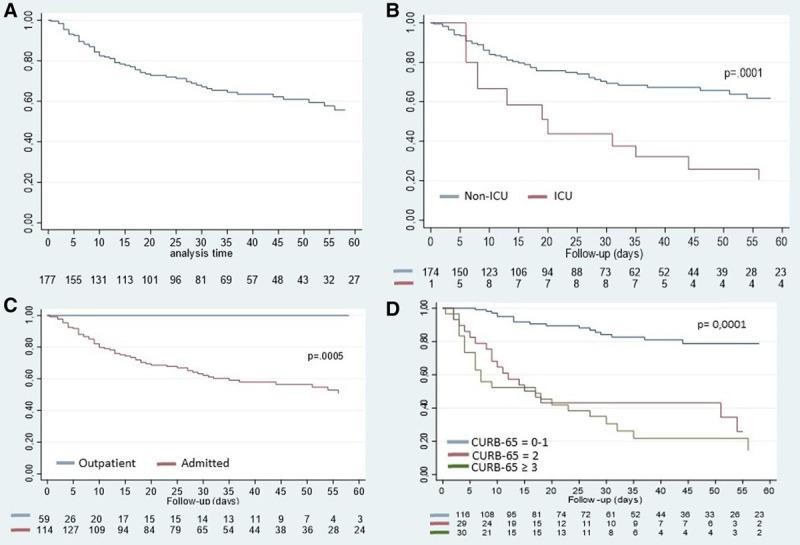
Patients with cancer are poorly represented in coronavirus disease 2019 (COVID-19) series, and heterogeneous series concerning hematology patients have been published. This study aimed to analyze the impact of COVID-19 in patients with lymphoma. We present a multicenter retrospective study from 19 centers in Madrid, Spain, evaluating risk factors for mortality in adult patients with COVID-19 and lymphoma. About 177 patients (55.9% male) were included with a median follow-up of 27 days and a median age of 70 years. At the time of COVID-19 diagnosis, 49.7% of patients were on active treatment. The overall mortality rate was 34.5%. Age >70 years, confusion, urea concentration, respiratory rate, blood pressure, and age >65 score ≥2, heart disease, and chronic kidney disease were associated with higher mortality risk ( < 0.05). Active disease significantly increased the risk of death (hazard ratio, 2.43; 95% confidence interval, 1.23-4.77; = 0.01). However, active treatment did not modify mortality risk and no differences were found between the different therapeutic regimens. The persistence of severe acute respiratory syndrome coronavirus 2-positive polymerase chain reaction after week 6 was significantly associated with mortality (54.5% versus 1.4%; < 0.001). We confirm an increased mortality compared with the general population. In view of our results, any interruption or delay in the start of treatment should be questioned given that active treatment has not been demonstrated to increase mortality risk and that achieving disease remission could lead to better outcomes.
癌症患者在2019冠状病毒病(COVID-19)系列研究中的代表性不足,并且已经发表了关于血液学患者的异质性系列研究。本研究旨在分析COVID-19对淋巴瘤患者的影响。我们呈现了一项来自西班牙马德里19个中心的多中心回顾性研究,评估成年COVID-19合并淋巴瘤患者的死亡风险因素。纳入了约177例患者(男性占55.9%),中位随访时间为27天,中位年龄为70岁。在COVID-19诊断时,49.7%的患者正在接受积极治疗。总死亡率为34.5%。年龄>70岁、意识模糊、尿素浓度、呼吸频率、血压、年龄>65岁且评分≥2、心脏病和慢性肾脏病与较高的死亡风险相关(P<0.05)。疾病活动期显著增加死亡风险(风险比,2.43;95%置信区间,1.23-4.77;P=0.01)。然而,积极治疗并未改变死亡风险,不同治疗方案之间未发现差异。第6周后严重急性呼吸综合征冠状病毒2阳性聚合酶链反应的持续存在与死亡率显著相关(54.5%对1.4%;P<0.001)。我们证实与普通人群相比死亡率有所增加。鉴于我们的结果,鉴于尚未证明积极治疗会增加死亡风险且实现疾病缓解可能会带来更好的结果,任何治疗开始的中断或延迟都应受到质疑。

 Zotero 插件