
解读唐氏综合征患者心理压力、抑郁与神经认知衰退之间的联系。
Deciphering the links between psychological stress, depression, and neurocognitive decline in patients with Down syndrome.
作者信息
Poumeaud François, Mircher Clotilde, Smith Peter J, Faye Pierre-Antoine, Sturtz Franck G
机构信息
Univ. Limoges, Peripheral Neuropathies, EA6309, F-87000, Limoges, France.
Institut Jérôme Lejeune, 37 Rue des Volontaires, F-75015, Paris, France.
出版信息
Neurobiol Stress. 2021 Feb 5;14:100305. doi: 10.1016/j.ynstr.2021.100305. eCollection 2021 May.
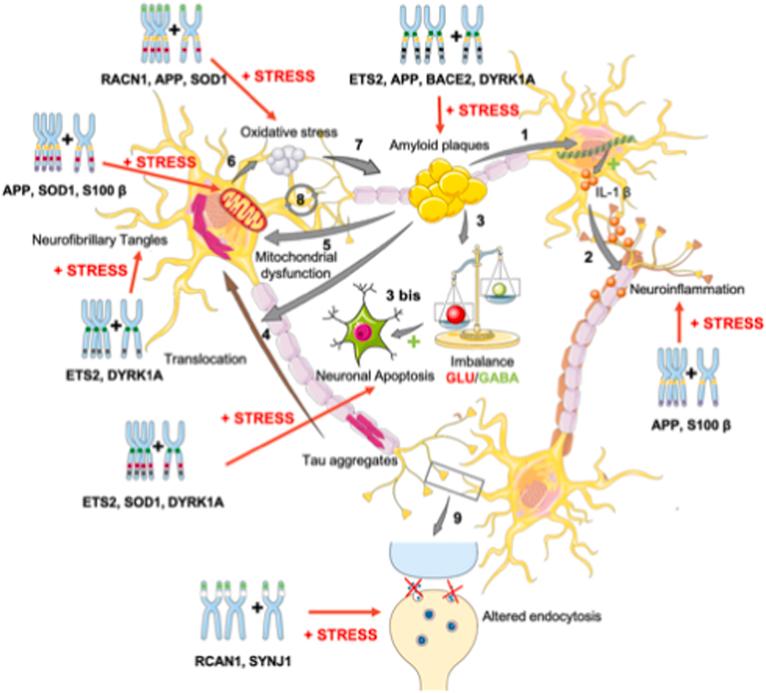
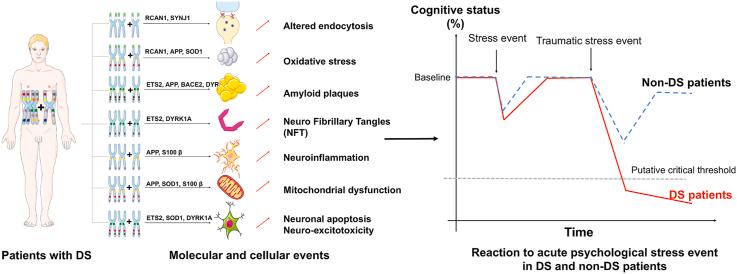
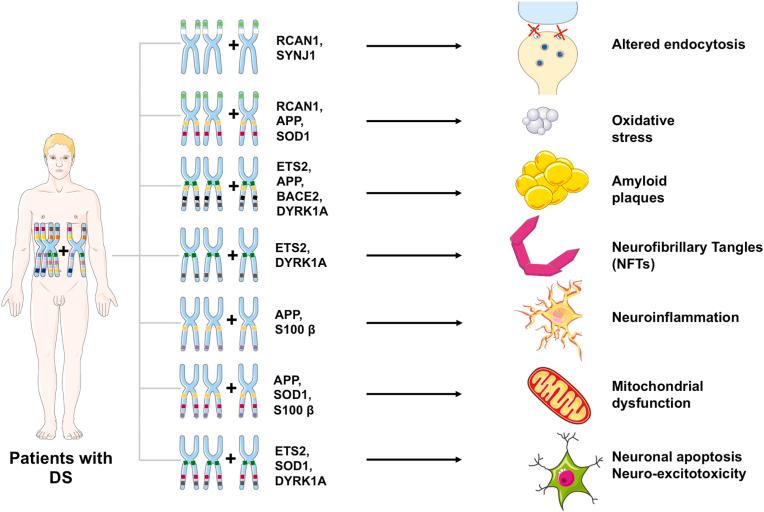
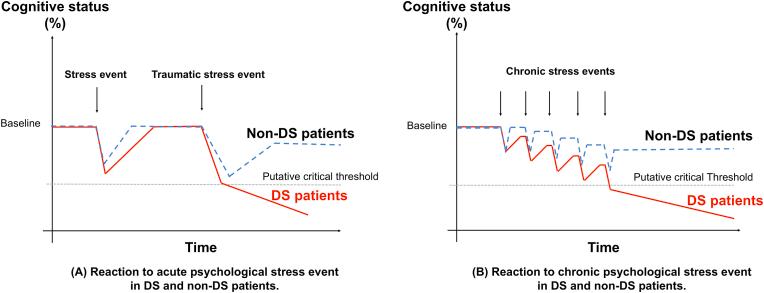
The relationships between psychological stress and cognitive functions are still to be defined despite some recent progress. Clinically, we noticed that patients with Down syndrome (DS) may develop rapid neurocognitive decline and Alzheimer's disease (AD) earlier than expected, often shortly after a traumatic life event (bereavement over the leave of a primary caregiver, an assault, modification of lifestyle, or the loss of parents). Of course, individuals with DS are naturally prone to develop AD, given the triplication of chromosome 21. However, the relatively weak intensity of the stressful event and the rapid pace of cognitive decline after stress in these patients have to be noticed. It seems DS patients react to stress in a similar manner normal persons react to a very intense stress, and thereafter develop a state very much alike post-traumatic stress disorders. Unfortunately, only a few studies have studied stress-induced regression in patients with DS. Thus, we reviewed the biochemical events involved in psychological stress and found some possible links with cognitive impairment and AD. Interestingly, these links could probably be also applied to non-DS persons submitted to an intense stress. We believe these links should be further explored as a better understanding of the relationships between stress and cognition could help in many situations including individuals of the general population.
尽管最近有一些进展,但心理压力与认知功能之间的关系仍有待明确。临床上,我们注意到唐氏综合征(DS)患者可能比预期更早出现快速的神经认知衰退和阿尔茨海默病(AD),通常在经历创伤性生活事件(主要照顾者离世后的丧亲之痛、攻击、生活方式改变或父母离世)后不久就会出现。当然,由于21号染色体三体,DS患者自然容易患AD。然而,必须注意到这些患者中应激事件的强度相对较弱,且应激后认知衰退速度很快。似乎DS患者对应激的反应方式与正常人对非常强烈的应激的反应方式相似,随后会发展出一种与创伤后应激障碍非常相似的状态。不幸的是,只有少数研究探讨了DS患者中应激诱导的衰退。因此,我们回顾了心理应激中涉及的生化事件,并发现了一些与认知障碍和AD的可能联系。有趣的是,这些联系可能也适用于遭受强烈应激的非DS人群。我们认为这些联系应进一步探索,因为更好地理解应激与认知之间的关系在包括普通人群个体在内的许多情况下都可能有所帮助。
 Zotero 插件