
促进城市非洲食品系统中健康食品消费的政策行动:加纳和肯尼亚的现实主义综合研究。
Policy Action Within Urban African Food Systems to Promote Healthy Food Consumption: A Realist Synthesis in Ghana and Kenya.
机构信息
School of Health and Related Research (ScHARR), University of Sheffield, Sheffield, UK.
School of Public Health, University of Ghana, Accra, Ghana.
出版信息
Int J Health Policy Manag. 2021 Dec 1;10(12):828-844. doi: 10.34172/ijhpm.2020.255.
BACKGROUND
Obesity and nutrition-related non-communicable diseases (NR-NCDs) are increasing throughout Africa, driven by urbanisation and changing food environments. Policy action has been limited - and influenced by high income countries. Socio-economic/political environments of African food systems must be considered in order to understand what policy might work to prevent NR-NCDs, for whom, and under what circumstances.
METHODS
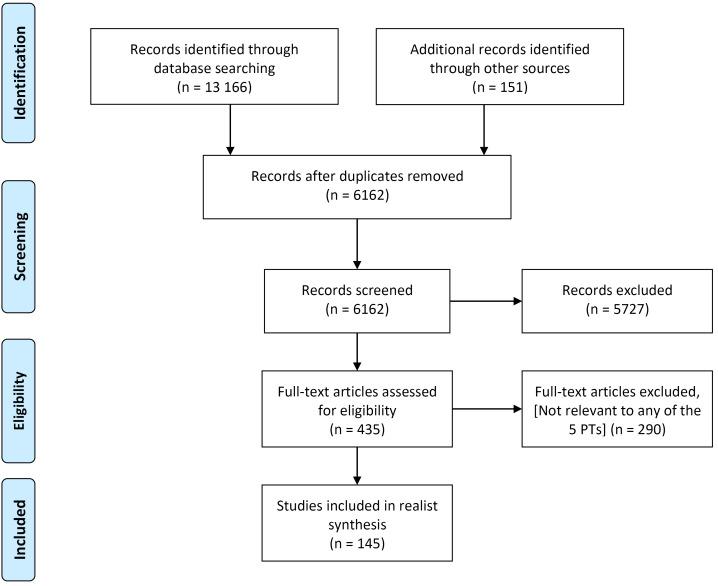
A realist synthesis of five policy areas to support healthier food consumption in urban Africa: regulating trade/foreign investment; regulating health/nutrition claims/labels; setting composition standards for processed foods; restricting unhealthy food marketing; and school food policy. We drew upon Ghana and Kenya to contextualise the evidence base. Programme theories were generated by stakeholders in Ghana/Kenya. A two-stage search interrogated MEDLINE, Web of Science and Scopus. Programme theories were tested and refined to produce a synthesised model.
RESULTS
The five policies operate through complex, inter-connected pathways moderated by global-, national- and local contexts. Consumers and the food environment interact to enable/disable food accessibility, affordability and availability. Consumer relationships with each other and retailers are important contextual influences, along with political/ economic interests, stakeholder alliances and globalized trade. Coherent laws/regulatory frameworks and government capacities are fundamental across all policies. The increasing importance of convenience is shaped by demographic and sociocultural drivers. Awareness of healthy diets mediates food consumption through comprehension, education, literacy and beliefs. Contextualised data (especially food composition data) and inter-sectoral collaboration are critical to policy implementation.
CONCLUSION
Evidence indicates that coherent action across the five policy areas could positively influence the healthiness of food environments and consumption in urban Africa. However, drivers of (un)healthy food environments and consumption reflect the complex interplay of socio-economic and political drivers acting at diverse geographical levels. Stakeholders at local, national, and global levels have important, yet differing, roles to play in ensuring healthy food environments and consumption in urban Africa.
背景
肥胖和与营养相关的非传染性疾病(NR-NCDs)在整个非洲不断增加,这是城市化和不断变化的食品环境所驱动的。政策行动一直受到限制 - 并且受到高收入国家的影响。为了了解哪些政策可能有助于预防 NR-NCDs、针对谁以及在什么情况下有效,必须考虑非洲食品系统的社会经济/政治环境。
方法
对支持非洲城市更健康食品消费的五个政策领域进行了现实主义综合:规范贸易/外国投资;规范健康/营养声明/标签;为加工食品制定成分标准;限制不健康食品营销;和学校食品政策。我们借鉴了加纳和肯尼亚的经验来使证据基础具有背景。加纳/肯尼亚的利益相关者提出了方案理论。通过 MEDLINE、Web of Science 和 Scopus 进行了两阶段搜索,以检验方案理论。对方案理论进行了测试和改进,以产生综合模型。
结果
这五项政策通过全球、国家和地方背景调节的复杂、相互关联的途径运作。消费者和食品环境相互作用,使食品的可及性、可负担性和可用性得以实现或受阻。消费者与零售商之间的关系以及政治/经济利益、利益相关者联盟和全球化贸易是重要的背景影响因素。在所有政策中,连贯的法律/监管框架和政府能力都是基础。便利性的重要性日益增加,受到人口和社会文化驱动因素的影响。对健康饮食的认识通过理解、教育、读写能力和信仰来调节食物的消费。背景化数据(特别是食物成分数据)和跨部门合作对于政策实施至关重要。
结论
证据表明,在这五个政策领域采取一致行动可以积极影响非洲城市食品环境和消费的健康性。然而,(不健康)食品环境和消费的驱动因素反映了在不同地理层面上发挥作用的社会经济和政治驱动因素的复杂相互作用。地方、国家和全球各级的利益相关者在确保非洲城市健康食品环境和消费方面都有重要但不同的作用。

 Zotero 插件