
在模块化支架上设计单价和多价抑制剂。
Engineering mono- and multi-valent inhibitors on a modular scaffold.
作者信息
Diamante Aurora, Chaturbedy Piyush K, Rowling Pamela J E, Kumita Janet R, Eapen Rohan S, McLaughlin Stephen H, de la Roche Marc, Perez-Riba Albert, Itzhaki Laura S
机构信息
Department of Pharmacology , University of Cambridge , Tennis Court Road , Cambridge CB2 1PD , UK . Email:
MRC Laboratory of Molecular Biology , Francis Crick Avenue , Cambridge Biomedical Campus , Cambridge , CB2 0QH , UK.
出版信息
Chem Sci. 2020 Dec 17;12(3):880-895. doi: 10.1039/d0sc03175e. eCollection 2021 Jan 21.
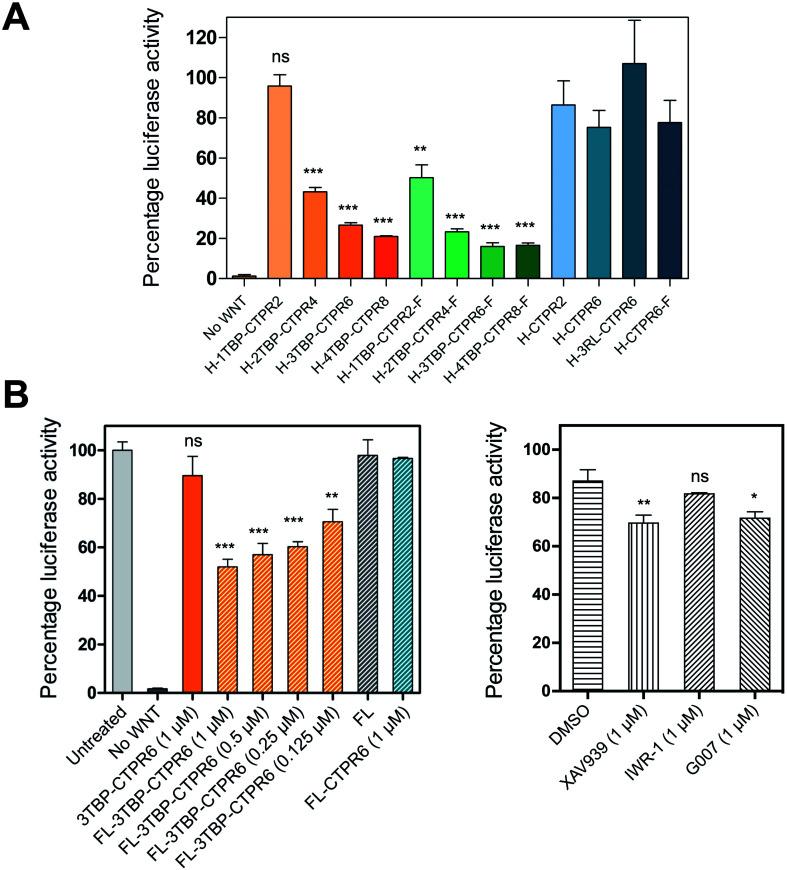
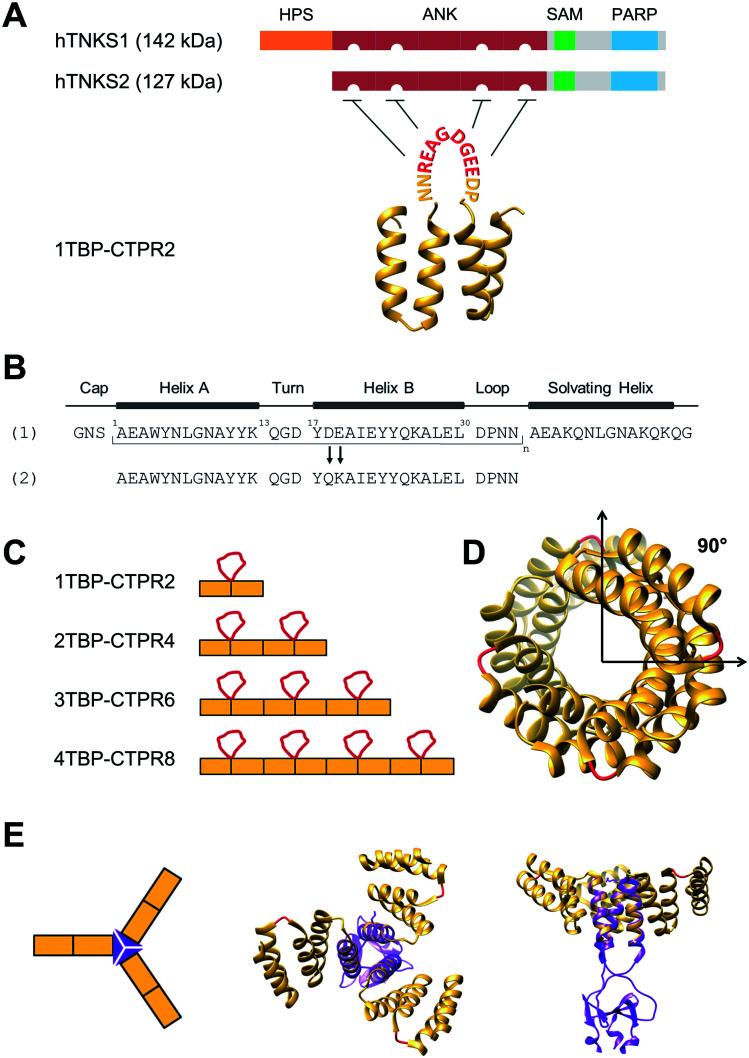
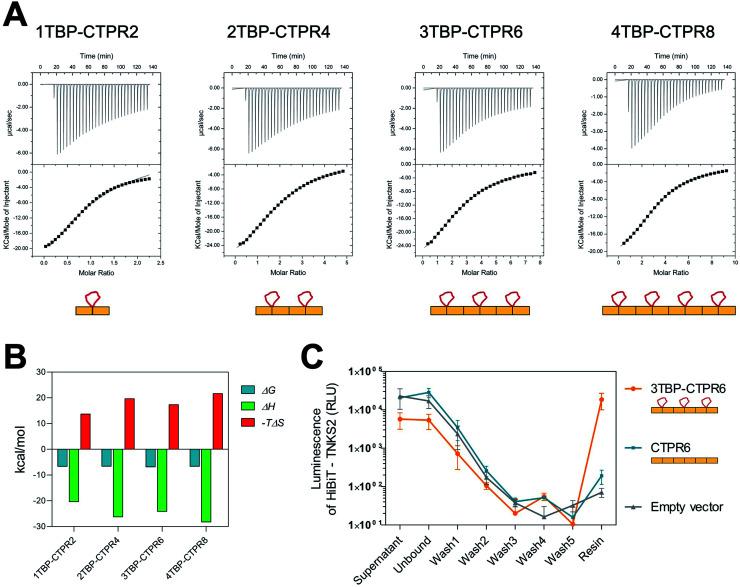
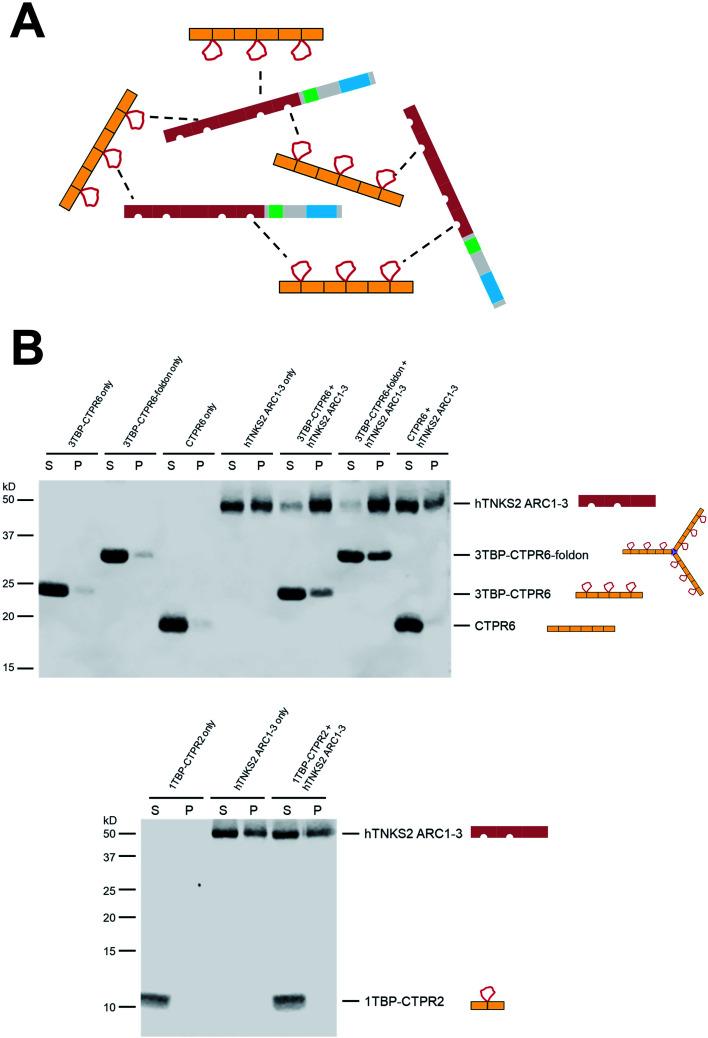
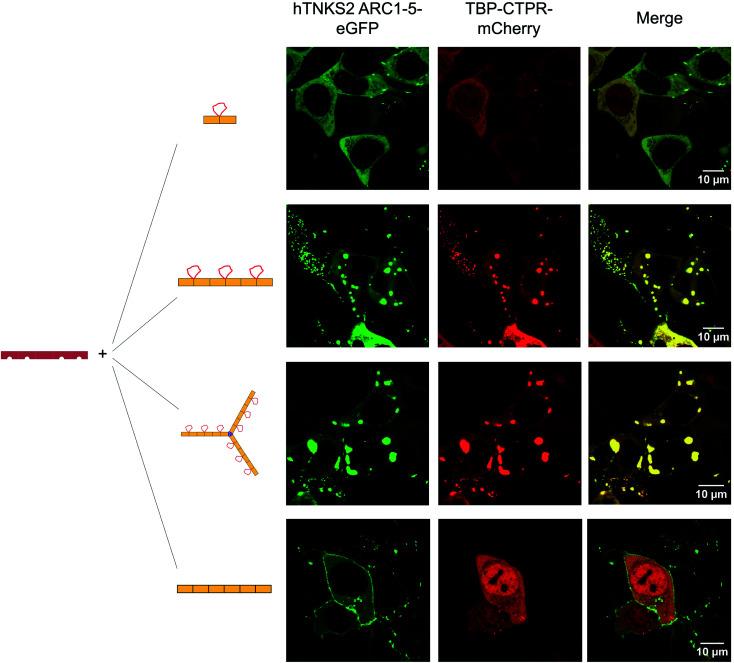
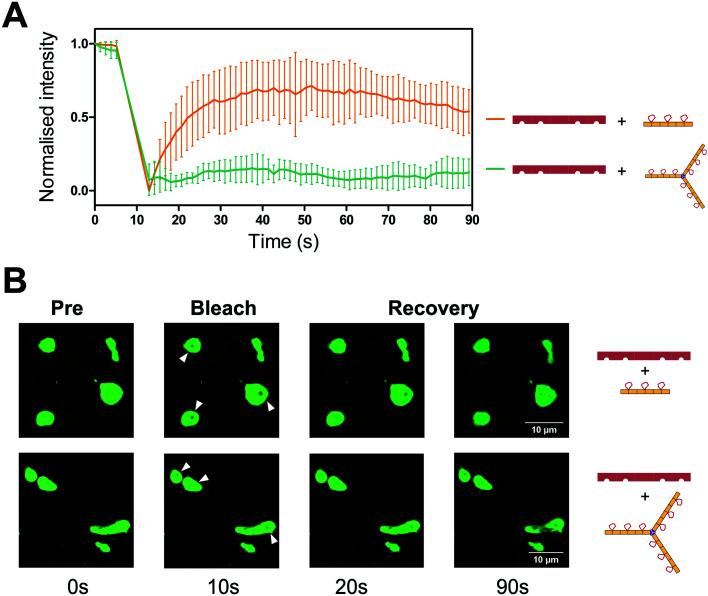
Here we exploit the simple, ultra-stable, modular architecture of consensus-designed tetratricopeptide repeat proteins (CTPRs) to create a platform capable of displaying both single as well as multiple functions and with diverse programmable geometrical arrangements by grafting non-helical short linear binding motifs (SLiMs) onto the loops between adjacent repeats. As proof of concept, we built synthetic CTPRs to bind and inhibit the human tankyrase proteins (hTNKS), which play a key role in Wnt signaling and are upregulated in cancer. A series of mono-valent and multi-valent hTNKS binders was assembled. To fully exploit the modular scaffold and to further diversify the multi-valent geometry, we engineered the binding modules with two different formats, one monomeric and the other trimeric. We show that the designed proteins are stable, correctly folded and capable of binding to and inhibiting the cellular activity of hTNKS leading to downregulation of the Wnt pathway. Multivalency in both the CTPR protein arrays and the hTNKS target results in the formation of large macromolecular assemblies, which can be visualized both and in the cell. When delivered into the cell by nanoparticle encapsulation, the multivalent CTPR proteins displayed exceptional activity. They are able to inhibit Wnt signaling where small molecule inhibitors have failed to date. Our results point to the tremendous potential of the CTPR platform to exploit a range of SLiMs and assemble synthetic binding molecules with built-in multivalent capabilities and precise, pre-programmed geometries.
在这里,我们利用经共识设计的四肽重复蛋白(CTPR)简单、超稳定的模块化结构,构建了一个平台,通过将非螺旋短线性结合基序(SLiM)嫁接到相邻重复序列之间的环上,该平台能够展示单一及多种功能,并具有多样的可编程几何排列。作为概念验证,我们构建了合成CTPR来结合并抑制人端锚聚合酶蛋白(hTNKS),该蛋白在Wnt信号传导中起关键作用且在癌症中上调。我们组装了一系列单价和多价hTNKS结合剂。为了充分利用模块化支架并进一步使多价几何结构多样化,我们设计了两种不同形式的结合模块,一种是单体形式,另一种是三聚体形式。我们表明,所设计的蛋白质稳定、正确折叠,能够结合并抑制hTNKS的细胞活性,从而导致Wnt通路下调。CTPR蛋白阵列和hTNKS靶标的多价性均导致形成大型大分子组装体,这在体外和细胞内均可观察到。当通过纳米颗粒包封递送至细胞中时,多价CTPR蛋白表现出卓越的活性。它们能够抑制Wnt信号传导,而小分子抑制剂至今未能做到这一点。我们的结果表明,CTPR平台具有巨大潜力,可利用一系列SLiM并组装具有内置多价能力和精确预编程几何结构的合成结合分子。
 Zotero 插件