
硫化氢通过控制红细胞 2,3-BPG 的生成来调节血红蛋白携氧能力。
Hydrogen Sulfide Is a Regulator of Hemoglobin Oxygen-Carrying Capacity via Controlling 2,3-BPG Production in Erythrocytes.
机构信息
National Clinical Research Center for Geriatric Disorders and National International Joint Research Center for Medical Metabolomics, Xiangya Hospital, Central South University, Changsha, 410008 Hunan, China.
Department of Physiology, Second Military Medical University, Shanghai 200433, China.
出版信息
Oxid Med Cell Longev. 2021 Feb 13;2021:8877691. doi: 10.1155/2021/8877691. eCollection 2021.
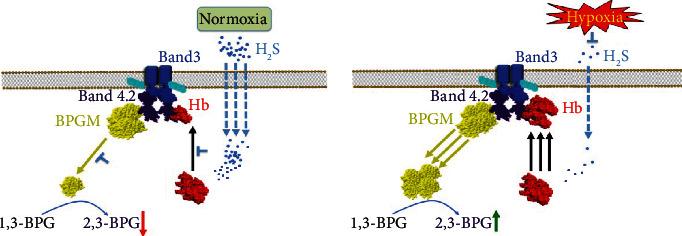
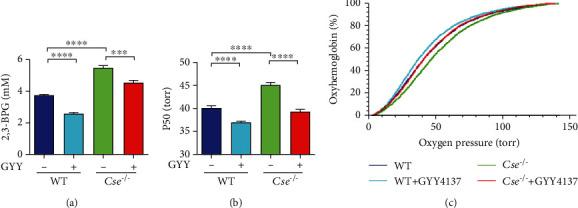
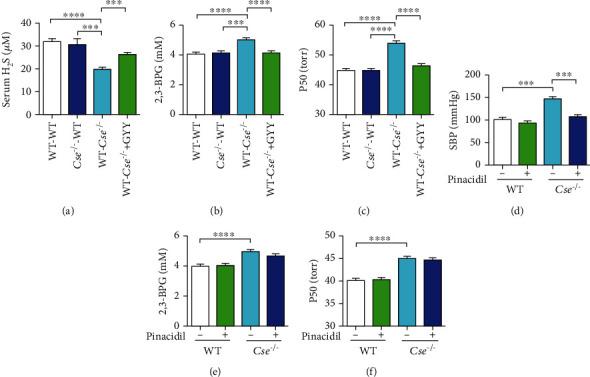
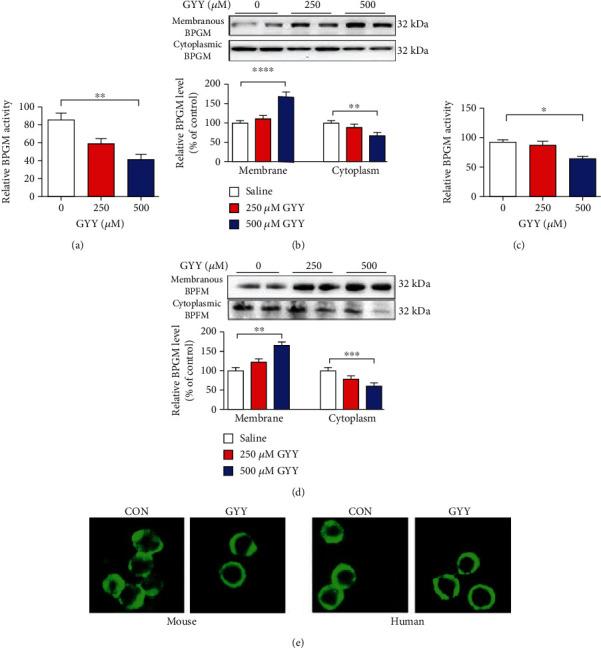
Hydrogen sulfide (HS) is naturally synthesized in a wide range of mammalian tissues. Whether HS is involved in the regulation of erythrocyte functions remains unknown. Using mice with a genetic deficiency in a HS natural synthesis enzyme cystathionine--lyase (CSE) and high-throughput metabolomic profiling, we found that levels of erythrocyte 2,3-bisphosphoglycerate (2,3-BPG), an erythroid-specific metabolite negatively regulating hemoglobin- (Hb-) oxygen (O) binding affinity, were increased in CSE knockout ( ) mice under normoxia. Consistently, the 50% oxygen saturation (P50) value was increased in erythrocytes of mice. These effects were reversed by treatment with HS donor GYY4137. In the models of cultured mouse and human erythrocytes, we found that HS directly acts on erythrocytes to decrease 2,3-BPG production, thereby enhancing Hb-O binding affinity. Mouse genetic studies showed that HS produced by peripheral tissues has a tonic inhibitory effect on 2,3-BPG production and consequently maintains Hb-O binding affinity in erythrocytes. We further revealed that HS promotes Hb release from the membrane to the cytosol and consequently enhances bisphosphoglycerate mutase (BPGM) anchoring to the membrane. These processes might be associated with S-sulfhydration of Hb. Moreover, hypoxia decreased the circulatory HS level and increased the erythrocyte 2,3-BPG content in mice, which could be reversed by GYY4137 treatment. Altogether, our study revealed a novel signaling pathway that regulates oxygen-carrying capacity in erythrocytes and highlights a previously unrecognized role of HS in erythrocyte 2,3-BPG production.
硫化氢(HS)在广泛的哺乳动物组织中自然合成。HS 是否参与红细胞功能的调节尚不清楚。使用一种 HS 天然合成酶胱硫醚-β-合成酶(CSE)基因缺失的小鼠和高通量代谢组学分析,我们发现,在常氧条件下,CSE 敲除()小鼠的红细胞 2,3-二磷酸甘油酸(2,3-BPG)水平升高,2,3-BPG 是一种负调节血红蛋白(Hb)-氧(O)结合亲和力的红细胞特异性代谢物。一致地,红细胞的 50%氧饱和度(P50)值在 小鼠中增加。这些效应可被 HS 供体 GYY4137 逆转。在培养的小鼠和人类红细胞模型中,我们发现 HS 直接作用于红细胞,减少 2,3-BPG 的产生,从而增强 Hb-O 结合亲和力。小鼠遗传研究表明,外周组织产生的 HS 对 2,3-BPG 的产生具有紧张性抑制作用,从而维持红细胞中的 Hb-O 结合亲和力。我们进一步揭示 HS 促进 Hb 从膜释放到细胞质,并因此增强双磷酸甘油酸变位酶(BPGM)锚定到膜上。这些过程可能与 Hb 的 S-巯基化有关。此外,缺氧降低了循环 HS 水平并增加了小鼠红细胞中的 2,3-BPG 含量,这可以被 GYY4137 处理逆转。总之,我们的研究揭示了一种调节红细胞携氧能力的新信号通路,并强调了 HS 在红细胞 2,3-BPG 产生中的以前未被认识的作用。




 Zotero 插件