
种子的功能包装。
Functional packaging of seeds.
机构信息
Department of Nanobiotechnology, Institute of Biophysics, University of Natural Resources and Life Sciences (BOKU) Vienna, Muthgasse 11/II, Vienna, 1900, Austria.
出版信息
New Phytol. 2021 Jun;230(6):2154-2163. doi: 10.1111/nph.17299. Epub 2021 Apr 3.
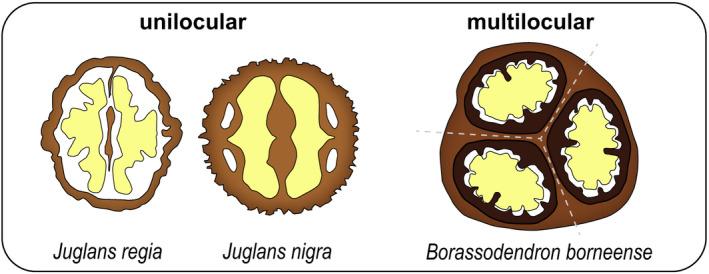
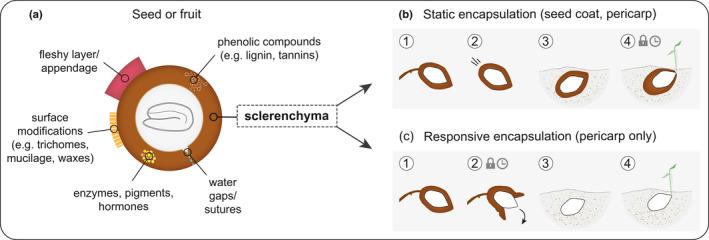
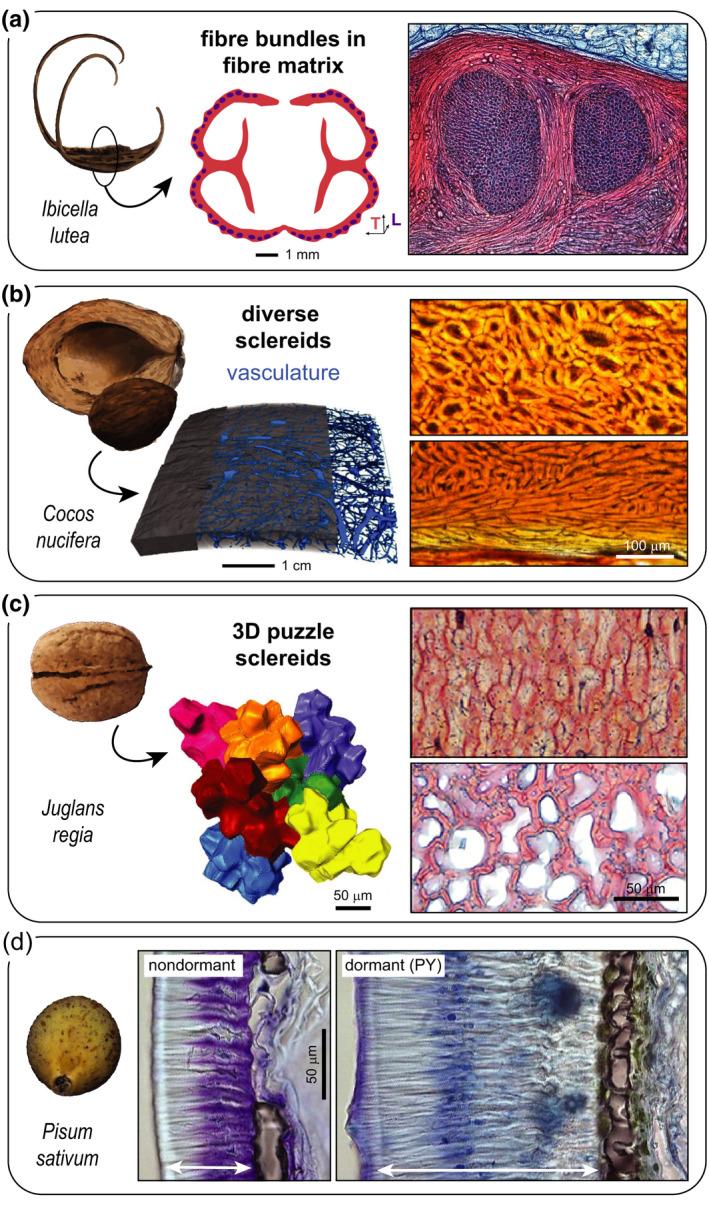
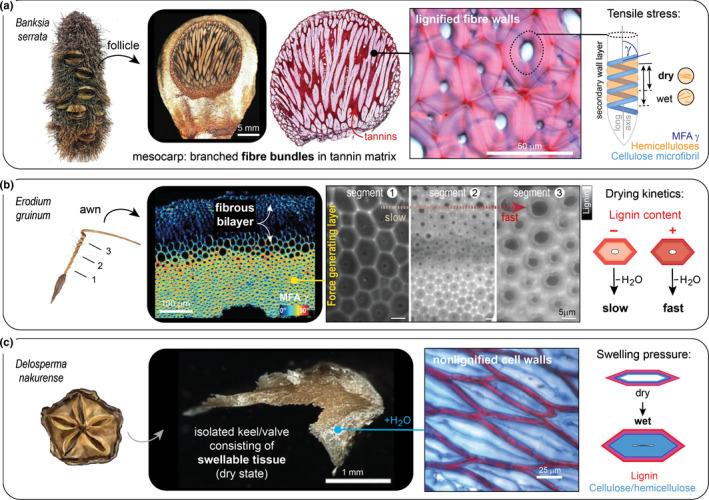
The encapsulation of seeds in hard coats and fruit walls (pericarp layers) fulfils protective and dispersal functions in many plant families. In angiosperms, packaging structures possess a remarkable range of different morphologies and functionalities, as illustrated by thermo and hygro-responsive seed pods and appendages, as well as mechanically strong and water-impermeable shells. Key to these different functionalities are characteristic structural arrangements and chemical modifications of the underlying sclerenchymatous tissues. Although many ecological aspects of hard seed encapsulation have been well documented, a detailed understanding of the relationship between tissue structure and function only recently started to emerge, especially in the context of environmentally driven fruit opening and seed dispersal (responsive encapsulations) and the outstanding durability of some seed coats and indehiscent fruits (static encapsulations). In this review, we focus on the tissue properties of these two systems, with particular consideration of water interactions, mechanical resistance, and force generation. Common principles, as well as unique adaptations, are discussed in different plant species. Understanding how plants integrate a broad range of functions and properties for seed protection during storage and dispersal plays a central role for seed conservation, population dynamics, and plant-based material developments.
在许多植物科中,种子被硬壳和果皮(果皮层)包裹,以实现保护和传播功能。在被子植物中,包装结构具有显著不同的形态和功能,例如热和湿响应的种子荚和附属物,以及机械强度高且不透水的外壳。这些不同功能的关键是基础厚壁组织的特征结构排列和化学修饰。尽管硬种子封装的许多生态方面已经得到很好的记录,但直到最近才开始出现对组织结构和功能之间关系的详细了解,特别是在环境驱动的果实开裂和种子传播(响应性封装)以及某些种皮和不开裂果实的卓越耐久性(静态封装)方面。在这篇综述中,我们重点关注这两个系统的组织特性,特别考虑水相互作用、机械阻力和力的产生。在不同的植物物种中讨论了共同的原则和独特的适应。了解植物如何在储存和传播过程中整合广泛的功能和特性来保护种子,对于种子保护、种群动态和基于植物的材料开发具有核心作用。
 Zotero 插件