
运用网络药理学和分子对接技术探索丹参治疗糖尿病肾病的作用机制
Exploring the mechanisms underlying the therapeutic effect of Salvia miltiorrhiza in diabetic nephropathy using network pharmacology and molecular docking.
作者信息
Zhang Lili, Han Lin, Wang Xinmiao, Wei Yu, Zheng Jinghui, Zhao Linhua, Tong Xiaolin
机构信息
Department of Endocrinology, Guang'anmen Hospital, China Academy of Chinese Medical Sciences, Beijing 100053, China.
Graduate College, Beijing University of Traditional Chinese Medicine, Beijing 100029, China.
出版信息
Biosci Rep. 2021 Jun 25;41(6). doi: 10.1042/BSR20203520.
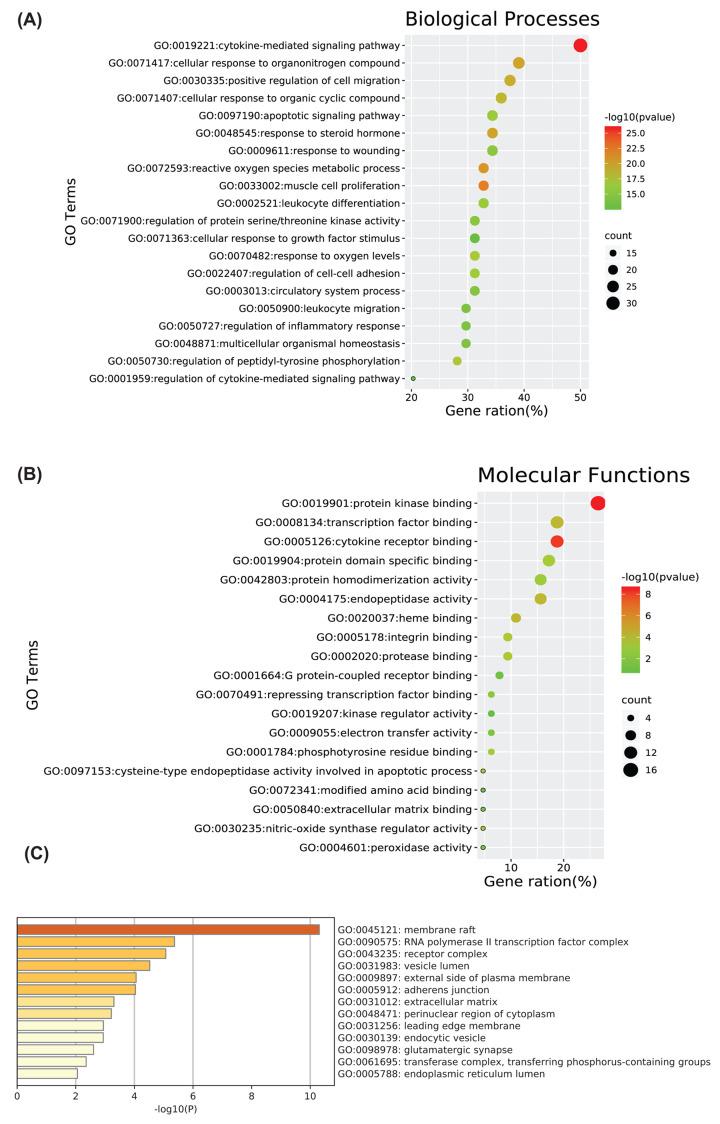
The mechanisms underlying the therapeutic effect of Salvia miltiorrhiza (SM) on diabetic nephropathy (DN) were examined using a systematic network pharmacology approach and molecular docking. The Traditional Chinese Medicine Systems Pharmacology (TCMSP) database was used to screen active ingredients of SM. Targets were obtained using the SwissTargetPrediction and TCMSP databases. Proteins related to DN were retrieved from the GeneCards and DisGeNET databases. A protein-protein interaction (PPI) network was constructed using common SM/DN targets in the Search Tool for the Retrieval of Interacting Genes/Proteins (STRING) database. The Metascape platform was used for Gene Ontology (GO) function analysis, and the Cytoscape plug-in ClueGO was used for Kyoto Encyclopedia of Genes and Genomes (KEGG) pathway enrichment analysis. Molecular docking was performed using iGEMDOCK and AutoDock Vina software. Pymol and LigPlos were used for network mapping. Sixty-six active ingredients and 189 targets of SM were found. Sixty-four targets overlapped with DN-related proteins. The PPI network revealed that AKT serine/threonine kinase 1 (AKT1), VEGFA, interleukin 6 (IL6), TNF, mitogen-activated protein kinase 1 (MAPK1), tumor protein p53 (TP53), epidermal growth factor receptor (EGFR), signal transducer and activator of transcription 3 (STAT3), mitogen-activated protein kinase 14 (MAPK14), and JUN were the ten most relevant targets. GO and KEGG analyses revealed that the common targets of DN and SM were mainly involved in advanced glycation end-products, oxidative stress, inflammatory response, and immune regulation. Molecular docking revealed that potential DN-related targets, including tumor necrosis factor (TNF), NOS2, and AKT1, more stably bound with salvianolic acid B than with tanshinone IIA. In conclusion, the present study revealed the active components and potential molecular therapeutic mechanisms of SM in DN and provides a reference for the wide application of SM in clinically managing DN.
采用系统网络药理学方法和分子对接技术,研究丹参(SM)对糖尿病肾病(DN)治疗作用的潜在机制。运用中药系统药理学(TCMSP)数据库筛选丹参的活性成分。通过瑞士靶点预测(SwissTargetPrediction)数据库和TCMSP数据库获取靶点。从基因卡片(GeneCards)数据库和疾病基因数据库(DisGeNET)中检索与糖尿病肾病相关的蛋白质。利用检索相互作用基因/蛋白质的搜索工具(STRING)数据库中的丹参/糖尿病肾病共同靶点构建蛋白质-蛋白质相互作用(PPI)网络。运用Metascape平台进行基因本体(GO)功能分析,使用Cytoscape插件ClueGO进行京都基因与基因组百科全书(KEGG)通路富集分析。使用iGEMDOCK和AutoDock Vina软件进行分子对接。使用Pymol和LigPlos进行网络映射。共发现丹参的66种活性成分和189个靶点。其中64个靶点与糖尿病肾病相关蛋白重叠。PPI网络显示,AKT丝氨酸/苏氨酸激酶1(AKT1)、血管内皮生长因子A(VEGFA)﹑白细胞介素6(IL6)、肿瘤坏死因子(TNF)、丝裂原活化蛋白激酶1(MAPK1)、肿瘤蛋白p53(TP53)、表皮生长因子受体(EGFR)、信号转导子和转录激活子3(STAT3)、丝裂原活化蛋白激酶14(MAPK14)和JUN是十个最相关的靶点。GO和KEGG分析表明,糖尿病肾病和丹参的共同靶点主要参与晚期糖基化终产物、氧化应激、炎症反应和免疫调节。分子对接显示,包括肿瘤坏死因子(TNF)、一氧化氮合酶2(NOS2)和AKT1在内的潜在糖尿病肾病相关靶点与丹酚酸B的结合比与丹参酮IIA更稳定。总之,本研究揭示了丹参在糖尿病肾病中的活性成分和潜在分子治疗机制,为丹参在临床治疗糖尿病肾病中的广泛应用提供了参考。




 Zotero 插件