
微生物群落分析揭示了五种鲨鱼体内的特定群落。
Microbiome Analyses Demonstrate Specific Communities Within Five Shark Species.
作者信息
Storo Rachael, Easson Cole, Shivji Mahmood, Lopez Jose V
机构信息
Halmos College of Arts and Sciences, Nova Southeastern University, Fort Lauderdale, FL, United States.
Department of Marine Sciences, University of Georgia, Athens, GA, United States.
出版信息
Front Microbiol. 2021 Feb 11;12:605285. doi: 10.3389/fmicb.2021.605285. eCollection 2021.
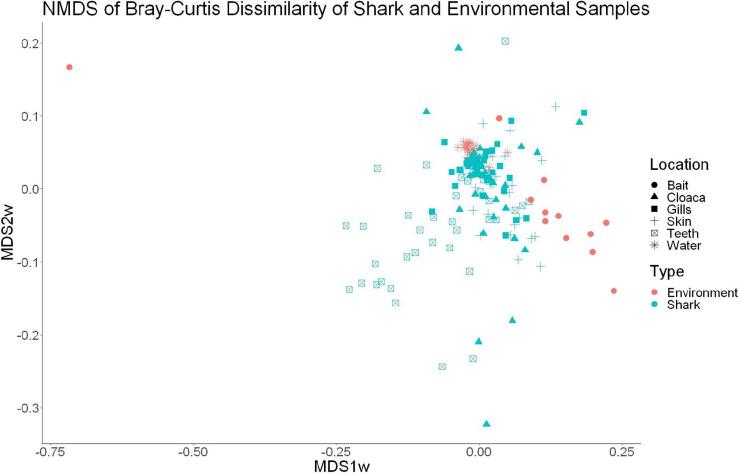
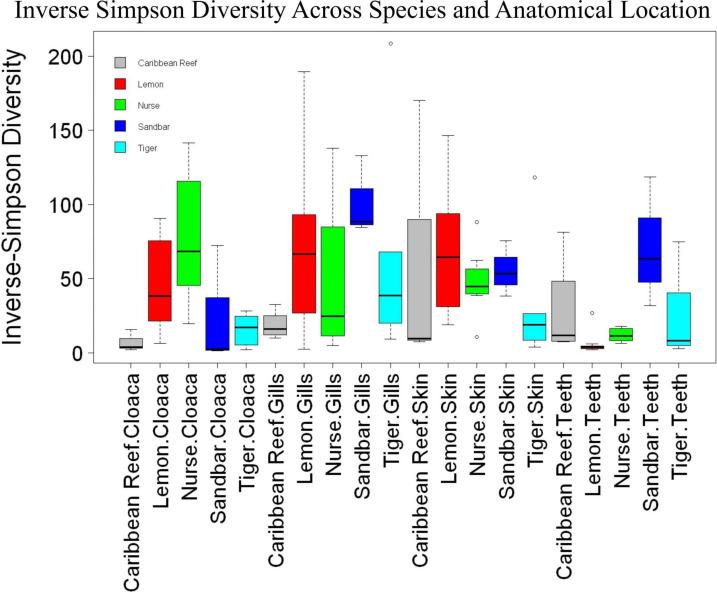
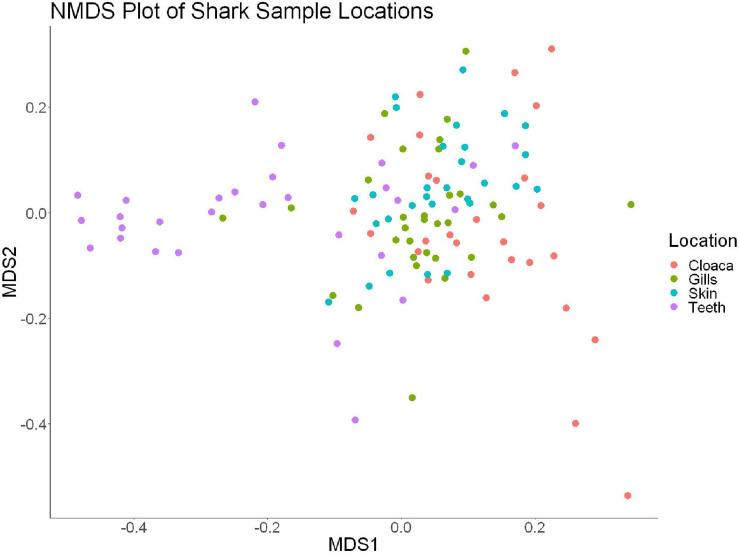
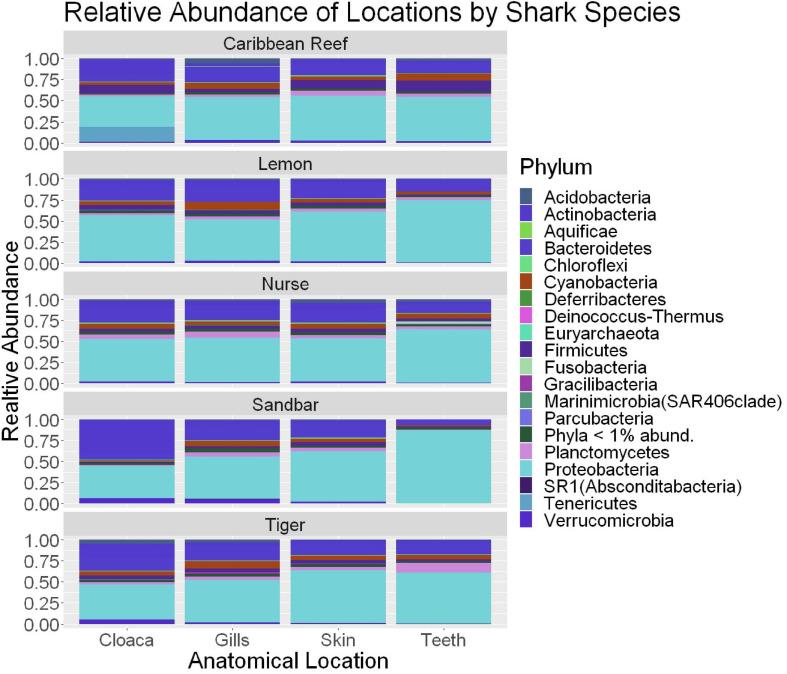
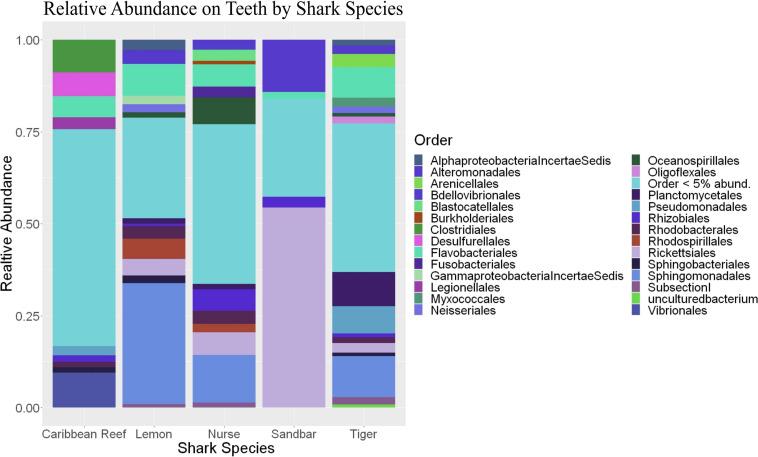
Profiles of symbiotic microbial communities ("microbiomes") can provide insight into the natural history and ecology of their hosts. Using high throughput DNA sequencing of the 16S rRNA V4 region, microbiomes of five shark species in South Florida (nurse, lemon, sandbar, Caribbean reef, and tiger) have been characterized for the first time. The microbiomes show species specific microbiome composition, distinct from surrounding seawater. Shark anatomical location (gills, teeth, skin, cloaca) affected the diversity of microbiomes. An in-depth analysis of teeth communities revealed species specific microbial communities. For example, the genus , explained 7.0% of the differences of the teeth microbiomes of lemon and Caribbean reef sharks. Lemon shark teeth communities () contained a high abundance of both (10.8 ± 26.0%) and (1.6 ± 5.1%), genera that can include human pathogenic taxa. The (2.8 ± 6.34%) and (3.1 ± 6.0%) genera and (2.6 ± 6.4%) were the most abundant members of nurse shark teeth microbial communities. The genus was highly represented in the sandbar shark (54.0 ± 46.0%) and tiger shark (5.8 ± 12.3%) teeth microbiomes. The prevalence of genera containing potential human pathogens could be informative in shark bite treatment protocols and future research to confirm or deny human pathogenicity. We conclude that South Florida sharks host species specific microbiomes that are distinct from their surrounding environment and vary due to differences in microbial community composition among shark species and diversity and composition among anatomical locations. Additionally, when considering the confounding effects of both species and location, microbial community diversity and composition varies.
共生微生物群落(“微生物组”)的特征可以为了解其宿主的自然史和生态学提供线索。利用16S rRNA V4区域的高通量DNA测序技术,首次对南佛罗里达州五种鲨鱼(护士鲨、柠檬鲨、沙洲鲨、加勒比礁鲨和虎鲨)的微生物组进行了特征分析。这些微生物组显示出物种特异性的微生物组组成,与周围海水不同。鲨鱼的解剖位置(鳃、牙齿、皮肤、泄殖腔)影响了微生物组的多样性。对牙齿群落的深入分析揭示了物种特异性的微生物群落。例如, 属解释了柠檬鲨和加勒比礁鲨牙齿微生物组差异的7.0%。柠檬鲨牙齿群落( )中 (10.8 ± 26.0%)和 (1.6 ± 5.1%)的丰度都很高,这些属可能包括人类致病类群。 属(2.8 ± 6.34%)、 属(3.1 ± 6.0%)和 属(2.6 ± 6.4%)是护士鲨牙齿微生物群落中最丰富的成员。 属在沙洲鲨(54.0 ± 46.0%)和虎鲨(5.8 ± 12.3%)牙齿微生物组中占比很高。含有潜在人类病原体的属的流行情况可能对鲨鱼咬伤治疗方案以及未来确认或否定人类致病性的研究具有参考价值。我们得出结论,南佛罗里达州的鲨鱼拥有物种特异性的微生物组,这些微生物组与周围环境不同,并且由于鲨鱼物种之间微生物群落组成的差异以及解剖位置之间的多样性和组成差异而有所变化。此外,考虑到物种和位置的混杂影响,微生物群落的多样性和组成也会发生变化。


 Zotero 插件