
非小细胞肺癌脑转移的风险因素:一项观察性研究方案。
Risk factors for brain metastases from non-small-cell lung cancer: A protocol for observational study.
机构信息
Department of Neurology Medicine, The First Affiliated Hospital of Nanchang University, Nanchang 330006.
Second Department of Cardiovascular Medicine, Jiangxi Provincial People's Hospital Affiliated to Nanchang University, Nanchang.
出版信息
Medicine (Baltimore). 2021 Mar 5;100(9):e24724. doi: 10.1097/MD.0000000000024724.
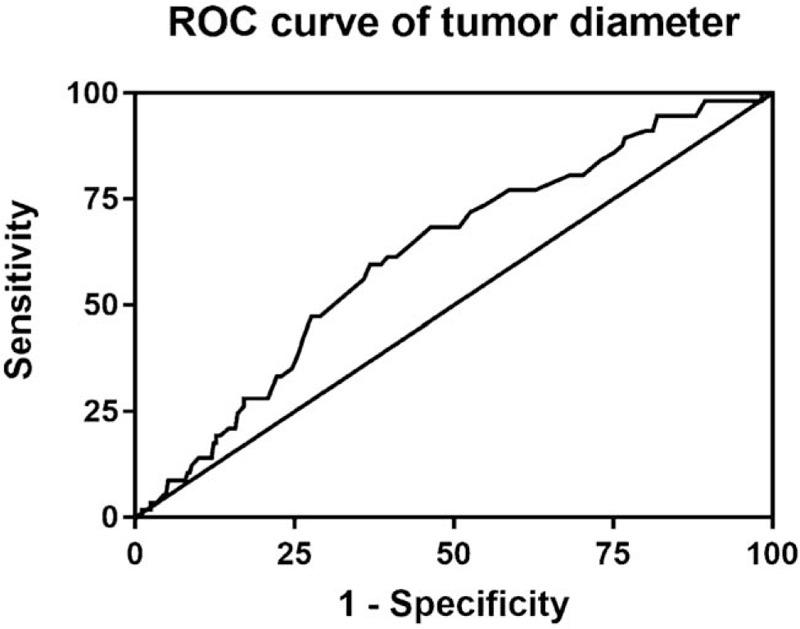
Brain metastasis is a common site of distant metastasis of non-small-cell lung cancer (NSCLC) that greatly reduces the prognosis of patients. In this study, we explored the correlation between different clinical factors and secondary brain metastases in NSCLC in an attempt to identify NSCLC patient populations at high risk of metastasis to the central nervous system.We collected data for 350 NSCLC patients from the medical record system of the First Affiliated Hospital of Nanchang University from June 2015 to June 2019, and these patients had pathologically verified diagnoses. The correlations between age at the time of diagnosis, sex, histological type, calcium concentration, hemoglobin (HB), fibrinogen (Fbg), activated partial thromboplastin time (APTT), alkaline phosphatase (ALP), carcinoembryonic antigen (CEA), CA125, and CA199 levels and brain metastasis were analyzed. Multivariate logistic regression analysis was used to identify risk factors for NSCLC brain metastasis. A receiver operating characteristic (ROC) curve was used to calculate the cutoff, sensitivity, and specificity of the independent related factors.Of the 350 patients, 57 were diagnosed with brain metastases. Univariate and multivariate logistic regression analysis indicated that lesion diameter, calcium concentration, and CEA level were independent risk factors correlated with brain metastasis (P < .05). There were no significant differences in age, sex, type of histopathology, presence or absence of mediastinal lymph node metastasis, HB, Fbg, APTT, ALP, cancer antigen 125 (CA-125), or cancer antigen 199 (CA-199) levels between patients with brain metastases and patients without brain metastases (P > .05, respectively). ROC curves demonstrated that these factors had comparable accuracy in predicting brain metastasis (area under the curve [AUCs] were 0.620, 0.661, and 0.729, respectively). The cutoff values for lesion diameter, calcium, and CEA were 5.050 cm, 2.295 mmol/L, and 11.160 ng/mL, respectively. The sensitivities for prediction brain metastasis were 59.6%, 64.9%, and 73.3%, with specificities of 63.1%, 59.2%, and 70.3%, respectively.According to our study, lesion diameter, calcium concentration, and CEA level are independent risk factors for brain metastases in NSCLC patients. Thus, we can strengthen the regular follow-up of NSCLC patients with tumor diameter > 5.050 cm, calcium > 2.295 mmol/L, CEA > 11.160 ng/mL, and use these factors as a reference for preventive treatments.
脑转移是非小细胞肺癌(NSCLC)远处转移的常见部位,极大地降低了患者的预后。在这项研究中,我们探讨了不同临床因素与 NSCLC 继发性脑转移之间的相关性,试图确定中枢神经系统转移风险较高的 NSCLC 患者人群。
我们从南昌大学第一附属医院的病历系统中收集了 2015 年 6 月至 2019 年 6 月间 350 例 NSCLC 患者的数据,这些患者均经病理证实诊断。分析了年龄、性别、组织学类型、钙浓度、血红蛋白(HB)、纤维蛋白原(Fbg)、部分凝血活酶时间(APTT)、碱性磷酸酶(ALP)、癌胚抗原(CEA)、CA125 和 CA199 水平与脑转移之间的相关性。采用多因素 logistic 回归分析识别 NSCLC 脑转移的危险因素。采用受试者工作特征(ROC)曲线计算独立相关因素的截断值、敏感性和特异性。
在 350 例患者中,57 例诊断为脑转移。单因素和多因素 logistic 回归分析表明,病灶直径、钙浓度和 CEA 水平是与脑转移相关的独立危险因素(P < .05)。脑转移患者与无脑转移患者在年龄、性别、组织学类型、是否存在纵隔淋巴结转移、HB、Fbg、APTT、ALP、CA-125 或 CA-199 水平方面无统计学差异(P > .05)。ROC 曲线表明,这些因素在预测脑转移方面具有相当的准确性(曲线下面积[AUCs]分别为 0.620、0.661 和 0.729)。病灶直径、钙和 CEA 的截断值分别为 5.050 cm、2.295 mmol/L 和 11.160 ng/mL。预测脑转移的敏感性分别为 59.6%、64.9%和 73.3%,特异性分别为 63.1%、59.2%和 70.3%。
根据我们的研究,病灶直径、钙浓度和 CEA 水平是非小细胞肺癌患者脑转移的独立危险因素。因此,我们可以加强对肿瘤直径>5.050 cm、钙>2.295 mmol/L、CEA>11.160 ng/mL 的 NSCLC 患者的常规随访,并将这些因素作为预防治疗的参考。


 Zotero 插件