
2014年美国儿科学会政策变更后美国早产儿呼吸道合胞病毒住院治疗的严重程度及费用
Severity and Cost of RSV Hospitalization Among US Preterm Infants Following the 2014 American Academy of Pediatrics Policy Change.
作者信息
Krilov Leonard R, Forbes Michael L, Goldstein Mitchell, Wadhawan Rajan, Stewart Dan L
机构信息
Department of Pediatrics, NYU Langone Hospital - Long Island and the NYU Long Island School of Medicine, Mineola, NY, USA.
Department of Pediatrics, Akron Children's Hospital, Akron, OH, USA.
出版信息
Infect Dis Ther. 2021 Mar;10(Suppl 1):27-34. doi: 10.1007/s40121-020-00389-0. Epub 2021 Mar 3.
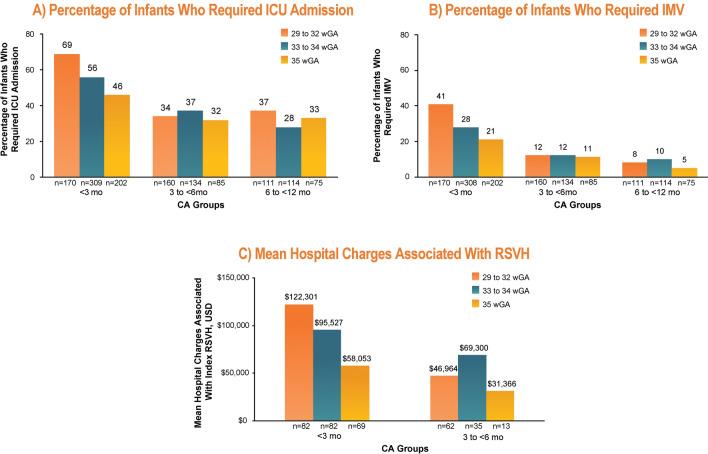
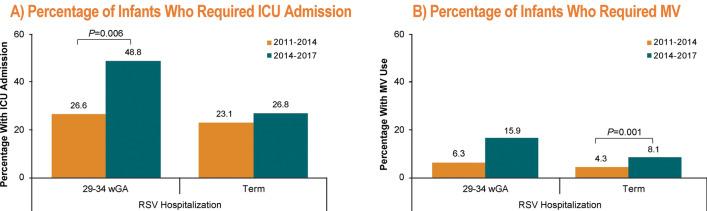
The American Academy of Pediatrics (AAP) Committee on Infectious Diseases (COID) periodically publishes recommendations for respiratory syncytial virus (RSV) immunoprophylaxis (IP) use in pediatric patients considered to be at highest risk for severe RSV infection. In 2014, for the first time, the AAP COID stopped recommending the use of RSV IP for otherwise healthy infants born at 29 weeks' gestational age (wGA) or later, stating that RSV hospitalization (RSVH) rates in this population are similar to those of term infants. Subsequently, epidemiological studies in the US at national and regional levels provided evidence of the impact of the policy change in 29-34 wGA infants. The results of these studies demonstrated a significant decrease in IP use after 2014 that was associated with an increased rate of RSVH in 29-34 wGA infants and an increase in morbidities. RSVH-related morbidities included pediatric intensive care unit (ICU) admissions, an increased need for mechanical ventilation, and an increase in the length of stay. After the change in recommendations, the costs of RSVH also rose among 29-34 wGA infants. The severity of the illness and expenses associated with RSVH were generally higher among 29-34 wGA infants of younger chronologic age compared with older preterm infants. Overall, these studies underscore that 29-34 wGA infants continue to be a high-risk pediatric population that could benefit from the protection provided by RSV IP. On the basis of these data, in 2018, the National Perinatal Association developed guidelines that recommended RSV IP for all ≤ 32 wGA infants and 32-35 wGA infants with additional risk factors. Re-evaluation of the AAP COID policy is warranted in light of these observations.
美国儿科学会(AAP)传染病委员会(COID)定期发布关于呼吸道合胞病毒(RSV)免疫预防(IP)在被认为患严重RSV感染风险最高的儿科患者中的使用建议。2014年,AAP COID首次不再建议对胎龄29周及以后出生的健康婴儿使用RSV IP,称该人群的RSV住院率与足月儿相似。随后,美国国家和地区层面的流行病学研究提供了政策变化对29 - 34周胎龄婴儿影响的证据。这些研究结果表明,2014年后IP的使用显著减少,这与29 - 34周胎龄婴儿RSV住院率增加及发病率上升有关。与RSV住院相关的发病率包括儿科重症监护病房(ICU)入院、机械通气需求增加以及住院时间延长。建议改变后,29 - 34周胎龄婴儿的RSV住院费用也有所上升。与年龄较大的早产儿相比,年龄较小的29 - 34周胎龄婴儿的疾病严重程度和与RSV住院相关的费用通常更高。总体而言,这些研究强调29 - 34周胎龄婴儿仍然是高危儿科人群,可能受益于RSV IP提供的保护。基于这些数据,2018年,美国围产期协会制定了指南,建议对所有胎龄≤32周的婴儿以及有其他风险因素的32 - 35周胎龄婴儿使用RSV IP。鉴于这些观察结果,有必要对AAP COID政策进行重新评估。

 Zotero 插件