
慢性冠状动脉综合征或外周动脉疾病患者的卒中预防
Prevention of stroke in patients with chronic coronary syndromes or peripheral arterial disease.
作者信息
Parker William A E, Gorog Diana A, Geisler Tobias, Vilahur Gemma, Sibbing Dirk, Rocca Bianca, Storey Robert F
机构信息
Cardiovascular Research Unit, Department of Infection, Immunity & Cardiovascular Disease, University of Sheffield, Beech Hill Road, Sheffield, S10 2RX, UK.
Department of Medicine, National Heart & Lung Institute, Imperial College, London, UK.
出版信息
Eur Heart J Suppl. 2020 Dec 6;22(Suppl M):M26-M34. doi: 10.1093/eurheartj/suaa165. eCollection 2020 Nov.
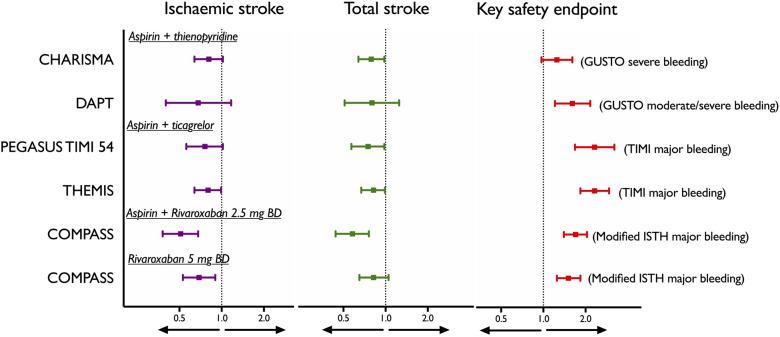
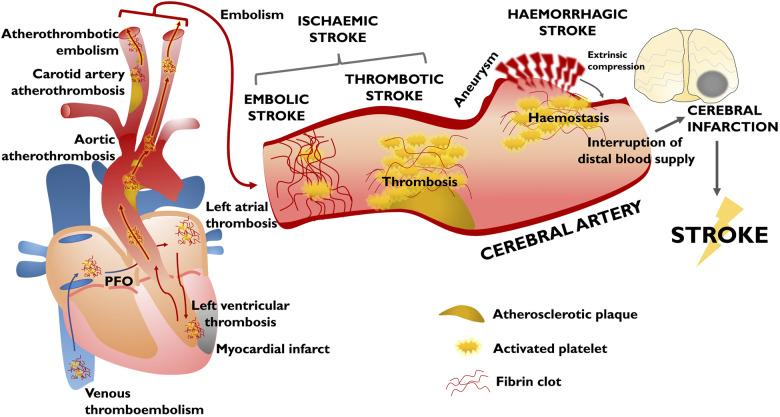
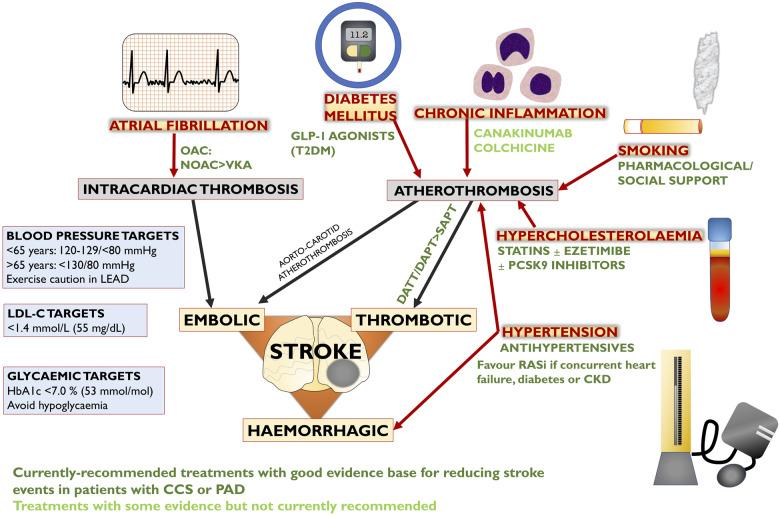
Stroke is a common and devastating condition caused by atherothrombosis, thromboembolism, or haemorrhage. Patients with chronic coronary syndromes (CCS) or peripheral artery disease (PAD) are at increased risk of stroke because of shared pathophysiological mechanisms and risk-factor profiles. A range of pharmacological and non-pharmacological strategies can help to reduce stroke risk in these groups. Antithrombotic therapy reduces the risk of major adverse cardiovascular events, including ischaemic stroke, but increases the incidence of haemorrhagic stroke. Nevertheless, the net clinical benefits mean antithrombotic therapy is recommended in those with CCS or symptomatic PAD. Whilst single antiplatelet therapy is recommended as chronic treatment, dual antiplatelet therapy should be considered for those with CCS with prior myocardial infarction at high ischaemic but low bleeding risk. Similarly, dual antithrombotic therapy with aspirin and very-low-dose rivaroxaban is an alternative in CCS, as well as in symptomatic PAD. Full-dose anticoagulation should always be considered in those with CCS/PAD and atrial fibrillation. Unless ischaemic risk is particularly high, antiplatelet therapy should not generally be added to full-dose anticoagulation. Optimization of blood pressure, low-density lipoprotein levels, glycaemic control, and lifestyle characteristics may also reduce stroke risk. Overall, a multifaceted approach is essential to best prevent stroke in patients with CCS/PAD.
中风是一种由动脉粥样硬化血栓形成、血栓栓塞或出血引起的常见且具有破坏性的疾病。患有慢性冠状动脉综合征(CCS)或外周动脉疾病(PAD)的患者由于共同的病理生理机制和风险因素特征,中风风险增加。一系列药物和非药物策略有助于降低这些人群的中风风险。抗栓治疗可降低包括缺血性中风在内的主要不良心血管事件的风险,但会增加出血性中风的发生率。尽管如此,临床净获益意味着在患有CCS或有症状的PAD患者中推荐抗栓治疗。虽然推荐单一抗血小板治疗作为长期治疗,但对于有心肌梗死病史、缺血风险高但出血风险低的CCS患者,应考虑双重抗血小板治疗。同样,阿司匹林和极低剂量利伐沙班的双重抗栓治疗是CCS以及有症状PAD患者的一种替代方案。对于患有CCS/PAD和房颤的患者,应始终考虑使用全剂量抗凝治疗。除非缺血风险特别高,一般不应在全剂量抗凝治疗基础上加用抗血小板治疗。优化血压、低密度脂蛋白水平、血糖控制和生活方式特征也可能降低中风风险。总体而言,多方面的方法对于最佳预防CCS/PAD患者的中风至关重要。
 Zotero 插件