
核糖体蛋白 GhRPS6 的全基因组分析及其在棉花黄萎病抗性中的作用。
Genome-Wide Analysis of Ribosomal Protein GhRPS6 and Its Role in Cotton Verticillium Wilt Resistance.
机构信息
Zhengzhou Research Base, State Key Laboratory of Cotton Biology, School of Life Science, Zhengzhou University, Zhengzhou 450001, China.
State Key Laboratory of Cotton Biology, Institute of Cotton Research, Chinese Academy of Agricultural Sciences, Anyang 455000, China.
出版信息
Int J Mol Sci. 2021 Feb 11;22(4):1795. doi: 10.3390/ijms22041795.
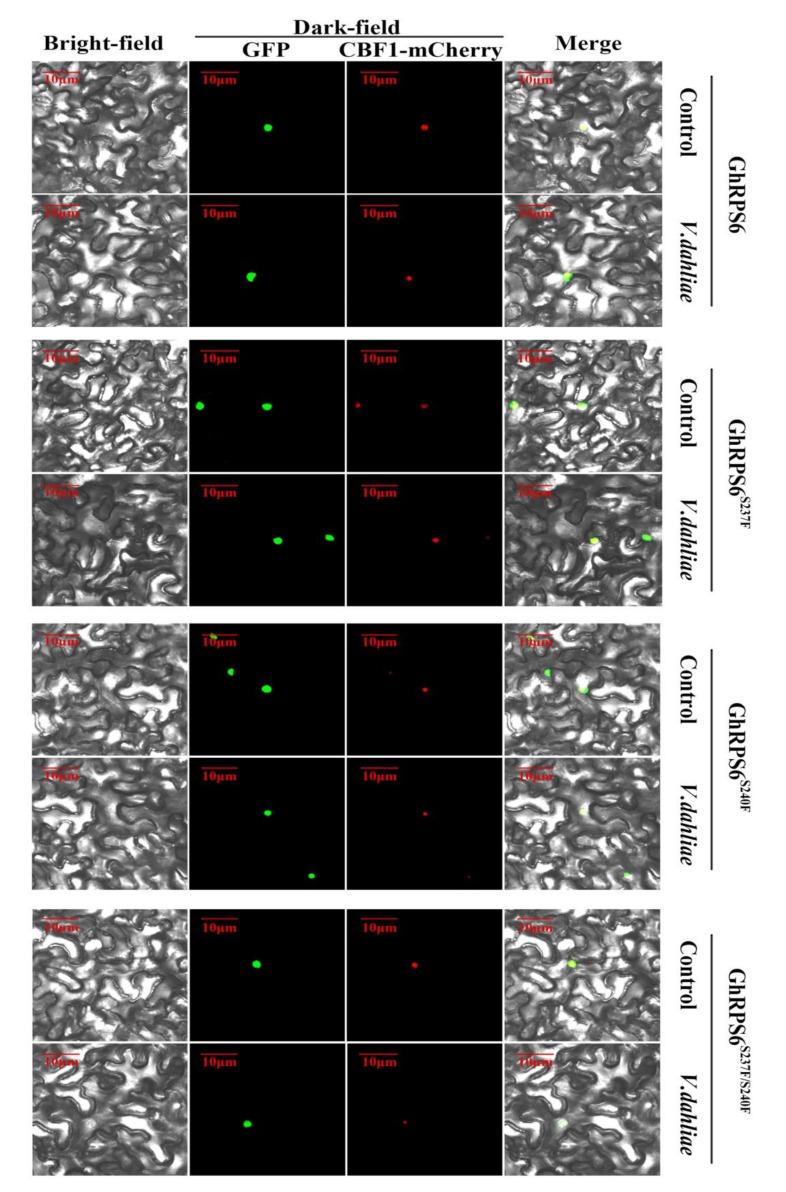
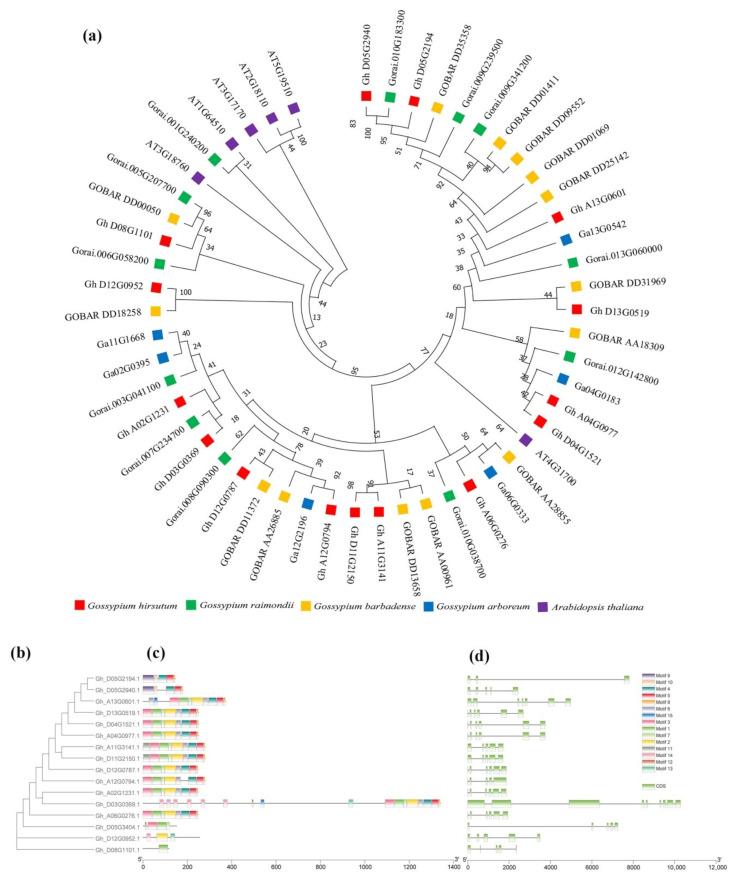
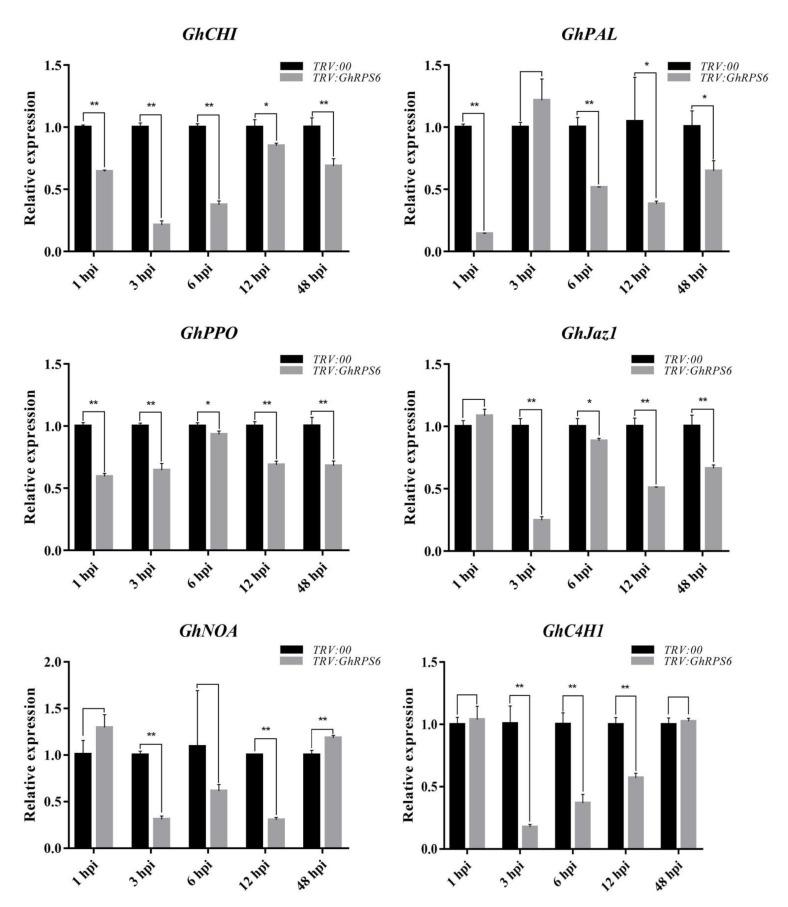
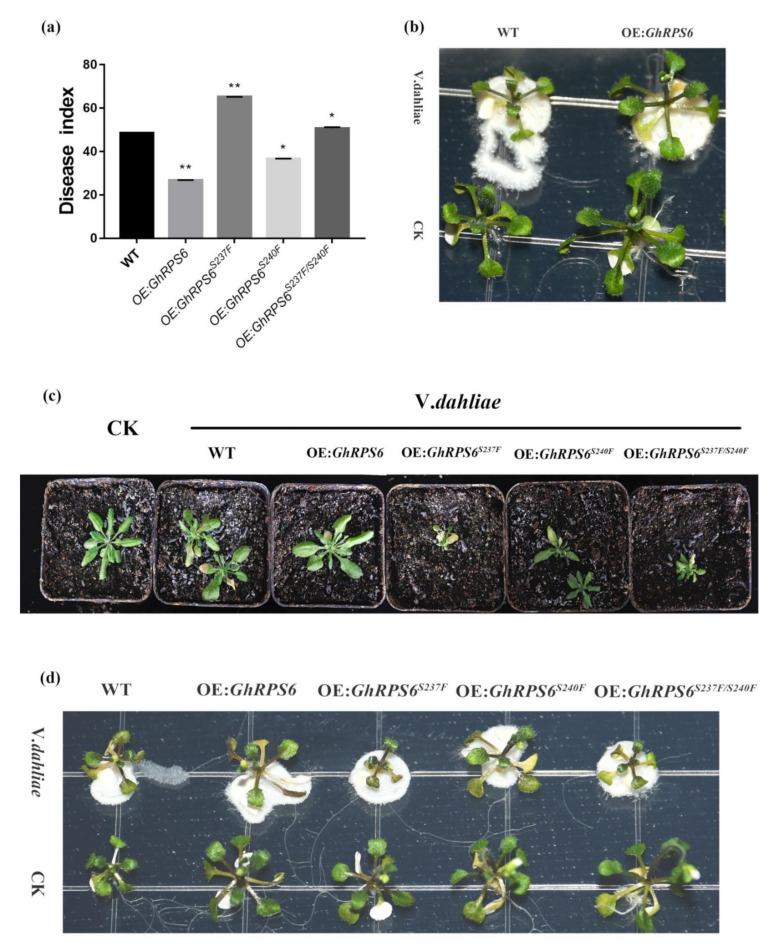
Verticillium wilt is threatening the world's cotton production. The pathogenic fungus can survive in the soil in the form of microsclerotia for a long time, colonize through the root of cotton, and invade into vascular bundles, causing yellowing and wilting of cotton leaves, and in serious cases, leading to plant death. Breeding resistant varieties is the most economical and effective method to control Verticillium wilt. In previous studies, proteomic analysis was carried out on different cotton varieties inoculated with strain Vd080. It was found that GhRPS6 was phosphorylated after inoculation, and the phosphorylation level in resistant cultivars was 1.5 times than that in susceptible cultivars. In this study, knockdown of expression results in the reduction of SA and JA content, and suppresses a series of defensive response, enhancing cotton plants susceptibility to . Overexpression in Arabidopsis transgenic plants was found to be more resistant to . Further, serines at 237 and 240 were mutated to phenylalanine, respectively and jointly. The transgenic plants demonstrated that seri-237 compromised the plant resistance to . Subcellular localization in showed that GhRPS6 was localized in the nucleus. Additionally, the pathogen inoculation and phosphorylation site mutation did not change its localization. These results indicate that GhRPS6 is a potential molecular target for improving resistance to Verticillium wilt in cotton. This lays a foundation for breeding disease-resistant varieties.
黄萎病正在威胁全球棉花生产。病原菌可以以微菌核的形式在土壤中长时间存活,通过棉花根部定殖,并侵入维管束,导致棉花叶片发黄和萎蔫,严重时导致植物死亡。培育抗性品种是防治黄萎病最经济有效的方法。在以前的研究中,对接种菌株 Vd080 的不同棉花品种进行了蛋白质组学分析。结果发现 GhRPS6 在接种后发生磷酸化,而抗性品种的磷酸化水平是敏感品种的 1.5 倍。在本研究中,敲低表达导致 SA 和 JA 含量降低,并抑制一系列防御反应,从而增强棉花植株对的易感性。在拟南芥转基因植物中的过表达被发现对更为抗性。此外,丝氨酸 237 和 240 分别突变为苯丙氨酸,并且共同突变。转基因植物表明 ser-237 削弱了植物对的抗性。在中进行的亚细胞定位表明 GhRPS6 定位于细胞核。此外,病原菌接种和磷酸化位点突变并没有改变其定位。这些结果表明 GhRPS6 是提高棉花抗黄萎病的潜在分子靶标。这为培育抗病品种奠定了基础。


 Zotero 插件