
评估15个国家大学生中新冠疫情的心理影响:一项证据
Assessing the Psychological Impact of COVID-19 among College Students: An Evidence of 15 Countries.
作者信息
Batra Kavita, Sharma Manoj, Batra Ravi, Singh Tejinder Pal, Schvaneveldt Nena
机构信息
Office of Research, School of Medicine, University of Nevada, Las Vegas, NV 89102, USA.
Department of Environmental and Occupational Health, University of Nevada, Las Vegas, NV 89119, USA.
出版信息
Healthcare (Basel). 2021 Feb 17;9(2):222. doi: 10.3390/healthcare9020222.
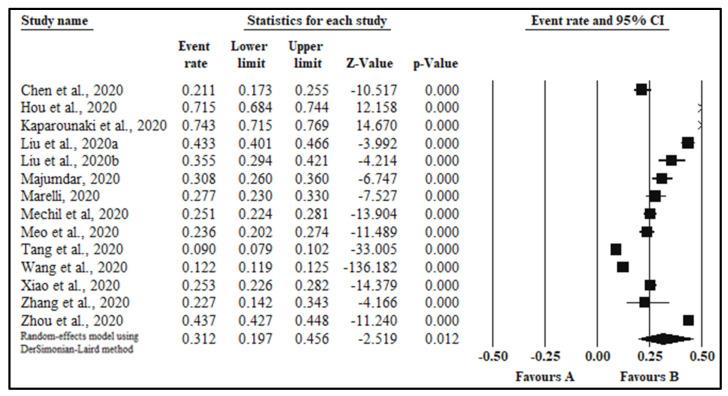
Mental health issues among college students is a leading public health concern, which seems to have been exacerbating during the COVID-19 pandemic. While previous estimates related to psychological burden among college students are available, quantitative synthesis of available data still needs to be performed. Therefore, this meta-analysis endeavors to present collective evidence discussing the psychological impact of COVID-19 among college students. Bibliographical library databases, including Embase, Medline, CINAHL, Scopus, and PsycINFO, were systematically searched for relevant studies. Titles, abstracts, and full articles were screened, and two reviewers extracted data. Heterogeneity was assessed by I statistic. The random-effects model was utilized to obtain the pooled estimates of psychological indicators among college students. Location, gender, level of severity, and quality scores were used as moderator variables for subgroup analyses. Funnel plot and Egger linear regression test was used to assess publication bias. Twenty-seven studies constituting 90,879 college students met the inclusion criteria. The results indicated 39.4% anxiety (95% CI: 28.6, 51.3; I = 99.8%; -value < 0.0001) and 31.2% depression (95% CI: 19.7, 45.6; I= 99.8%, < 0.0001) among college students. The pooled prevalence of stress (26.0%), post-traumatic stress disorder (29.8%), and impaired sleep quality (50.5%) were also reported. College students bear a disproportionate burden of mental health problems worldwide, with females having higher anxiety and depression levels than males. This study''s findings underscore the need to develop appropriate public health interventions to address college students' emotional and psychosocial needs. The policies should be reflective of demographic and socioeconomic differentials.
大学生心理健康问题是一个主要的公共卫生问题,在新冠疫情期间似乎有加剧之势。虽然之前已有关于大学生心理负担的估计,但仍需对现有数据进行定量综合分析。因此,本荟萃分析致力于提供关于新冠疫情对大学生心理影响的综合证据。我们系统检索了包括Embase、Medline、CINAHL、Scopus和PsycINFO在内的文献数据库,以查找相关研究。对标题、摘要和全文进行筛选,两名评审员提取数据。采用I统计量评估异质性。利用随机效应模型获得大学生心理指标的合并估计值。将地点、性别、严重程度和质量得分用作亚组分析的调节变量。采用漏斗图和Egger线性回归检验评估发表偏倚。27项研究共纳入90,879名大学生,符合纳入标准。结果显示,大学生中焦虑症患病率为39.4%(95%置信区间:28.6, 51.3;I = 99.8%;P值<0.0001),抑郁症患病率为31.2%(95%置信区间:19.7, 45.6;I = 99.8%,P < 0.0001)。还报告了压力(26.0%)、创伤后应激障碍(29.8%)和睡眠质量受损(50.5%)的合并患病率。在全球范围内,大学生承受着不成比例 的心理健康问题负担, 女性的焦虑和抑郁水平高于男性。本研究结果强调,有必要制定适当的公共卫生干预措施,以满足大学生的情感和心理社会需求。这些政策应反映人口和社会经济差异。


 Zotero 插件