
用于秀丽隐杆线虫的扩展生长素诱导降解结构域工具包。
An expanded auxin-inducible degron toolkit for Caenorhabditis elegans.
机构信息
Department of Molecular, Cell, and Developmental Biology, University of California-Santa Cruz, Santa Cruz, CA 95064, USA.
Center for Translational Cancer Research, Institute of Biosciences and Technology, Texas A&M Health Science Center, Texas A&M University, Houston, TX 77030, USA.
出版信息
Genetics. 2021 Mar 31;217(3). doi: 10.1093/genetics/iyab006.
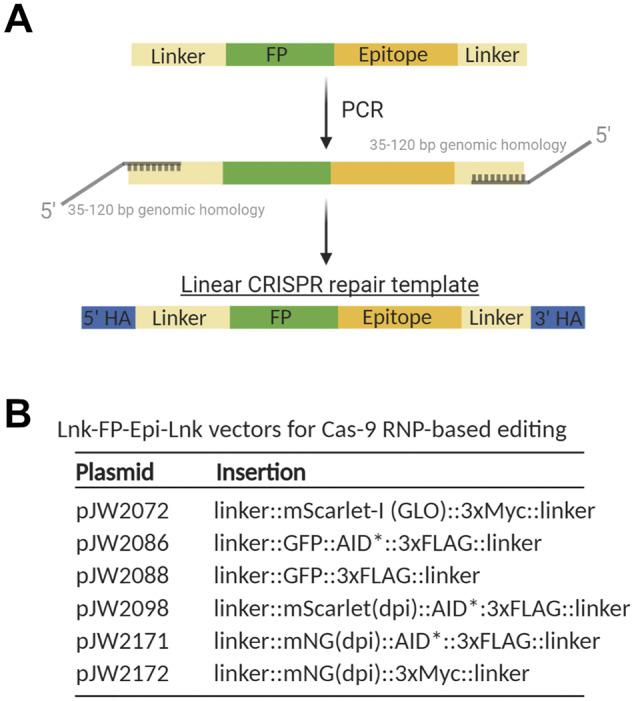
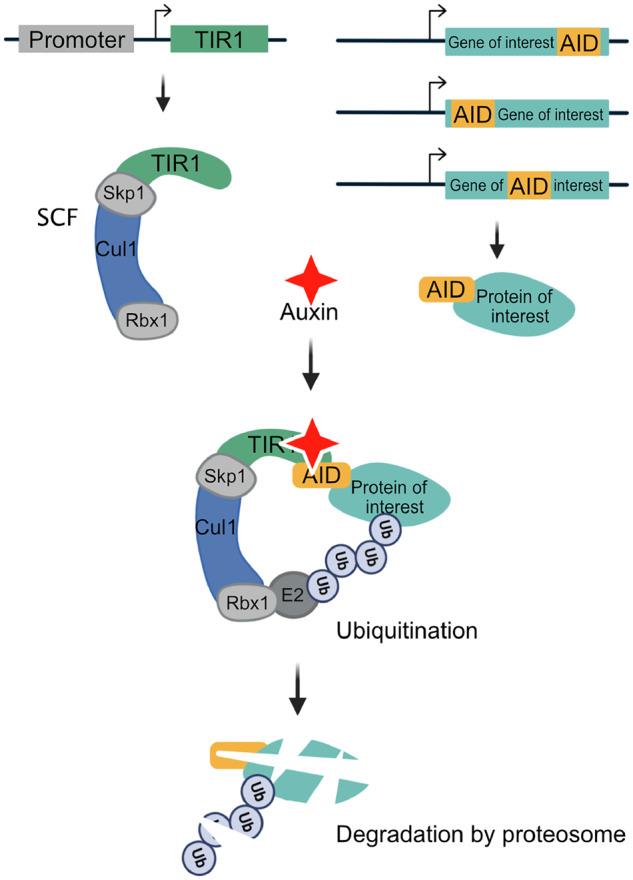
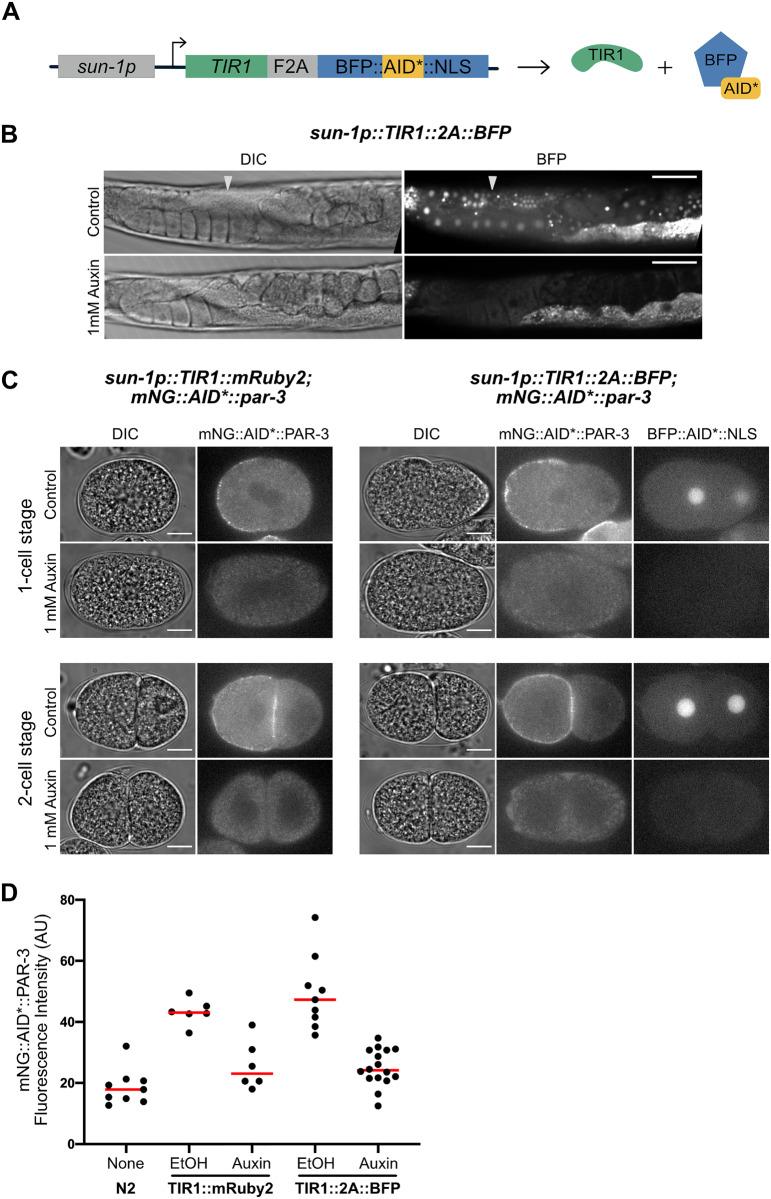
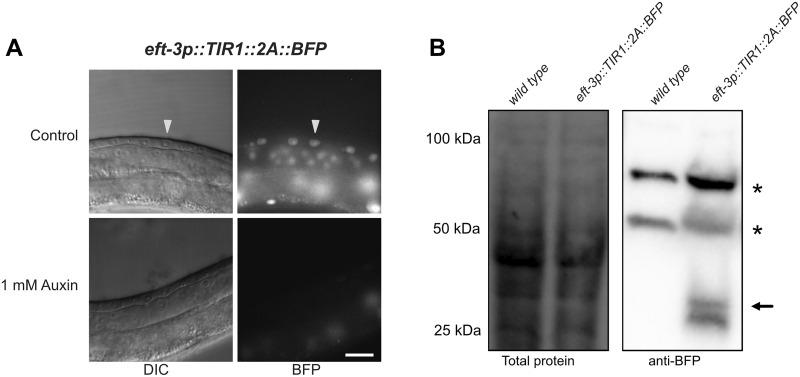
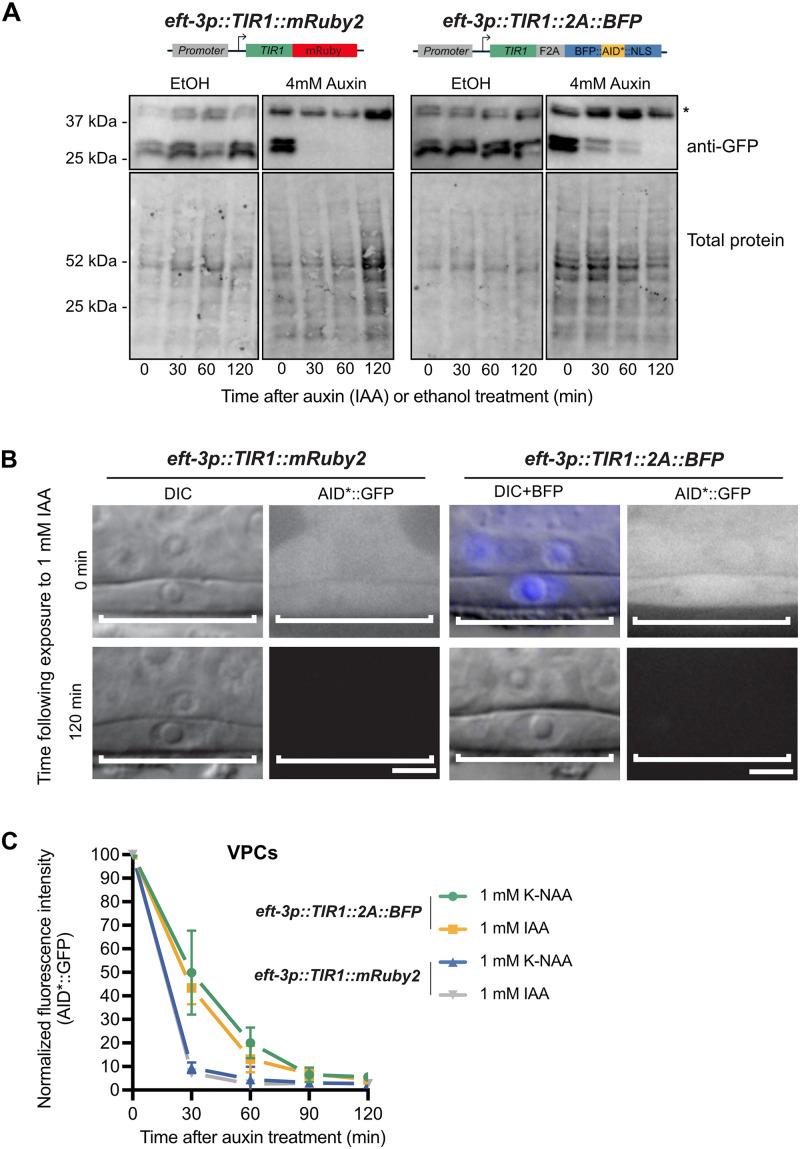
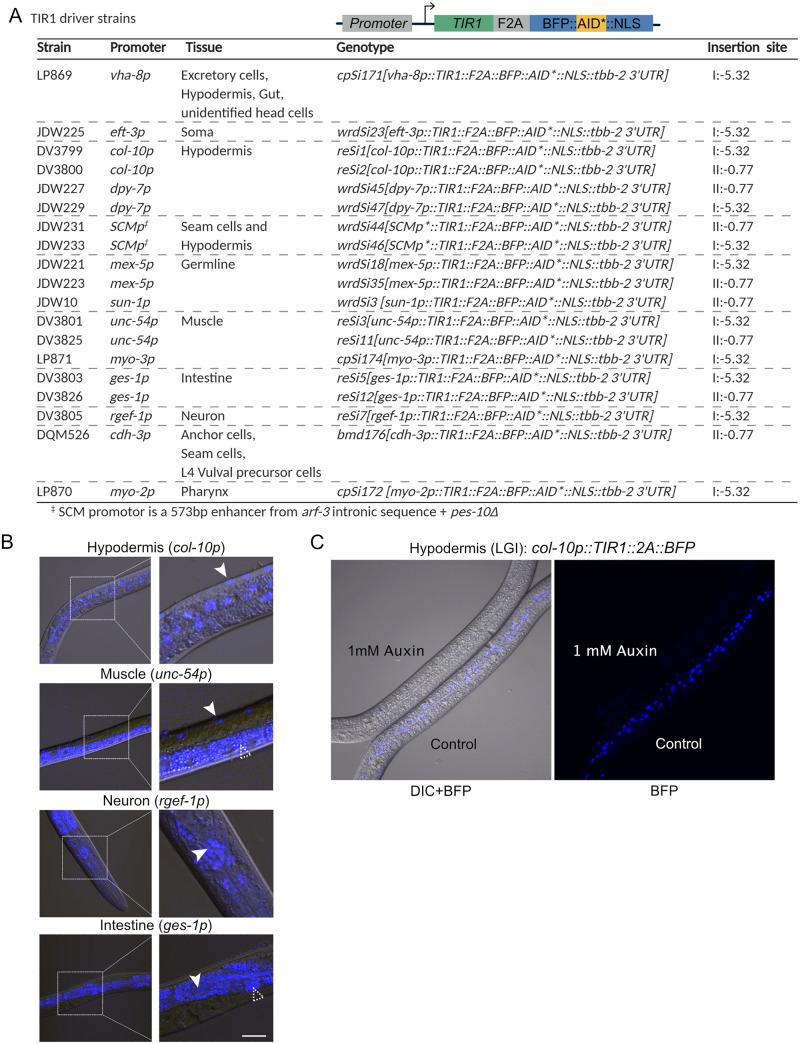
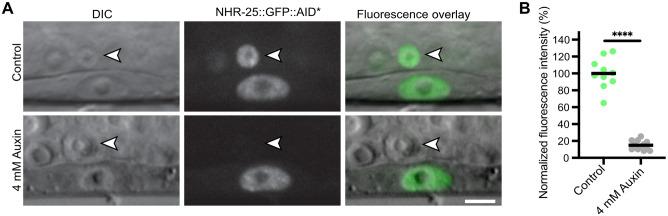
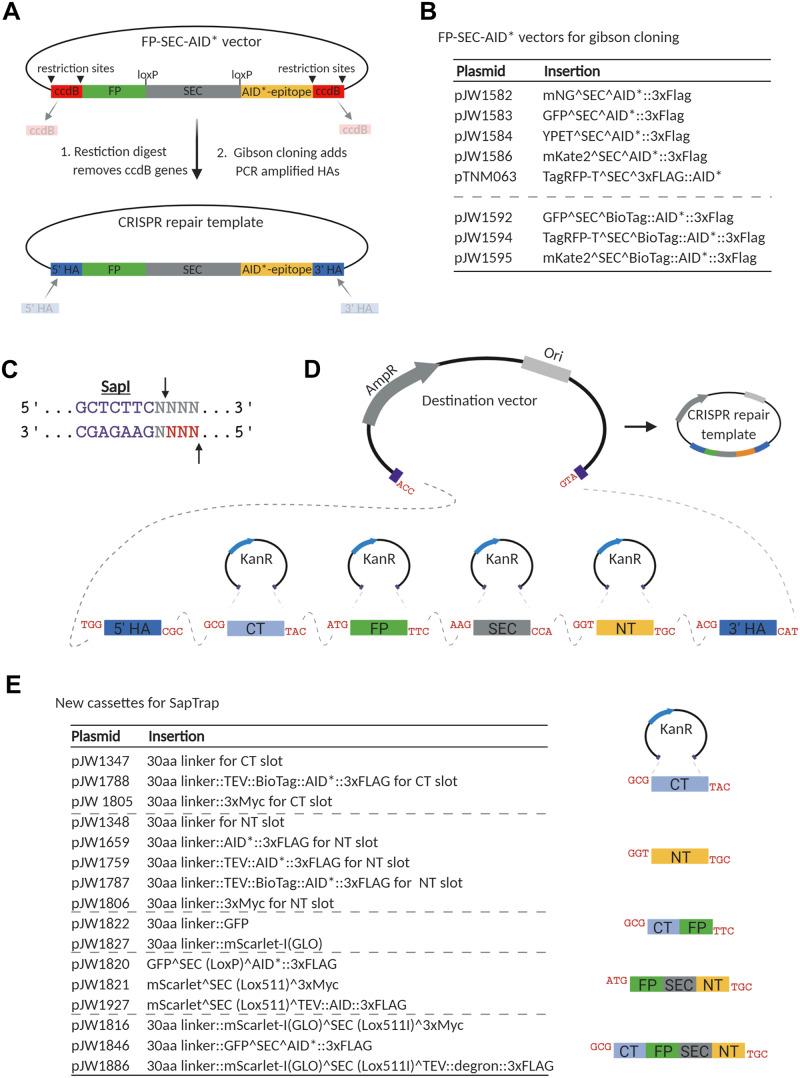
The auxin-inducible degron (AID) system has emerged as a powerful tool to conditionally deplete proteins in a range of organisms and cell types. Here, we describe a toolkit to augment the use of the AID system in Caenorhabditis elegans. We have generated a set of single-copy, tissue-specific (germline, intestine, neuron, muscle, pharynx, hypodermis, seam cell, anchor cell) and pan-somatic TIR1-expressing strains carrying a co-expressed blue fluorescent reporter to enable use of both red and green channels in experiments. These transgenes are inserted into commonly used, well-characterized genetic loci. We confirmed that our TIR1-expressing strains produce the expected depletion phenotype for several nuclear and cytoplasmic AID-tagged endogenous substrates. We have also constructed a set of plasmids for constructing repair templates to generate fluorescent protein::AID fusions through CRISPR/Cas9-mediated genome editing. These plasmids are compatible with commonly used genome editing approaches in the C. elegans community (Gibson or SapTrap assembly of plasmid repair templates or PCR-derived linear repair templates). Together these reagents will complement existing TIR1 strains and facilitate rapid and high-throughput fluorescent protein::AID tagging of genes. This battery of new TIR1-expressing strains and modular, efficient cloning vectors serves as a platform for straightforward assembly of CRISPR/Cas9 repair templates for conditional protein depletion.
生长素诱导降解结构域 (AID) 系统已成为在多种生物体和细胞类型中条件性耗尽蛋白质的强大工具。在这里,我们描述了一套可增强 AID 系统在秀丽隐杆线虫中应用的工具包。我们生成了一组单拷贝、组织特异性(生殖系、肠、神经元、肌肉、咽、皮下组织、 seam 细胞、锚定细胞)和全体细胞 TIR1 表达株,携带共表达的蓝色荧光报告基因,以在实验中同时使用红色和绿色通道。这些转基因插入到常用的、特征良好的遗传基因座中。我们证实,我们的 TIR1 表达株对几种核和细胞质 AID 标记的内源性底物产生了预期的耗尽表型。我们还构建了一组质粒,用于构建修复模板,通过 CRISPR/Cas9 介导的基因组编辑生成荧光蛋白::AID 融合。这些质粒与线虫社区中常用的基因组编辑方法(Gibson 或 SapTrap 组装质粒修复模板或 PCR 衍生的线性修复模板)兼容。这些试剂将补充现有的 TIR1 株,并促进快速和高通量的荧光蛋白::AID 基因标记。这套新的 TIR1 表达株和模块化、高效的克隆载体作为一个平台,用于简单地组装 CRISPR/Cas9 修复模板,以进行条件性蛋白耗尽。

 Zotero 插件