
中药及旧药新用作为治疗剂在调节肺部疾病氧化应激和炎症中的应用
Chinese Herbs and Repurposing Old Drugs as Therapeutic Agents in the Regulation of Oxidative Stress and Inflammation in Pulmonary Diseases.
作者信息
Yang Chien-Chung, Yang Chuen-Mao
机构信息
Department of Traditional Chinese Medicine, Chang Gung Memorial Hospital at Tao-Yuan, Kwei-San, Tao-Yuan, 33302, Taiwan.
School of Traditional Chinese Medicine, College of Medicine, Chang Gung University, Kwei-San, Tao-Yuan, 33302, Taiwan.
出版信息
J Inflamm Res. 2021 Mar 4;14:657-687. doi: 10.2147/JIR.S293135. eCollection 2021.
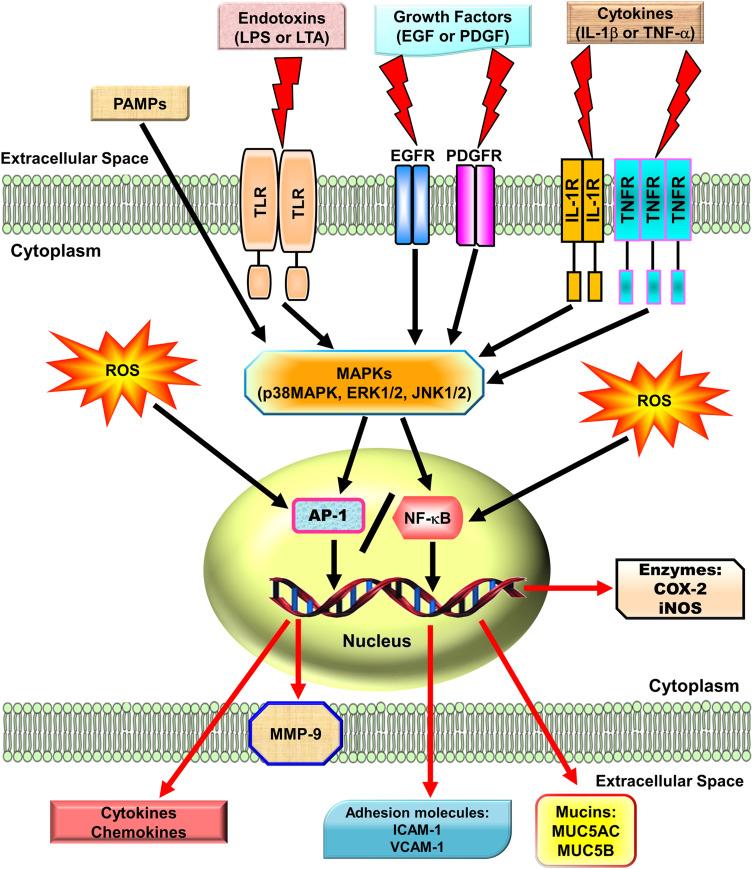
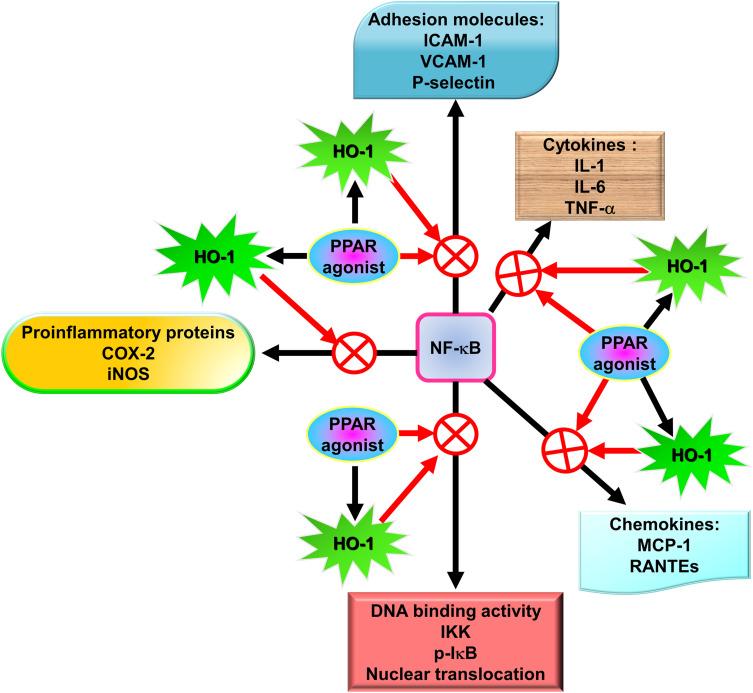
Several pro-inflammatory factors and proteins have been characterized that are involved in the pathogenesis of inflammatory diseases, including acute respiratory distress syndrome, chronic obstructive pulmonary disease, and asthma, induced by oxidative stress, cytokines, bacterial toxins, and viruses. Reactive oxygen species (ROS) act as secondary messengers and are products of normal cellular metabolism. Under physiological conditions, ROS protect cells against oxidative stress through the maintenance of cellular redox homeostasis, which is important for proliferation, viability, cell activation, and organ function. However, overproduction of ROS is most frequently due to excessive stimulation of either the mitochondrial electron transport chain and xanthine oxidase or reduced nicotinamide adenine dinucleotide phosphate (NADPH) by pro-inflammatory cytokines, such as interleukin-1β and tumor necrosis factor α. NADPH oxidase activation and ROS overproduction could further induce numerous inflammatory target proteins that are potentially mediated via Nox/ROS-related transcription factors triggered by various intracellular signaling pathways. Thus, oxidative stress is considered important in pulmonary inflammatory processes. Previous studies have demonstrated that redox signals can induce pulmonary inflammatory diseases. Thus, therapeutic strategies directly targeting oxidative stress may be effective for pulmonary inflammatory diseases. Therefore, drugs with anti-inflammatory and anti-oxidative properties may be beneficial to these diseases. Recent studies have suggested that traditional Chinese medicines, statins, and peroxisome proliferation-activated receptor agonists could modulate inflammation-related signaling processes and may be beneficial for pulmonary inflammatory diseases. In particular, several herbal medicines have attracted attention for the management of pulmonary inflammatory diseases. Therefore, we reviewed the pharmacological effects of these drugs to dissect how they induce host defense mechanisms against oxidative injury to combat pulmonary inflammation. Moreover, the cytotoxicity of oxidative stress and apoptotic cell death can be protected via the induction of HO-1 by these drugs. The main objective of this review is to focus on Chinese herbs and old drugs to develop anti-inflammatory drugs able to induce HO-1 expression for the management of pulmonary inflammatory diseases.
已经鉴定出几种促炎因子和蛋白质,它们参与了由氧化应激、细胞因子、细菌毒素和病毒引起的炎症性疾病的发病机制,包括急性呼吸窘迫综合征、慢性阻塞性肺疾病和哮喘。活性氧(ROS)作为第二信使,是正常细胞代谢的产物。在生理条件下,ROS通过维持细胞氧化还原稳态来保护细胞免受氧化应激,这对细胞增殖、活力、细胞活化和器官功能很重要。然而,ROS的过量产生最常见的原因是促炎细胞因子(如白细胞介素-1β和肿瘤坏死因子α)对线粒体电子传递链和黄嘌呤氧化酶的过度刺激,或烟酰胺腺嘌呤二核苷酸磷酸(NADPH)的减少。NADPH氧化酶的激活和ROS的过量产生可进一步诱导许多炎症靶蛋白,这些蛋白可能通过各种细胞内信号通路触发的Nox/ROS相关转录因子介导。因此,氧化应激在肺部炎症过程中被认为很重要。先前的研究表明,氧化还原信号可诱导肺部炎症性疾病。因此,直接针对氧化应激的治疗策略可能对肺部炎症性疾病有效。因此,具有抗炎和抗氧化特性的药物可能对这些疾病有益。最近的研究表明,中药、他汀类药物和过氧化物酶体增殖物激活受体激动剂可以调节炎症相关的信号传导过程,可能对肺部炎症性疾病有益。特别是,几种草药已引起人们对肺部炎症性疾病治疗的关注。因此,我们综述了这些药物的药理作用,以剖析它们如何诱导宿主防御机制抵抗氧化损伤以对抗肺部炎症。此外,这些药物可通过诱导HO-1来保护氧化应激的细胞毒性和凋亡性细胞死亡。本综述的主要目的是关注中药和老药,以开发能够诱导HO-1表达的抗炎药物来治疗肺部炎症性疾病。

 Zotero 插件