
黏膜纳米乳剂过敏疫苗可抑制警报素表达并诱导对多种食物过敏原反应性的旁观者抑制。
Mucosal Nanoemulsion Allergy Vaccine Suppresses Alarmin Expression and Induces Bystander Suppression of Reactivity to Multiple Food Allergens.
作者信息
Farazuddin Mohammad, Landers Jeffrey J, Janczak Katarzyna W, Lindsey Hayley K, Finkelman Fred D, Baker James R, O'Konek Jessica J
机构信息
Mary H. Weiser Food Allergy Center, University of Michigan, Ann Arbor, MI, United States.
Division of Allergy, Immunology and Rheumatology, University of Cincinnati College of Medicine, Cincinnati, OH, United States.
出版信息
Front Immunol. 2021 Feb 25;12:599296. doi: 10.3389/fimmu.2021.599296. eCollection 2021.
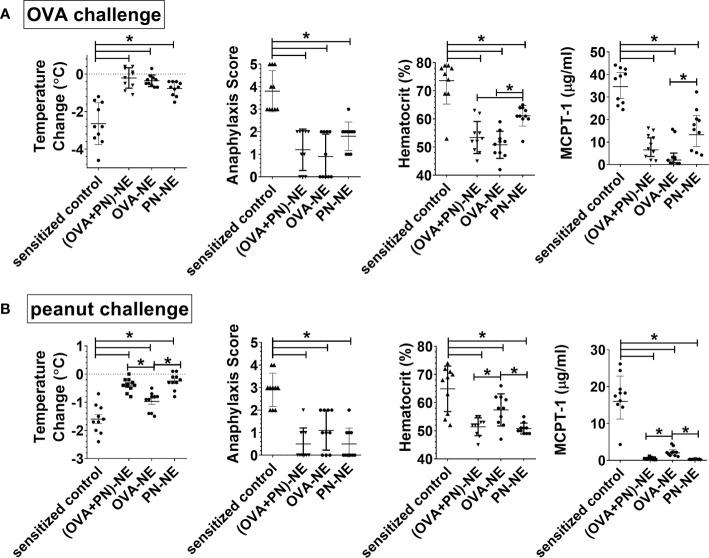
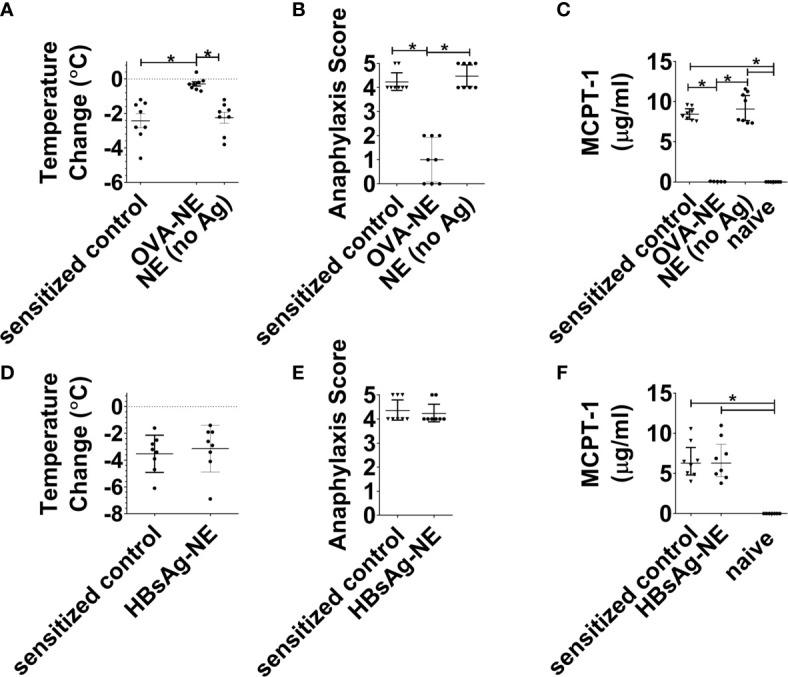
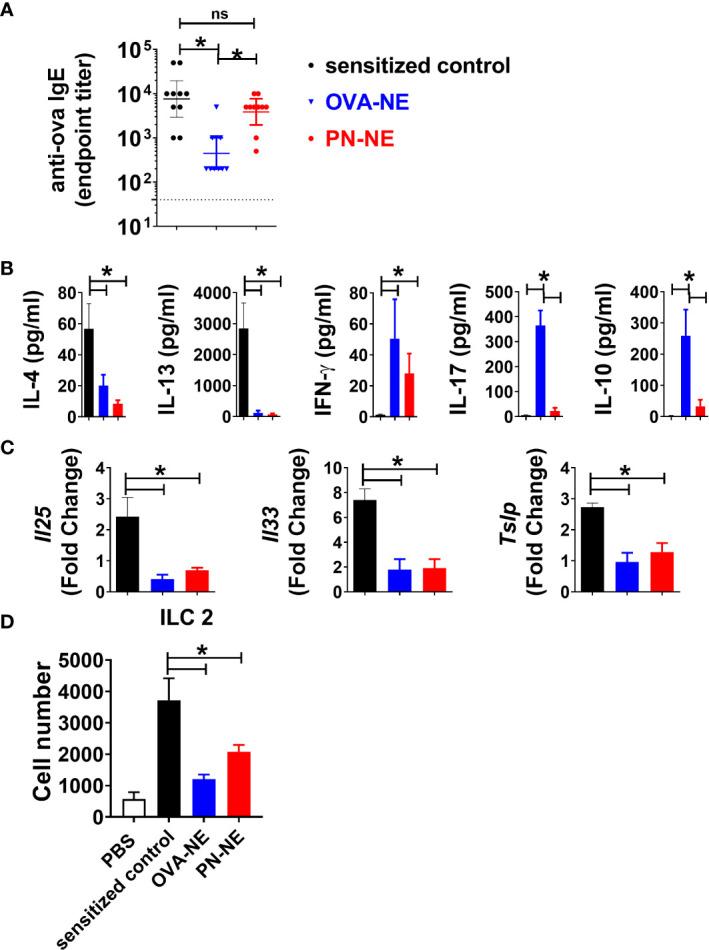
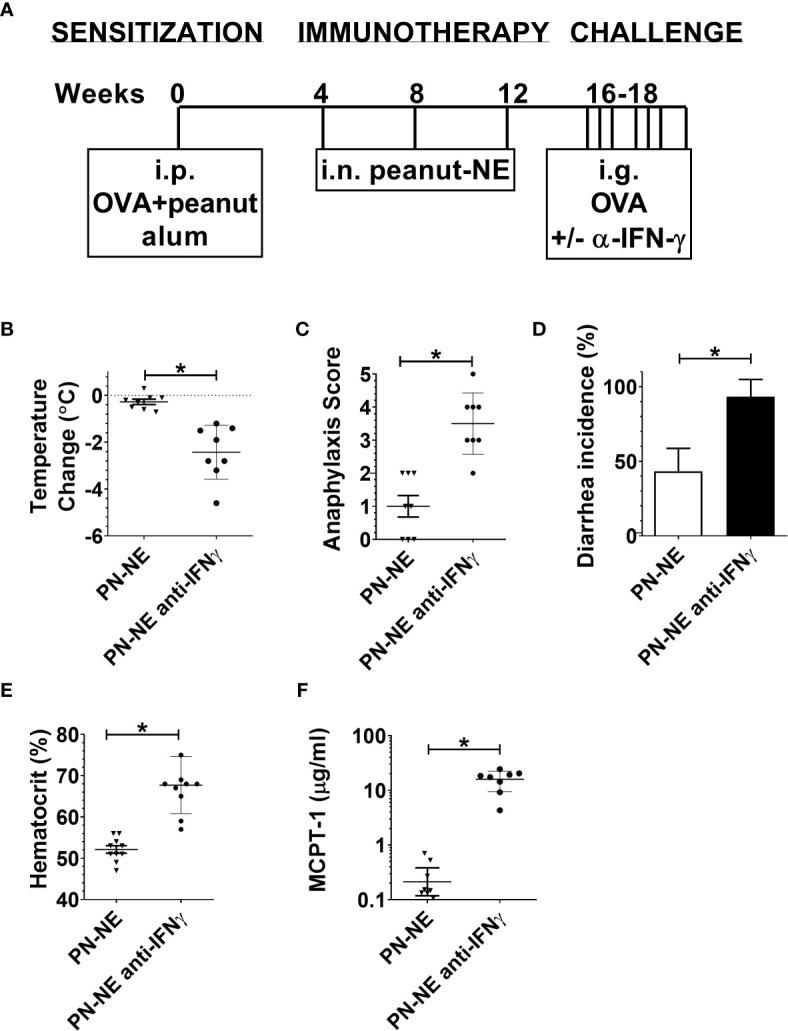
We have demonstrated that intranasal immunotherapy with allergens formulated in a nanoemulsion (NE) mucosal adjuvant suppresses Th2/IgE-mediated allergic responses and protects from allergen challenge in murine food allergy models. Protection conferred by this therapy is associated with strong suppression of allergen specific Th2 cellular immunity and increased Th1 cytokines. Here we extend these studies to examine the effect of NE-allergen immunization in mice sensitized to multiple foods. Mice were sensitized to both egg and peanut and then received NE vaccine formulated with either one or both of these allergens. The animals were then subjected to oral challenges with either egg or peanut to assess reactivity. Immunization with NE formulations containing both egg and peanut markedly reduced reactivity after oral allergen challenge with either allergen. Interestingly, mice that received the vaccine containing only peanut also had reduced reactivity to challenge with egg. Protection from oral allergen challenge was achieved despite the persistence of allergen-specific IgE and was associated with strong suppression of both Th2-polarized immune responses, alarmins and type 2 innate lymphoid cells (ILC2). NE-induced bystander suppression of reactivity required IFN-γ and the presence of an allergen in the NE vaccine. These results demonstrate that anaphylactic reactions to food allergens can be suppressed using allergen-specific immunotherapy without having to eliminate allergen-specific IgE and suggests that modulation of Th2 immunity towards one allergen may induce bystander effects that suppress reactivity to other allergens through the induction of IFN-γ and suppression of alarmins in the intestine. In addition, these data suggest that a NE vaccine for a single food allergen may lead to a global suppression of allergic responses to multiple foods.
我们已经证明,在小鼠食物过敏模型中,用纳米乳剂(NE)粘膜佐剂配制的变应原进行鼻内免疫疗法可抑制Th2/IgE介导的过敏反应,并预防变应原激发。这种疗法提供的保护与变应原特异性Th2细胞免疫的强烈抑制和Th1细胞因子的增加有关。在这里,我们扩展这些研究,以检查NE-变应原免疫对致敏于多种食物的小鼠的影响。小鼠对鸡蛋和花生均致敏,然后接受用这两种变应原中的一种或两种配制的NE疫苗。然后用鸡蛋或花生对动物进行口服激发以评估反应性。用含有鸡蛋和花生的NE制剂进行免疫,在用任何一种变应原进行口服变应原激发后,均显著降低了反应性。有趣的是,仅接受含花生疫苗的小鼠对鸡蛋激发的反应性也降低。尽管变应原特异性IgE持续存在,但仍实现了对口服变应原激发的保护,并且与Th2极化免疫反应、警报素和2型固有淋巴细胞(ILC2)的强烈抑制有关。NE诱导的旁观者反应性抑制需要IFN-γ和NE疫苗中存在变应原。这些结果表明,使用变应原特异性免疫疗法可以抑制对食物变应原的过敏反应,而不必消除变应原特异性IgE,并表明对一种变应原的Th2免疫调节可能会诱导旁观者效应,通过诱导IFN-γ和抑制肠道中的警报素,抑制对其他变应原的反应性。此外,这些数据表明,针对单一食物变应原的NE疫苗可能会导致对多种食物的过敏反应的全面抑制。


 Zotero 插件