
自发性钙波动出现在具有真实三维几何结构的薄星形胶质细胞突起中。
Spontaneous Ca Fluctuations Arise in Thin Astrocytic Processes With Real 3D Geometry.
作者信息
Héja László, Szabó Zsolt, Péter Márton, Kardos Julianna
机构信息
Functional Pharmacology Research Group, Institute of Organic Chemistry, Research Centre for Natural Sciences, Hungarian Academy of Sciences (MTA), Budapest, Hungary.
Hevesy György PhD School of Chemistry, ELTE Eötvös Loránd University, Budapest, Hungary.
出版信息
Front Cell Neurosci. 2021 Mar 1;15:617989. doi: 10.3389/fncel.2021.617989. eCollection 2021.
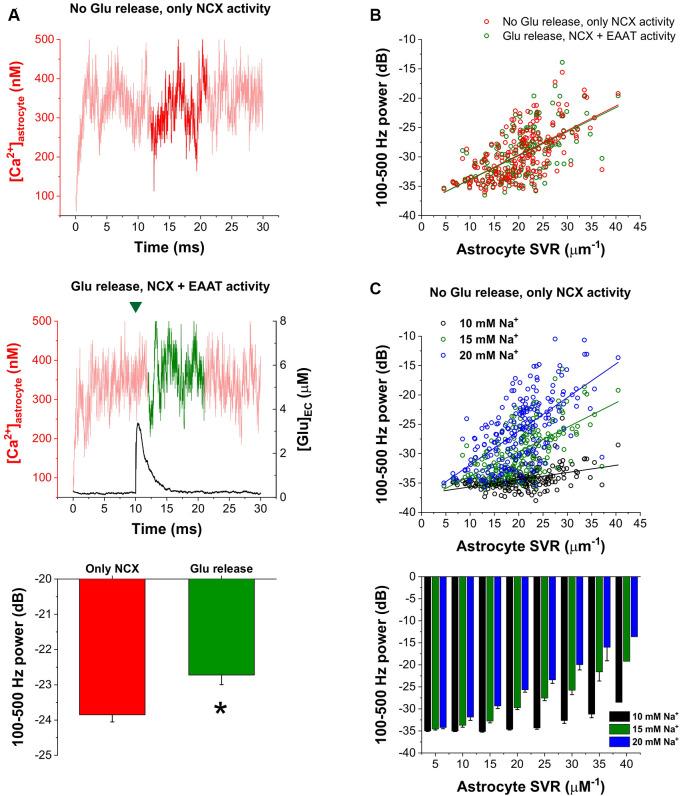
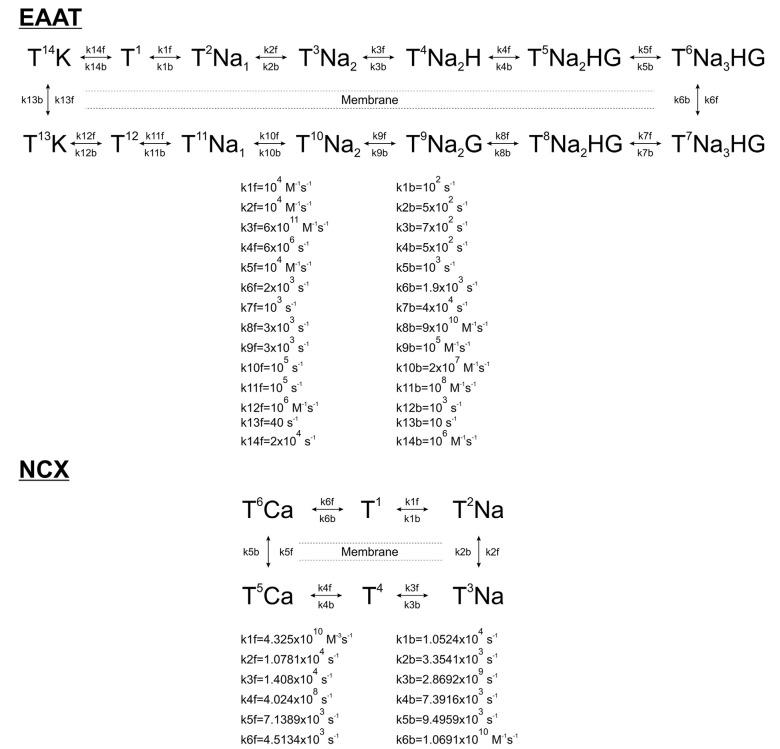
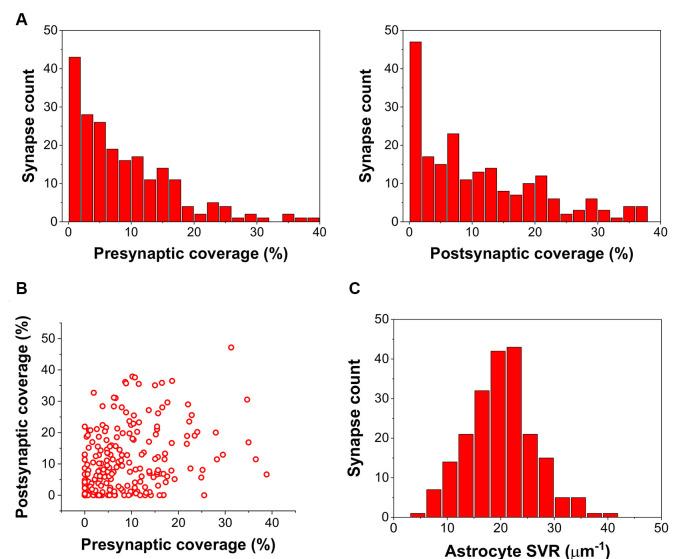
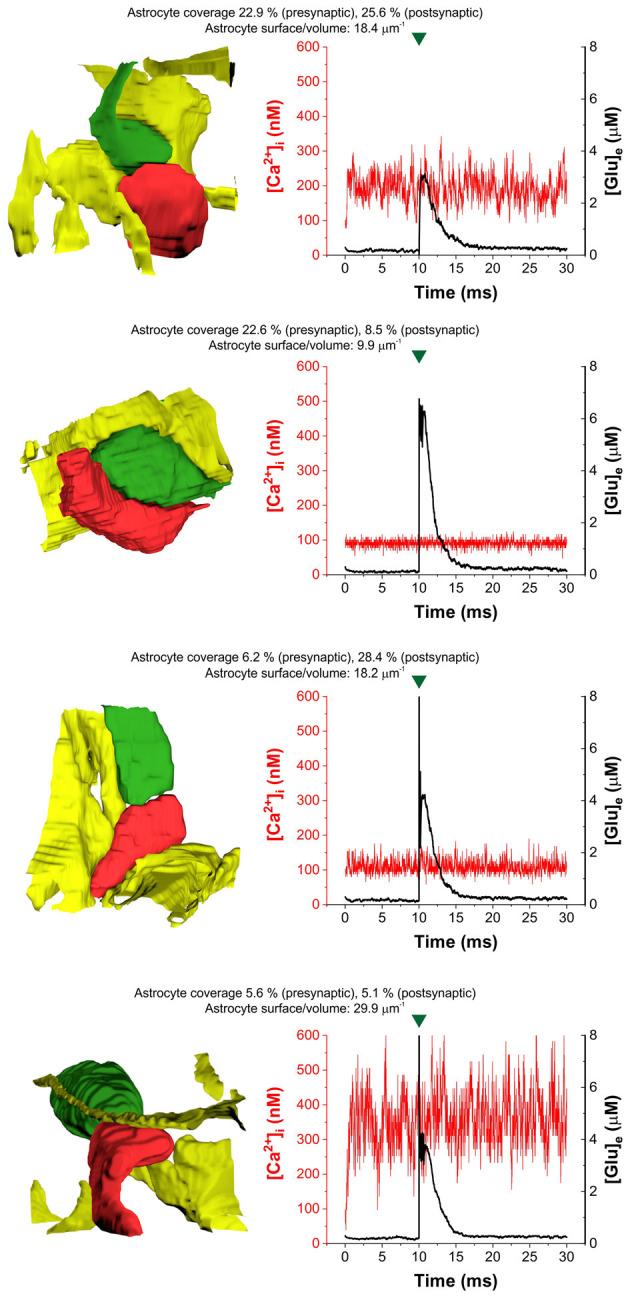
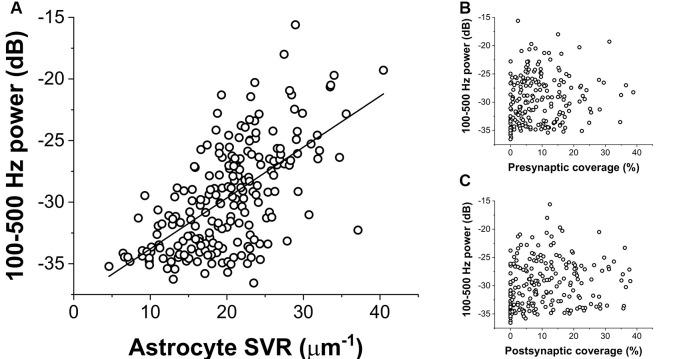
Fluctuations of cytosolic Ca concentration in astrocytes are regarded as a critical non-neuronal signal to regulate neuronal functions. Although such fluctuations can be evoked by neuronal activity, rhythmic astrocytic Ca oscillations may also spontaneously arise. Experimental studies hint that these spontaneous astrocytic Ca oscillations may lie behind different kinds of emerging neuronal synchronized activities, like epileptogenic bursts or slow-wave rhythms. Despite the potential importance of spontaneous Ca oscillations in astrocytes, the mechanism by which they develop is poorly understood. Using simple 3D synapse models and kinetic data of astrocytic Glu transporters (EAATs) and the Na/Ca exchanger (NCX), we have previously shown that NCX activity alone can generate markedly stable, spontaneous Ca oscillation in the astrocytic leaflet microdomain. Here, we extend that model by incorporating experimentally determined real 3D geometries of 208 excitatory synapses reconstructed from publicly available ultra-resolution electron microscopy datasets. Our simulations predict that the surface/volume ratio (SVR) of peri-synaptic astrocytic processes prominently dictates whether NCX-mediated spontaneous Ca oscillations emerge. We also show that increased levels of intracellular astrocytic Na concentration facilitate the appearance of Ca fluctuations. These results further support the principal role of the dynamical reshaping of astrocyte processes in the generation of intrinsic Ca oscillations and their spreading over larger astrocytic compartments.
星形胶质细胞胞质钙浓度的波动被视为调节神经元功能的关键非神经元信号。尽管这种波动可由神经元活动诱发,但有节奏的星形胶质细胞钙振荡也可能自发产生。实验研究表明,这些自发的星形胶质细胞钙振荡可能是不同类型的新兴神经元同步活动的基础,如致痫性爆发或慢波节律。尽管星形胶质细胞中自发钙振荡具有潜在的重要性,但其产生机制仍知之甚少。利用简单的三维突触模型以及星形胶质细胞谷氨酸转运体(EAATs)和钠钙交换体(NCX)的动力学数据,我们之前已经表明,仅NCX活性就能在星形胶质细胞小叶微区产生明显稳定的自发钙振荡。在此,我们通过纳入从公开可用的超分辨率电子显微镜数据集中重建的208个兴奋性突触的实验测定真实三维几何结构来扩展该模型。我们的模拟预测,突触周围星形胶质细胞突起的表面积与体积比(SVR)显著决定了NCX介导的自发钙振荡是否会出现。我们还表明,星形胶质细胞内钠离子浓度的升高促进了钙波动的出现。这些结果进一步支持了星形胶质细胞突起的动态重塑在内在钙振荡的产生及其在更大的星形胶质细胞区室中的传播中的主要作用。
 Zotero 插件