
藻类来源抗氧化剂在癌症治疗中的药用前景
Medicinal Prospects of Antioxidants From Algal Sources in Cancer Therapy.
作者信息
Ferdous Umme Tamanna, Yusof Zetty Norhana Balia
机构信息
Aquatic Animal Health and Therapeutics Laboratory (AquaHealth), Institute of Bioscience, Universiti Putra Malaysia, Selangor, Malaysia.
Faculty of Biotechnology and Biomolecular Sciences, Department of Biochemistry, Universiti Putra Malaysia, Selangor, Malaysia.
出版信息
Front Pharmacol. 2021 Mar 5;12:593116. doi: 10.3389/fphar.2021.593116. eCollection 2021.
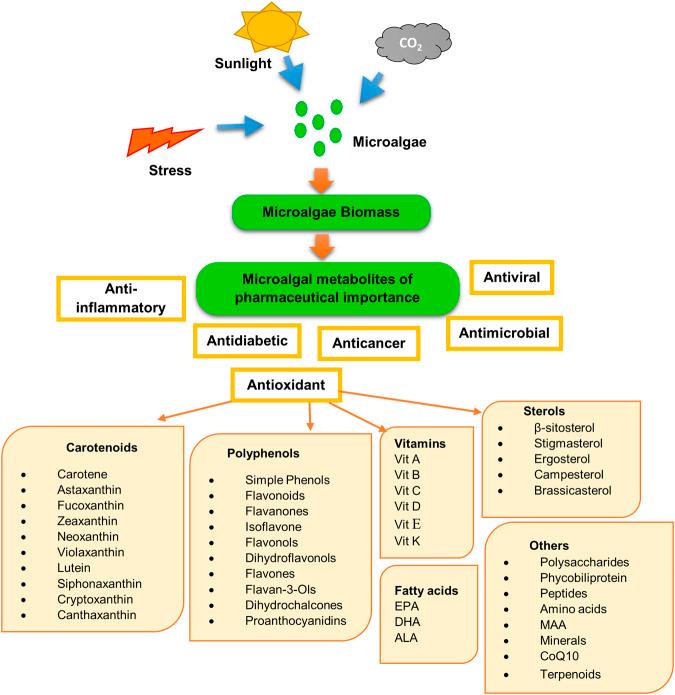
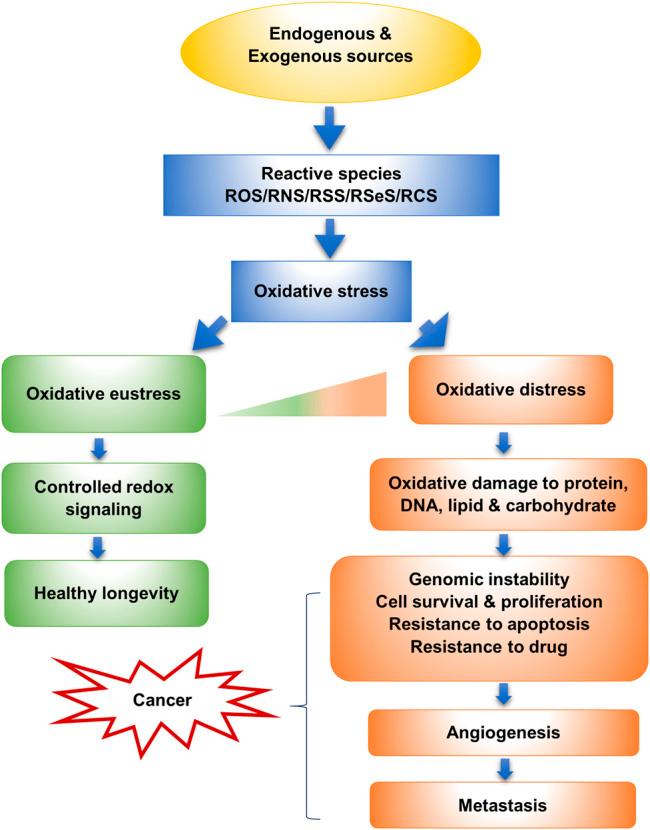
Though cancer therapeutics can successfully eradicate cancerous cells, the effectiveness of these medications is mostly restricted to several deleterious side effects. Therefore, to alleviate these side effects, antioxidant supplementation is often warranted, reducing reactive species levels and mitigating persistent oxidative damage. Thus, it can impede the growth of cancer cells while protecting the normal cells simultaneously. Moreover, antioxidant supplementation alone or in combination with chemotherapeutics hinders further tumor development, prevents chemoresistance by improving the response to chemotherapy drugs, and enhances cancer patients' quality of life by alleviating side effects. Preclinical and clinical studies have been revealed the efficacy of using phytochemical and dietary antioxidants from different sources in treating chemo and radiation therapy-induced toxicities and enhancing treatment effectiveness. In this context, algae, both micro and macro, can be considered as alternative natural sources of antioxidants. Algae possess antioxidants from diverse groups, which can be exploited in the pharmaceutical industry. Despite having nutritional benefits, investigation and utilization of algal antioxidants are still in their infancy. This review article summarizes the prospective anticancer effect of twenty-three antioxidants from microalgae and their potential mechanism of action in cancer cells, as well as usage in cancer therapy. In addition, antioxidants from seaweeds, especially from edible species, are outlined, as well.
尽管癌症治疗药物能够成功根除癌细胞,但这些药物的有效性大多受限于一些有害的副作用。因此,为了减轻这些副作用,通常需要补充抗氧化剂,以降低活性物质水平并减轻持续性氧化损伤。这样一来,它既能抑制癌细胞的生长,同时又能保护正常细胞。此外,单独补充抗氧化剂或与化疗药物联合使用,可阻碍肿瘤的进一步发展,通过提高对化疗药物的反应来防止化疗耐药,并通过减轻副作用来提高癌症患者的生活质量。临床前和临床研究已经揭示了使用来自不同来源的植物化学物质和膳食抗氧化剂治疗化疗和放疗引起的毒性以及提高治疗效果的功效。在这种背景下,微型和大型藻类都可被视为抗氧化剂的替代性天然来源。藻类含有多种不同类型的抗氧化剂,可用于制药行业。尽管藻类具有营养价值,但对藻类抗氧化剂的研究和利用仍处于起步阶段。这篇综述文章总结了来自微藻的23种抗氧化剂的潜在抗癌作用及其在癌细胞中的潜在作用机制,以及它们在癌症治疗中的应用。此外,还概述了来自海藻,特别是可食用海藻种类的抗氧化剂。
 Zotero 插件