
精神分裂症患者与非精神疾病对照受试者血浆中神经元和星形胶质细胞来源的外泌体淀粉样β蛋白1-42、淀粉样β蛋白1-40以及磷酸化tau蛋白水平:与认知功能和精神病理学的关系
Plasma Levels of Neuron- and Astrocyte-Derived Exosomal Amyloid Beta1-42, Amyloid Beta1-40, and Phosphorylated Tau Levels in Schizophrenia Patients and Non-psychiatric Comparison Subjects: Relationships With Cognitive Functioning and Psychopathology.
作者信息
Lee Ellen E, Winston-Gray Charisse, Barlow James W, Rissman Robert A, Jeste Dilip V
机构信息
Department of Psychiatry, University of California San Diego, San Diego, CA, United States.
Veterans Affairs San Diego Healthcare System, La Jolla, CA, United States.
出版信息
Front Psychiatry. 2021 Mar 2;11:532624. doi: 10.3389/fpsyt.2020.532624. eCollection 2020.
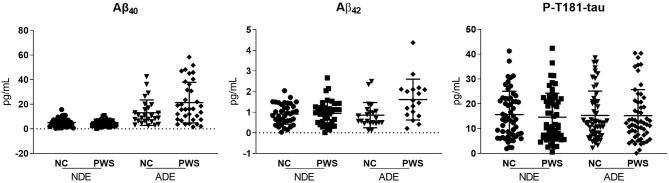
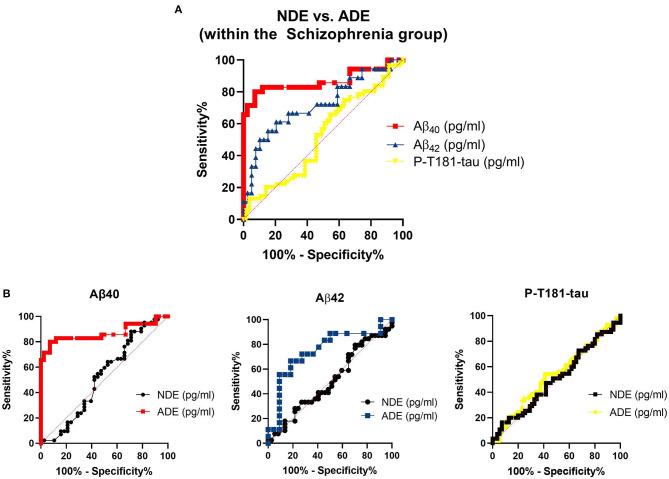
Cognitive deficits in people with schizophrenia (PWS) are a major predictor of disability and functioning, yet the underlying pathophysiology remains unclear. A possible role of amyloid and tau biomarkers (hallmarks of Alzheimer's disease) is still speculative in schizophrenia. Exosomes or extracellular vesicles, involved with cell-to-cell communication and waste removal, can be used to assay brain-based proteins from peripheral blood. To our knowledge, this is the first study of exosomal amyloid and tau protein levels in PWS. This cross-sectional study included 60 PWS and 60 age- and sex-comparable non-psychiatric comparison subjects (NCs), age range 26-65 years. Assessments of global cognitive screening, executive functioning, psychopathology, and physical measures were conducted. Exosomes were extracted and precipitated from fasting plasma and identified as neuron-derived exosomes (NDEs) or astrocyte-derived exosomes (ADEs). Human-specific ELISAs were used to assay levels of amyloid-beta 1-42 (Aβ42), amyloid-beta 1-40 (Aβ40), and phosphorylated T181 tau (P-T181-tau). Plasma assays for aging biomarkers (C-reactive protein and F2-isoprostanes) were also performed. ADE-Aβ42 levels were higher in PWS compared to NCs, though the other exosomal markers were similar between the two groups. Higher ADE-P-T181-tau levels were associated with worse executive functioning. Among PWS, higher ADE-P-T181-tau levels were associated with less severe negative symptoms and increased F2-isoprostane levels. Astrocyte-derived Aβ marker levels were sensitive and specific in differentiating between diagnostic groups. Among PWS, Aβ40 levels differed most by exosomal origin. Exosomal markers may provide novel insights into brain-based processes (e.g., aging, oxidative stress) from peripheral blood samples.
精神分裂症患者(PWS)的认知缺陷是残疾和功能状况的主要预测指标,但其潜在的病理生理学仍不清楚。淀粉样蛋白和tau生物标志物(阿尔茨海默病的标志)在精神分裂症中的可能作用仍具有推测性。外泌体或细胞外囊泡参与细胞间通讯和废物清除,可用于检测外周血中基于脑的蛋白质。据我们所知,这是第一项关于PWS中外泌体淀粉样蛋白和tau蛋白水平的研究。这项横断面研究纳入了60名PWS和60名年龄及性别匹配的非精神科对照受试者(NCs),年龄范围为26至65岁。进行了整体认知筛查、执行功能、精神病理学和身体测量评估。从空腹血浆中提取并沉淀外泌体,并将其鉴定为神经元来源的外泌体(NDEs)或星形胶质细胞来源的外泌体(ADEs)。使用人特异性酶联免疫吸附测定法检测淀粉样β蛋白1-42(Aβ42)、淀粉样β蛋白1-40(Aβ40)和磷酸化T181 tau(P-T181-tau)的水平。还进行了衰老生物标志物(C反应蛋白和F2-异前列腺素)的血浆检测。与NCs相比,PWS中的ADE-Aβ42水平更高,尽管两组之间的其他外泌体标志物相似。较高的ADE-P-T181-tau水平与较差的执行功能相关。在PWS中,较高的ADE-P-T181-tau水平与较轻的阴性症状和升高的F2-异前列腺素水平相关。星形胶质细胞来源的Aβ标志物水平在区分诊断组方面具有敏感性和特异性。在PWS中,Aβ40水平因外泌体来源的不同而差异最大。外泌体标志物可能为从外周血样本中了解基于脑的过程(如衰老、氧化应激)提供新的见解。



 Zotero 插件