
基于微管蛋白多态性指纹图谱的浮萍物种基因分型及种间杂交发现
Duckweed Species Genotyping and Interspecific Hybrid Discovery by Tubulin-Based Polymorphism Fingerprinting.
作者信息
Braglia Luca, Lauria Massimiliano, Appenroth Klaus J, Bog Manuela, Breviario Diego, Grasso Aldo, Gavazzi Floriana, Morello Laura
机构信息
Institute of Agricultural Biology and Biotechnology, National Research Council, Milan, Italy.
Institute of Plant Physiology, Friedrich Schiller University Jena, Jena, Germany.
出版信息
Front Plant Sci. 2021 Mar 8;12:625670. doi: 10.3389/fpls.2021.625670. eCollection 2021.
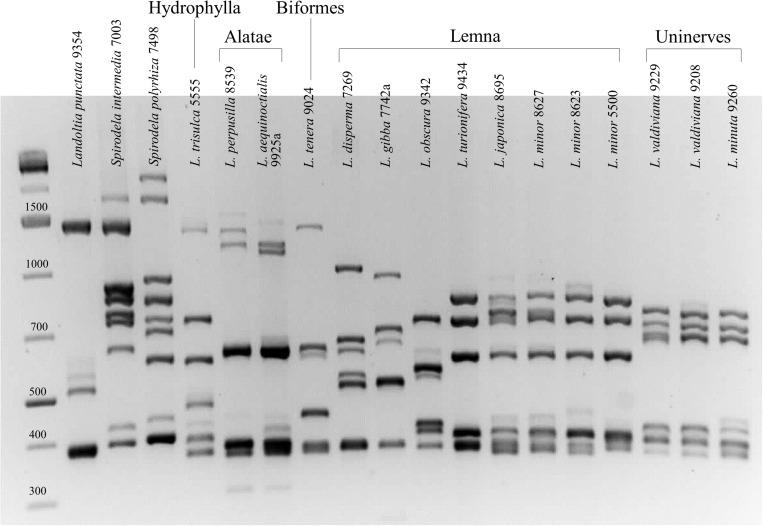
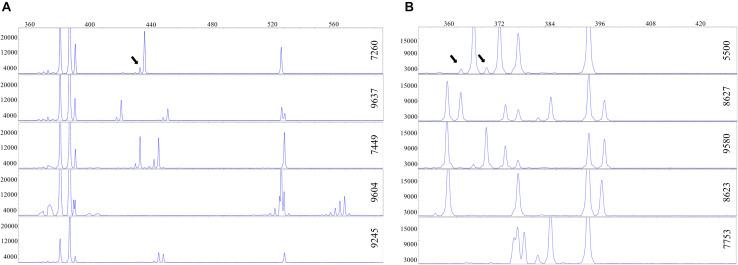
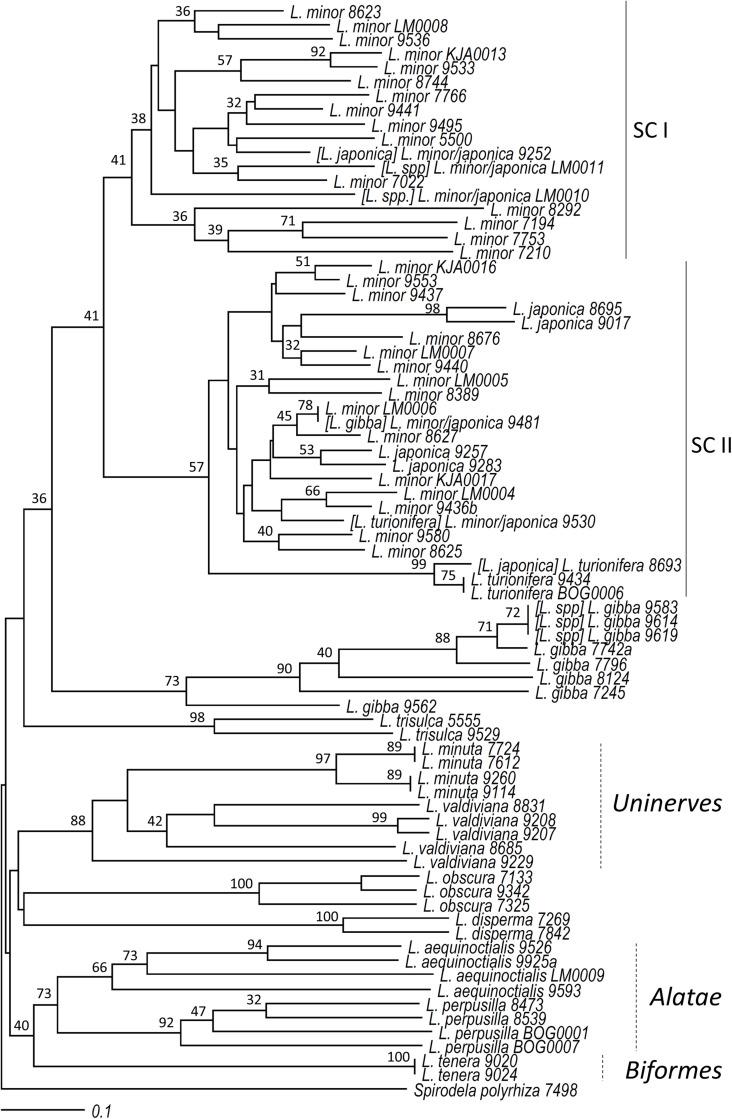
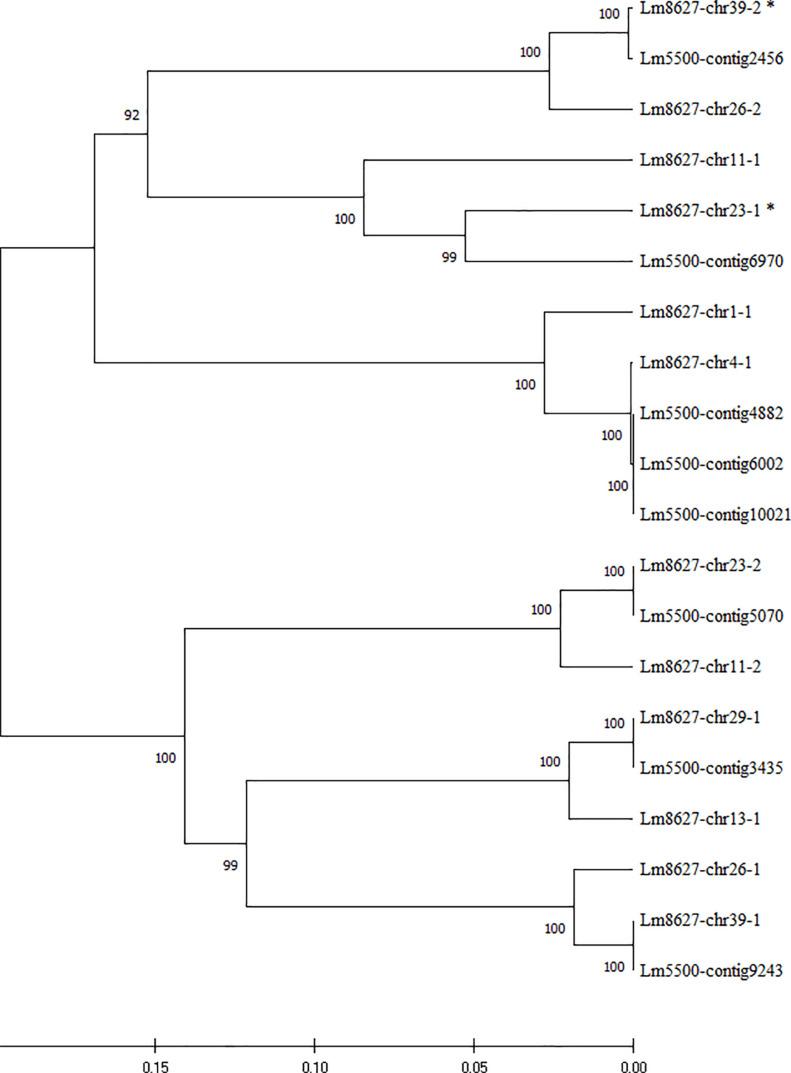
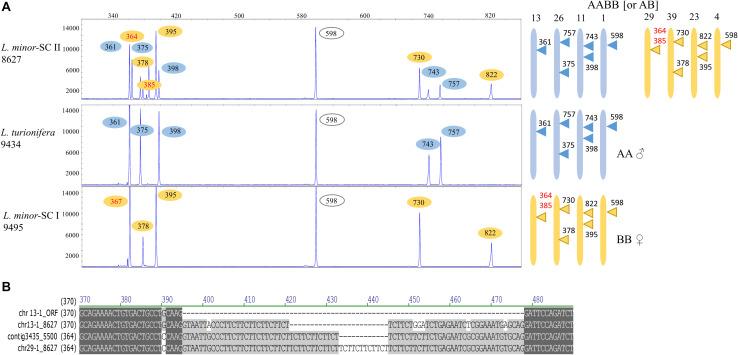
Duckweeds (Lemnaceae) are the smallest and fastest-growing angiosperms. This feature, together with high starch production and good nutritional properties, makes them suitable for several applications, including wastewater treatment, bioenergy production, or feed and food supplement. Due to their reduced morphology and great similarity between diverse species, taxonomic identification of duckweeds is a challenging issue even for experts. Among molecular genotyping methods, DNA barcoding is the most useful tool for species identification without a need for cluster analysis. The combination of two plastid barcoding loci is now considered the gold standard for duckweed classification. However, not all species can be defined with confidence by these markers, and a fast identification method able to solve doubtful cases is missing. Here we show the potential of tubulin-based polymorphism (TBP), a molecular marker based on the intron length polymorphisms of β-tubulin loci, in the genomic profiling of the genera , , and . Ninety-four clones were analyzed, including at least two representatives of each species of the three genera, with a special focus on the very heterogeneous species . We showed that a single PCR amplification with universal primers, followed by agarose gel analysis, was able to provide distinctive fingerprinting profiles for 10 out of 15 species. Cluster analysis of capillary electrophoresis-TBP data provided good separation for the remaining species, although the relationship between and was not fully resolved. However, an accurate comparison of TBP profiles provided evidence for the unexpected existence of intraspecific hybrids between and , as further confirmed by amplified fragment length polymorphism and sequence analysis of a specific β-tubulin locus. Such hybrids could possibly correspond to , as originally suggested by E. Landolt. The discovery of interspecific hybrids opens a new perspective to understand the speciation mechanisms in the family of duckweeds.
浮萍(浮萍科)是最小且生长最快的被子植物。这一特性,连同其高淀粉产量和良好的营养特性,使其适用于多种应用,包括废水处理、生物能源生产或饲料及食品补充剂。由于其形态简化且不同物种间极为相似,即使对于专家而言,浮萍的分类鉴定也是一个具有挑战性的问题。在分子基因分型方法中,DNA条形码是无需聚类分析即可进行物种鉴定的最有用工具。两个质体条形码位点的组合现在被认为是浮萍分类的金标准。然而,并非所有物种都能通过这些标记明确界定,并且缺少一种能够解决疑难案例的快速鉴定方法。在此,我们展示了基于微管蛋白的多态性(TBP)的潜力,TBP是一种基于β -微管蛋白基因座内含子长度多态性的分子标记,可用于 属、 属和 属的基因组分析。分析了94个克隆,包括这三个属中每个物种的至少两个代表,特别关注非常多样化的 物种。我们表明,使用通用引物进行一次PCR扩增,随后进行琼脂糖凝胶分析,能够为15个物种中的10个提供独特的指纹图谱。毛细管电泳 - TBP数据的聚类分析为其余物种提供了良好的分离效果,尽管 属和 属之间的关系尚未完全解析。然而,TBP图谱的精确比较为 属和 属之间意外存在种内杂交种提供了证据,通过特定β -微管蛋白基因座的扩增片段长度多态性和序列分析进一步证实了这一点。这种杂交种可能对应于E. Landolt最初提出的 。种间杂交种的发现为理解浮萍科的物种形成机制开辟了新的视角。

 Zotero 插件