
可持续增材制造:聚对苯二甲酸乙二醇酯在多次回收过程中的力学响应。
Sustainable Additive Manufacturing: Mechanical Response of Polyethylene Terephthalate Glycol over Multiple Recycling Processes.
作者信息
Vidakis Nectarios, Petousis Markos, Tzounis Lazaros, Grammatikos Sotirios A, Porfyrakis Emmanouil, Maniadi Athena, Mountakis Nikolaos
机构信息
Mechanical Engineering Department, Hellenic Mediterranean University, 71410 Heraklion, Greece.
Department of Materials Science and Engineering, University of Ioannina, 45110 Ioannina, Greece.
出版信息
Materials (Basel). 2021 Mar 2;14(5):1162. doi: 10.3390/ma14051162.
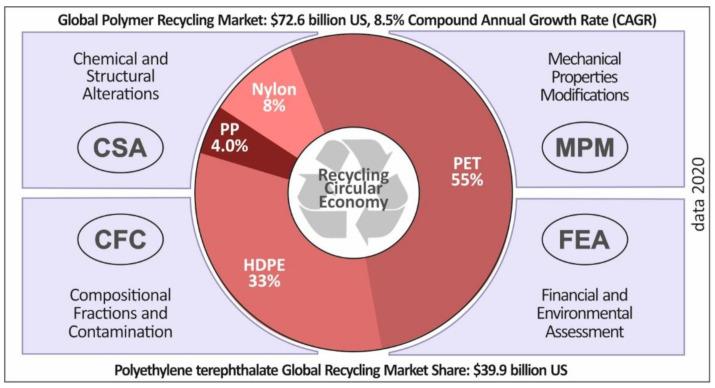
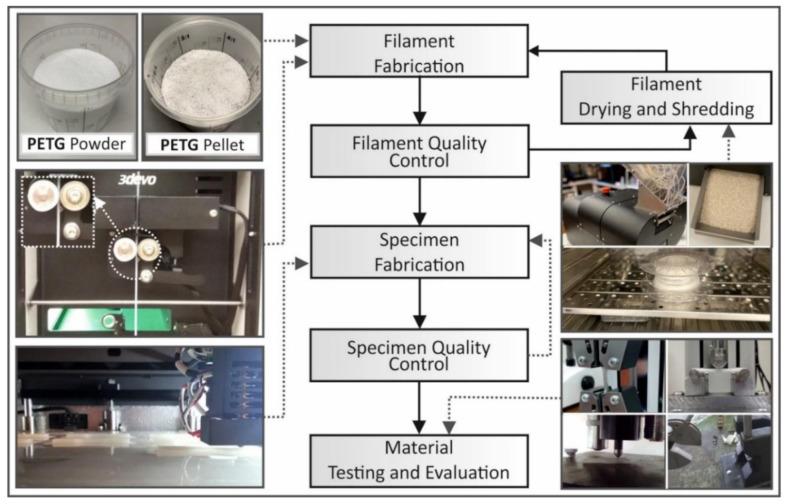
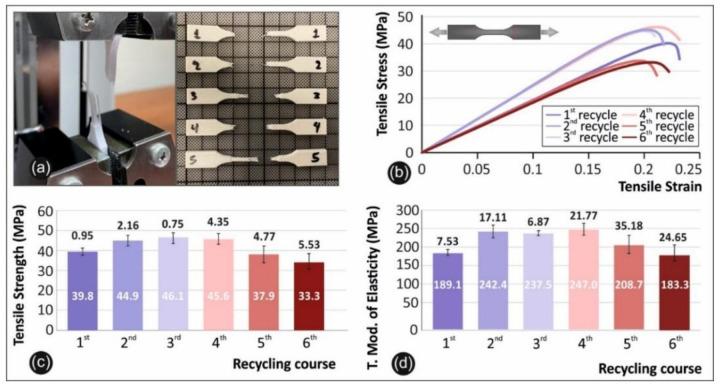
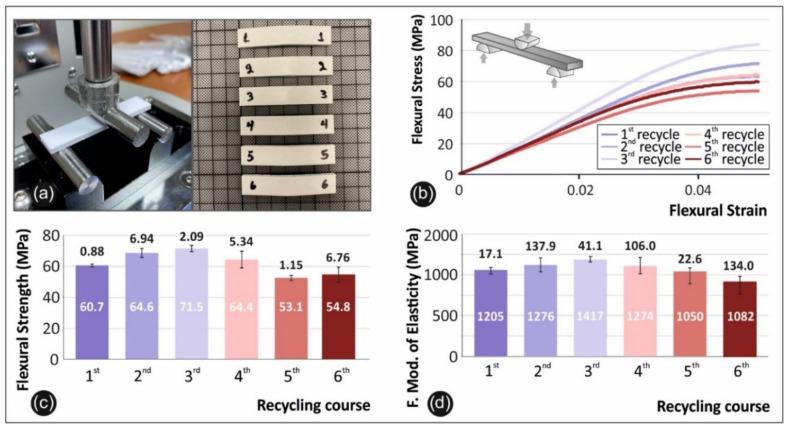
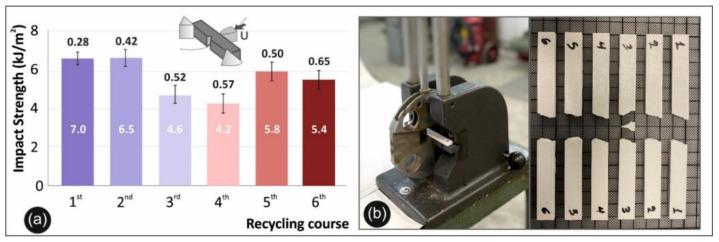
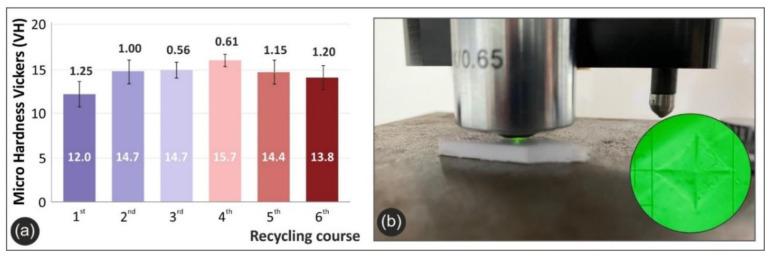
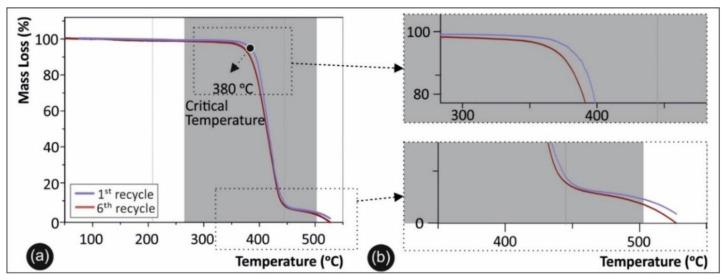
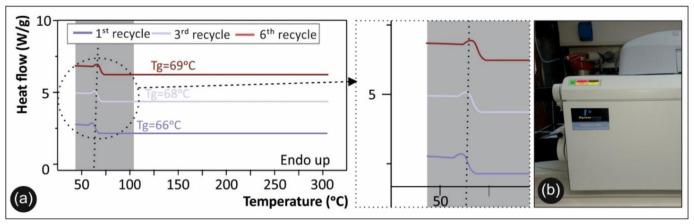
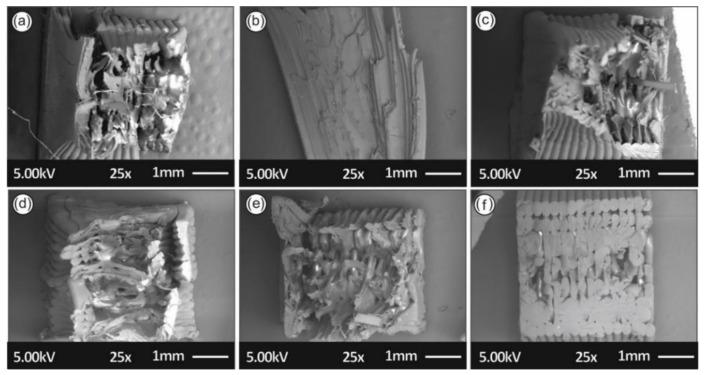
The continuous demand for thermoplastic polymers in a great variety of applications, combined with an urgent need to minimize the quantity of waste for a balanced energy-from-waste strategy, has led to increasing scientific interest in developing new recycling processes for plastic products. Glycol-modified polyethylene terephthalate (PETG) is known to have some enhanced properties as compared to polyethylene terephthalate (PET) homopolymer; this has recently attracted the interest from the fused filament fabrication (FFF) three-dimensional (3D) printing community. PET has shown a reduced ability for repeated recycling through traditional processes. Herein, we demonstrate the potential for using recycled PETG in consecutive 3D printing manufacturing processes. Distributed recycling additive manufacturing (DRAM)-oriented equipment was chosen in order to test the mechanical and thermal response of PETG material in continuous recycling processes. Tensile, flexure, impact strength, and Vickers micro-hardness tests were carried out for six (6) cycles of recycling. Finally, Raman spectroscopy as well as thermal and morphological analyses via scanning electron microscopy (SEM) fractography were carried out. In general, the results revealed a minor knockdown effect on the mechanical properties as well as the thermal properties of PETG following the process proposed herein, even after six rounds of recycling.
对热塑性聚合物在各种应用中的持续需求,加上迫切需要尽量减少废物量以实现平衡的垃圾能源战略,引发了科学界对开发塑料制品新回收工艺的日益浓厚兴趣。与聚对苯二甲酸乙二酯(PET)均聚物相比,二醇改性聚对苯二甲酸乙二酯(PETG)具有一些增强性能;这最近引起了熔融长丝制造(FFF)三维(3D)打印领域的关注。PET通过传统工艺进行重复回收的能力已有所下降。在此,我们展示了在连续3D打印制造工艺中使用回收PETG的潜力。为了测试PETG材料在连续回收过程中的机械和热响应,选择了面向分布式回收增材制造(DRAM)的设备。对回收的六个(6)循环进行了拉伸、弯曲、冲击强度和维氏显微硬度测试。最后,进行了拉曼光谱分析以及通过扫描电子显微镜(SEM)断口分析进行的热分析和形态分析。总体而言,结果表明,即使经过六轮回收,按照本文提出的工艺,PETG的机械性能和热性能也仅受到轻微的降低影响。



 Zotero 插件