
与参与自定节奏运动的同龄人相比,参与团队运动的儿童表现出更卓越的执行功能。
Children Involved in Team Sports Show Superior Executive Function Compared to Their Peers Involved in Self-Paced Sports.
作者信息
De Waelle Silke, Laureys Felien, Lenoir Matthieu, Bennett Simon J, Deconinck Frederik J A
机构信息
Department of Movement and Sports Sciences, Ghent University, 9000 Ghent, Belgium.
Research Institute for Sport and Exercise Sciences, Liverpool John Moores University, Liverpool L3 3AF, UK.
出版信息
Children (Basel). 2021 Mar 30;8(4):264. doi: 10.3390/children8040264.
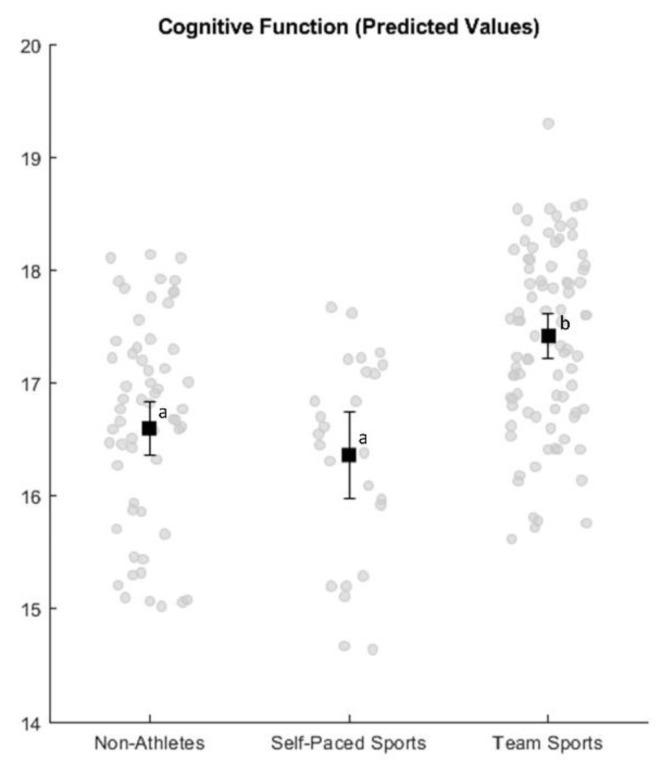
Children's motor and cognitive functions develop rapidly during childhood. Physical activity and executive function are intricately linked during this important developmental period, with physical activity interventions consistently proving to benefit children's executive function. However, it is less clear which type of physical activity shows the strongest associations with executive function in children. Therefore, this study compared executive function performance of children aged 8 to 12 that either participated in team sports or self-paced sports or were not involved in any kind of organized sports (non-athletes). Results demonstrate that children participating in team sports show superior executive function compared to children participating in self-paced sports and non-athletes. Importantly, children participating in self-paced sports do not outperform non-athletes when it comes to executive function. This study is the first to show that even at a very young age, team sports athletes outperform athletes from self-paced sports as well as non-athletes on a multifaceted and comprehensive test battery for executive function. Furthermore, our findings support the hypothesis that cognitively engaging physical activity, such as participation in team sports, might show stronger associations with executive functioning compared to other types of sports and physical activity.
儿童的运动和认知功能在童年时期发展迅速。在这个重要的发育阶段,身体活动与执行功能密切相关,身体活动干预一直被证明对儿童的执行功能有益。然而,哪种类型的身体活动与儿童的执行功能关联最强尚不清楚。因此,本研究比较了8至12岁参与团队运动、自主节奏运动或未参与任何有组织运动(非运动员)的儿童的执行功能表现。结果表明,与参与自主节奏运动的儿童和非运动员相比,参与团队运动的儿童表现出更优的执行功能。重要的是,在执行功能方面,参与自主节奏运动的儿童并不比非运动员表现更好。本研究首次表明,即使在非常年幼的年龄,团队运动运动员在多方面和全面的执行功能测试组合中也优于自主节奏运动的运动员以及非运动员。此外,我们的研究结果支持这样一种假设,即与其他类型的运动和身体活动相比,认知参与度高的身体活动,如参与团队运动,可能与执行功能有更强的关联。
 Zotero 插件