
用于监测呼吸活动的低功耗非接触式生物阻抗传感器。
Low Power Contactless Bioimpedance Sensor for Monitoring Breathing Activity.
机构信息
Computer Systems Department, Jožef Stefan Institute, 1000 Ljubljana, Slovenia.
出版信息
Sensors (Basel). 2021 Mar 16;21(6):2081. doi: 10.3390/s21062081.
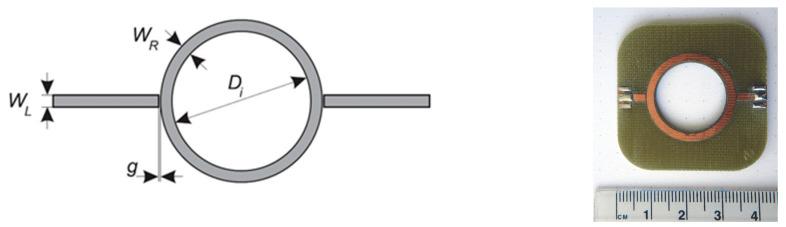
An electronic circuit for contactless detection of impedance changes in a tissue is presented. It operates on the principle of resonant frequency change of the resonator having the observed tissue as a dielectric. The operating frequency reflects the tissue dielectric properties (i.e., the tissue composition and on the tissue physiological changes). The sensor operation was tested within a medical application by measuring the breathing of a patient, which was an easy detectable physiological process. The advantage over conventional contact bioimpedance measurement methods is that no direct contact between the resonator and the body is required. Furthermore, the sensor's wide operating range, ability to adapt to a broad range of measured materials, fast response, low power consumption, and small outline dimensions enables applications not only in the medical sector, but also in other domains. This can be extended, for example, to food industry or production maintenance, where the observed phenomena are reflected in dynamic dielectric properties of the observed object or material.
提出了一种用于检测组织中阻抗变化的非接触式电子电路。它基于具有被观察组织作为电介质的谐振器的谐振频率变化的原理运行。工作频率反映了组织的介电特性(即组织组成和组织生理变化)。通过测量患者的呼吸,在医疗应用中测试了传感器的工作情况,呼吸是一种容易检测到的生理过程。与传统的接触式生物阻抗测量方法相比,其优势在于不需要谐振器与身体直接接触。此外,传感器的宽工作范围、适应广泛的测量材料的能力、快速响应、低功耗和小外形尺寸使其不仅可以应用于医疗领域,还可以应用于其他领域。例如,可以将其扩展到食品工业或生产维护领域,其中观察到的现象反映在被观察对象或材料的动态介电特性中。


 Zotero 插件