
生牛乳诱导的小鼠食物过敏症状保护作用与微生物群落结构的变化有关。
Raw Milk-Induced Protection against Food Allergic Symptoms in Mice Is Accompanied by Shifts in Microbial Community Structure.
机构信息
Division of Pharmacology, Faculty of Science, Utrecht Institute for Pharmaceutical Sciences, Utrecht University, 3584 CG Utrecht, The Netherlands.
Rush Center for Integrated Microbiome and Chronobiology Research, Rush Medical College, Rush University Medical Center, Chicago, IL 60612, USA.
出版信息
Int J Mol Sci. 2021 Mar 26;22(7):3417. doi: 10.3390/ijms22073417.
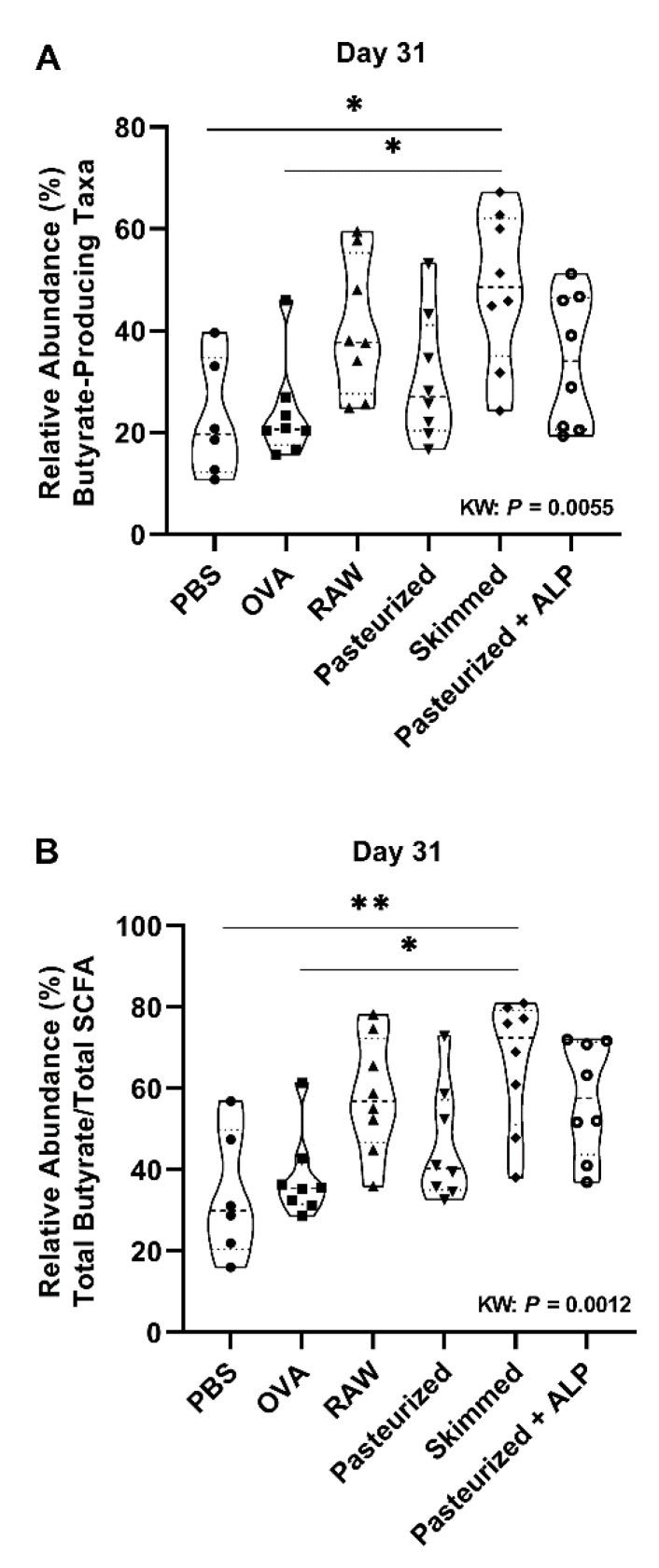
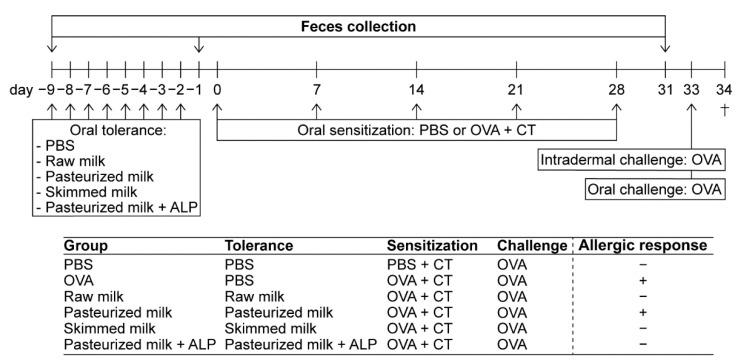
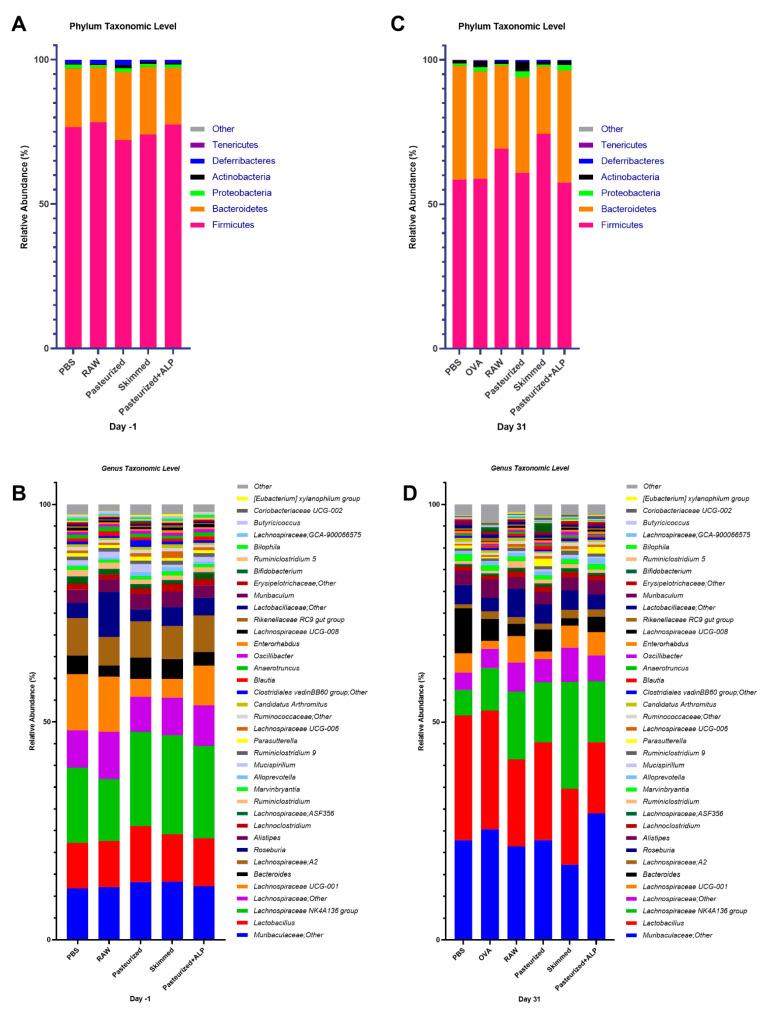
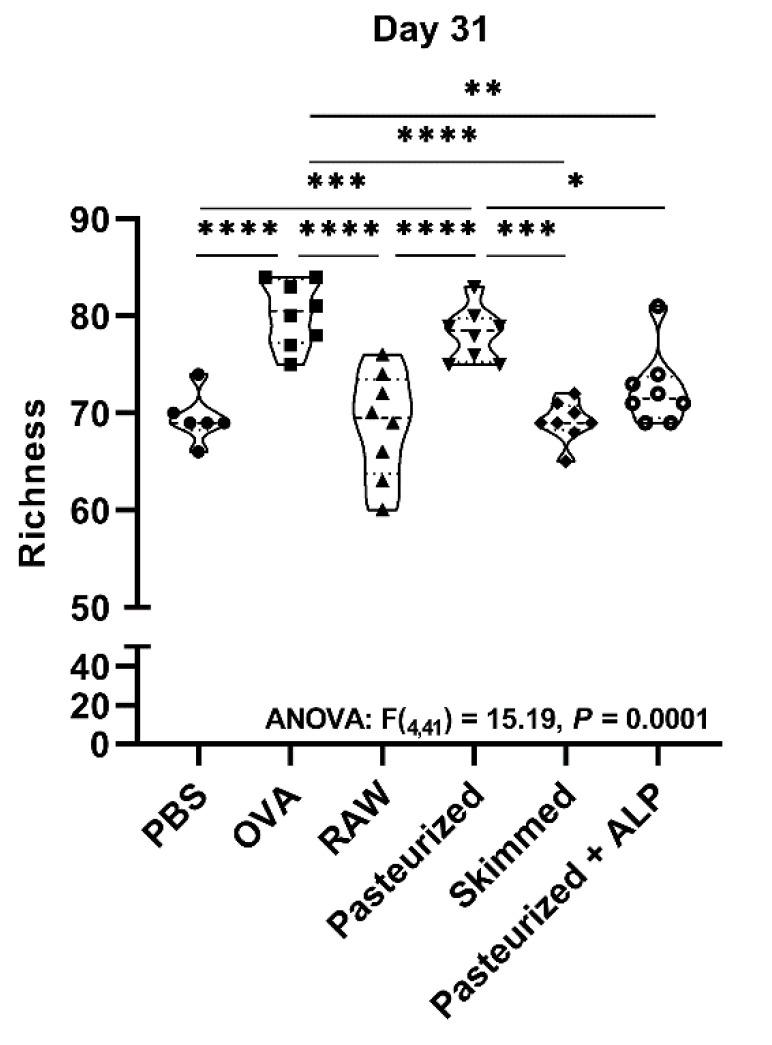
The mechanism underlying the allergy-protective effects of raw cow's milk is still unknown, but the modulation of the gut microbiome may play a role. The effects of consuming raw cow's milk or processed milk on fecal microbial communities were therefore characterized in an experimental murine model. C3H/HeOuJ mice were treated with raw milk, pasteurized milk, skimmed raw milk, pasteurized milk supplemented with alkaline phosphatase (ALP), or phosphate-buffered saline (PBS) for eight days prior to sensitization and challenge with ovalbumin (OVA). Fecal samples were collected after milk exposure and after OVA sensitization, and microbiomes were characterized using 16S ribosomal RNA gene amplicon sequencing. Treatment with raw milk prior to OVA sensitization increased the relative abundance of putative butyrate-producing bacteria from the taxa UCG-001, UCG-008, and 5 (Clostridial clusters XIVa and IV), while it decreased the relative abundance of Proteobacterial genera such as , a putative pro-inflammatory bacterial genus. This effect was observed after eight days of raw milk exposure and became more pronounced five weeks later, after allergic sensitization in the absence of milk. Similar trends were observed after treatment with skimmed raw milk. Conversely, the feeding of pasteurized milk led to a loss of allergy protection and a putative dysbiotic microbiome. The addition of ALP to pasteurized milk restored the protective effect observed with raw milk and mitigated some of the microbial community alterations associated with milk pasteurization. Raw milk-induced protection against food allergic symptoms in mice is accompanied by an increased relative abundance of putative butyrate-producing Clostridiales and a decreased relative abundance of putative pro-inflammatory Proteobacteria. Given the safety concerns regarding raw milk consumption, this knowledge is key for the development of new, microbiologically safe, preventive strategies to reduce the incidence of allergic diseases.
生牛乳抗过敏作用的机制尚不清楚,但肠道微生物组的调节可能发挥作用。因此,在实验性小鼠模型中研究了摄入生牛乳或加工牛乳对粪便微生物群落的影响。在致敏和卵清蛋白(OVA)挑战之前,用生牛乳、巴氏杀菌乳、脱脂生牛乳、添加碱性磷酸酶(ALP)的巴氏杀菌乳或磷酸盐缓冲盐水(PBS)处理 C3H/HeOuJ 小鼠 8 天。在牛奶暴露后和 OVA 致敏后收集粪便样本,并使用 16S 核糖体 RNA 基因扩增子测序对微生物组进行特征分析。在 OVA 致敏前用生牛乳处理可增加假定的丁酸产生菌的相对丰度,来自分类群 UCG-001、UCG-008 和 5(梭菌簇 XIVa 和 IV),同时降低假定的促炎细菌属的相对丰度,如 。这种作用在生牛乳暴露 8 天后观察到,在没有牛奶的情况下,在过敏致敏 5 周后更为明显。在用脱脂生牛乳处理后也观察到类似的趋势。相反,巴氏杀菌乳的喂养导致过敏保护丧失和假定的菌群失调。向巴氏杀菌乳中添加 ALP 可恢复与生牛乳观察到的保护作用,并减轻与牛奶巴氏杀菌相关的一些微生物群落改变。生牛乳诱导的对食物过敏症状的保护作用伴随着假定丁酸产生梭菌的相对丰度增加和假定促炎变形菌的相对丰度降低。鉴于生牛乳消费的安全问题,这些知识是开发新的、微生物安全的预防策略以降低过敏性疾病发生率的关键。
 Zotero 插件