
与非工业化人群中 sp. 和 spp. 定植相关的人类肠道微生物群变化。
Changes in the Human Gut Microbiota Associated With Colonization by sp. and spp. in Non-Industrialized Populations.
机构信息
Gènes Diffusion, Douai, France.
PEGASE-Biosciences, Institut Pasteur de Lille, Lille, France.
出版信息
Front Cell Infect Microbiol. 2021 Mar 18;11:533528. doi: 10.3389/fcimb.2021.533528. eCollection 2021.
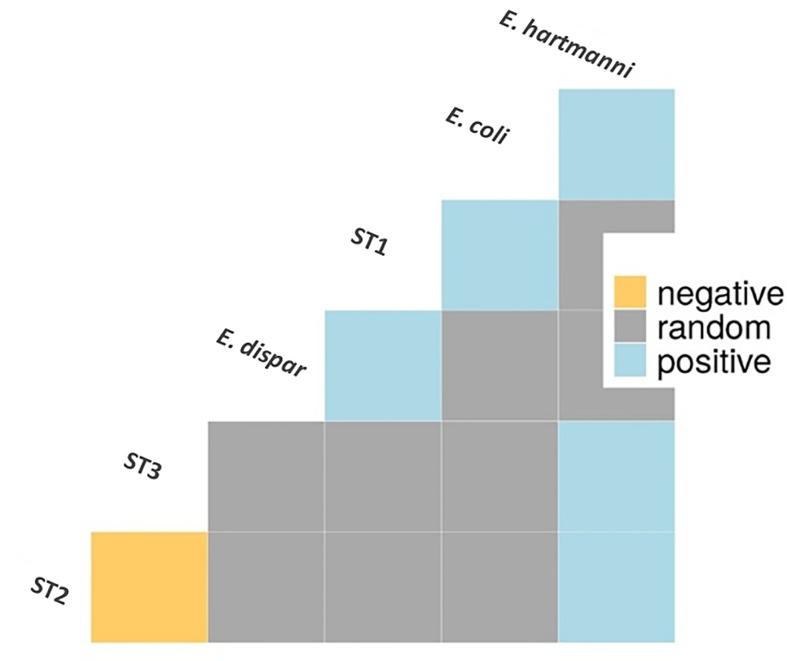
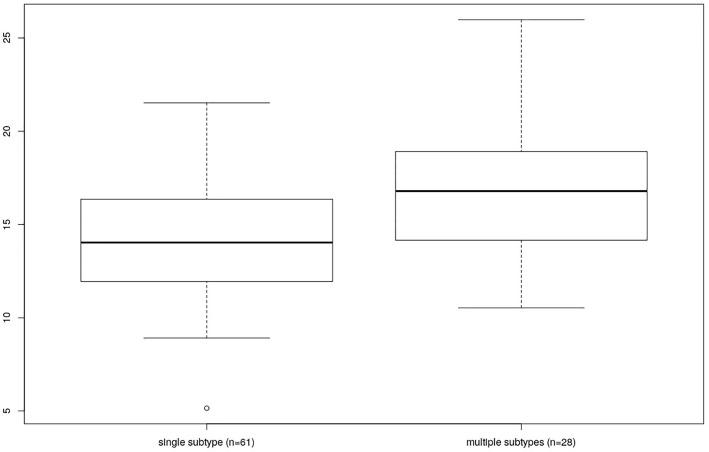
Human gut microbial communities are mainly composed of bacteria, but also include fungi, viruses, archaea, and protozoa, whose role in the gut ecosystem has only recently begun to be recognized. For example, humans colonized by (a gut protozoan with controversial pathogenicity) host a more diverse bacterial microbiota than individuals not carrying it, suggesting that its presence may be beneficial for the host. In parallel, the presence of non-pathogenic spp. has been associated with an increased diversity and compositional shifts in the bacterial microbiota of healthy rural individuals in Cameroon. However, and , the two most prevalent human gut protozoa, have never been studied in the same individuals, preventing the study of their interaction. As is one of the few gut protozoa commonly found in industrialized populations, which are otherwise mostly devoid of gut eukaryotes, we need to focus on rural "traditional" populations, who harbor a higher diversity of gut eukaryotes (whether pathogenic or commensal) in order to study protozoa interactions in the gut ecosystem. To this end, we profiled the gut bacterial microbiota of 134 healthy Cameroonian adults using 16S rRNA gene amplicon sequencing data. and presence and co-occurrence pattern in the same individuals were determined using metagenomic shotgun data. We found that, when taking into account both protozoa jointly, was associated with both a higher richness and a higher evenness of the gut bacterial microbiota, while was associated only with a higher richness. We demonstrated a cumulative influence of these protozoa on bacterial microbiome diversity. Furthermore, while the abundance of several common taxa (for example, , and ) varied according to colonization, only a single amplicon sequence variant was found to be differentially abundant between -negative and -positive samples. Given the specific signature of each protozoan on the gut microbiota and the seemingly stronger association for , our results suggest that and interact with gut bacteria each in its own way, but experimental studies are needed to explore the precise mechanisms of these interactions.
人类肠道微生物群落主要由细菌组成,但也包括真菌、病毒、古菌和原生动物,它们在肠道生态系统中的作用最近才开始被认识到。例如,携带(一种具有争议性致病性的肠道原生动物)的人类宿主的细菌微生物群比不携带它的个体更为多样化,这表明它的存在可能对宿主有益。与此同时,在喀麦隆的健康农村个体中,非致病性 spp. 的存在与细菌微生物群的多样性增加和组成变化有关。然而, 和 ,这两种最常见的人类肠道原生动物,从未在同一个体中进行过研究,这阻碍了对它们相互作用的研究。由于 是在工业化人群中常见的少数几种肠道原生动物之一,而这些人群中通常缺乏肠道真核生物,因此我们需要关注农村“传统”人群,他们的肠道真核生物(无论是致病的还是共生的)多样性更高,以便研究肠道生态系统中的原生动物相互作用。为此,我们使用 16S rRNA 基因扩增子测序数据对 134 名健康喀麦隆成年人的肠道细菌微生物群进行了分析。使用宏基因组鸟枪法测序数据确定了这两种原生动物在同一个体中的存在和共现模式。我们发现,当同时考虑这两种原生动物时, 与肠道细菌微生物群的丰富度和均匀度均呈正相关,而 仅与丰富度呈正相关。我们证明了这些原生动物对细菌微生物组多样性的累积影响。此外,虽然一些常见分类群(例如, 、 和 )的丰度根据 的定植而变化,但仅发现一个 扩增子序列变异在 -阴性和 -阳性样本之间存在差异丰度。鉴于每种原生动物对肠道微生物群的特定特征以及 似乎与肠道细菌的关联更强,我们的结果表明, 和 以各自独特的方式与肠道细菌相互作用,但需要进行实验研究来探索这些相互作用的确切机制。




 Zotero 插件