
沉默XIST通过调节miR-30b-5p/CCL16轴和TLR4/NF-κB信号通路减轻脂多糖(LPS)诱导的人肺成纤维细胞WI-38的炎症损伤。
Silencing XIST mitigated lipopolysaccharide (LPS)-induced inflammatory injury in human lung fibroblast WI-38 cells through modulating miR-30b-5p/CCL16 axis and TLR4/NF-κB signaling pathway.
作者信息
Xu Jiahui, Li Honggui, Lv Ying, Zhang Chang, Chen Yiting, Yu Dezhao
机构信息
Department of Pediatrics, Guangdong Second Hospital of Traditional Chinese Medicine, No. 60 Hengfu Road, 510000, Guangzhou, Guangdong, China.
Department of Pediatrics, The Fifth Clinical College of Guangzhou University of Traditional Chinese Medicine, 510000, Guangzhou, Guangdong, China.
出版信息
Open Life Sci. 2021 Feb 6;16(1):108-127. doi: 10.1515/biol-2021-0005. eCollection 2021.
BACKGROUND
Emerging evidence shows that long noncoding RNA (lncRNA) has been a novel insight in various diseases, including pneumonia. Even though lncRNA X-inactive-specific transcript (XIST) is well studied, its role in pneumonia remains to be largely unrevealed.
METHODS
Expression of XIST, miRNA-30b-5p (miR-30b-5p), and CC chemokine ligand 16 (CCL16) was detected using reverse transcriptase quantitative polymerase chain reaction and western blotting; their interaction was confirmed by dual-luciferase reporter assay. Apoptosis, inflammation, and toll-like receptor 4 (TLR4)/NF-κB signaling pathway were measured using methyl thiazolyl tetrazolium assay, flow cytometry, western blotting, and enzyme-linked immunosorbent assay.
RESULTS
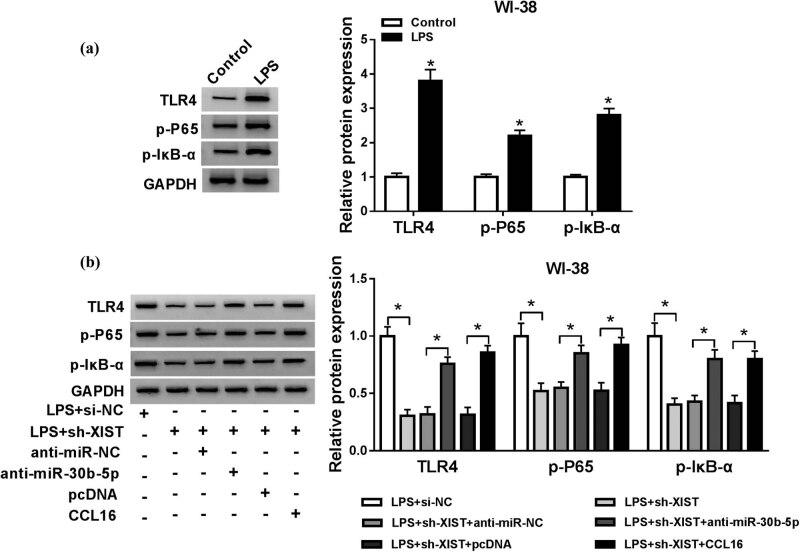
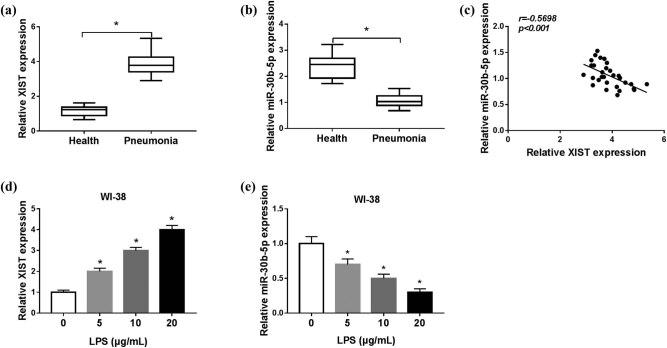
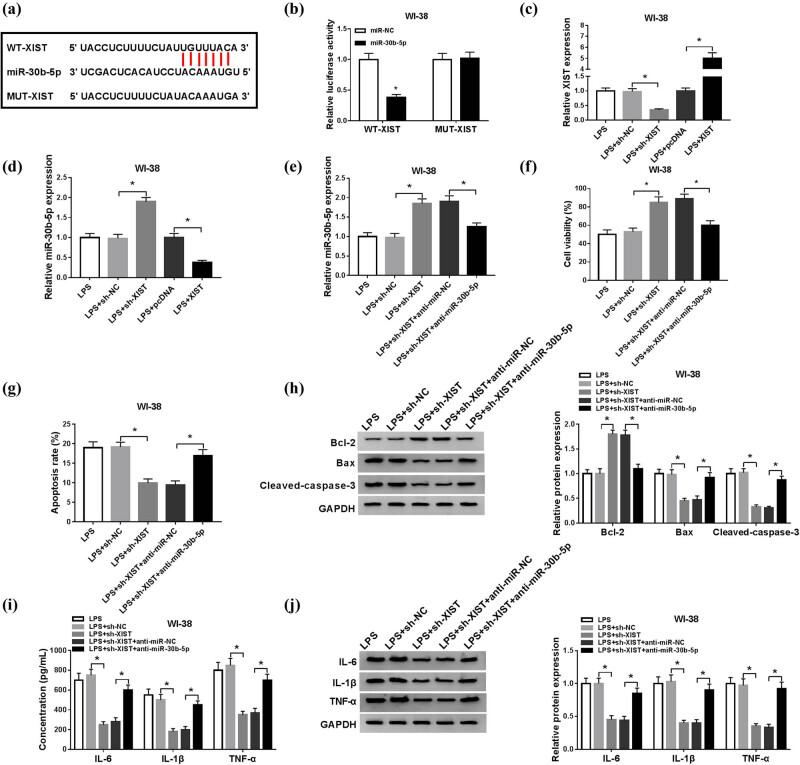
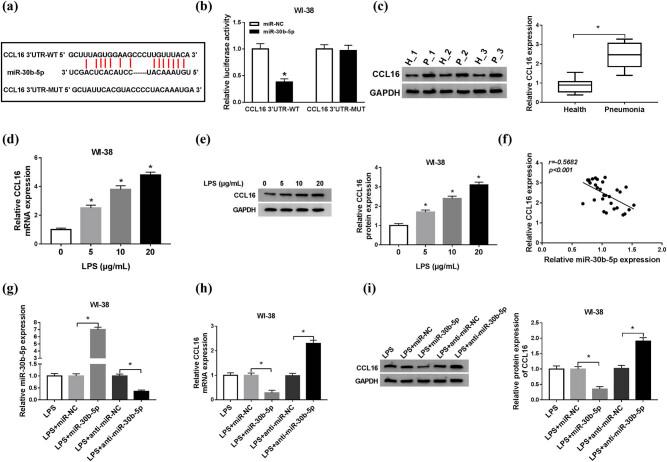
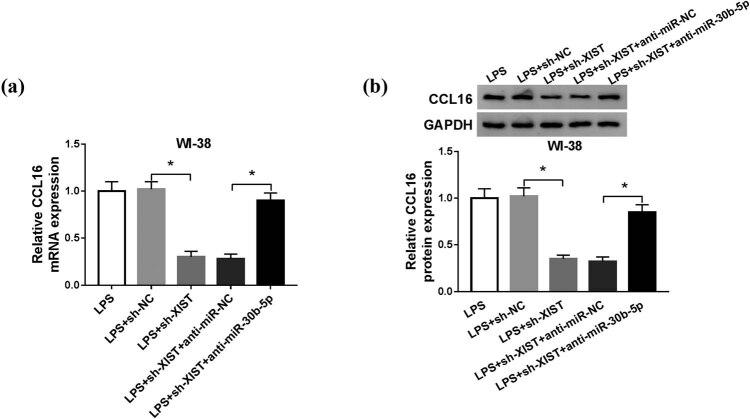
Lipopolysaccharide (LPS) stimulation decreased cell viability and B cell lymphoma (Bcl)-2 expression, and increased cell apoptosis rate and expression of Bcl-2-associated X protein (Bax), cleaved-caspase-3, interleukin (IL)-6, IL-1β, and tumor necrosis factor α (TNF-α) in WI-38 cells. Expression of XIST and CCL16 was upregulated in the serum of patients with pneumonia and LPS-induced WI-38 cells, respectively; silencing XIST and CCL16 could suppress LPS-induced apoptosis and inflammation in WI-38 cells, and this protection was abolished by miR-30b-5p downregulation. Moreover, XIST and CCL16 could physically bind to miR-30b-5p, and XIST regulated CCL16 expression via sponging miR-30b-5p. TLR4 and phosphorylated P65 (p-P65) and p-IκB-α were highly induced by LPS treatment, and this upregulation was diminished by blocking XIST, accompanied with CCL16 downregulation and miR-30b-5p upregulation.
CONCLUSIONS
Silencing XIST could alleviate LPS-induced inflammatory injury in human lung fibroblast WI-38 cells through modulating miR-30b-5p/CCL16 axis and inhibiting TLR4/NF-κB signaling pathway.
背景
新出现的证据表明,长链非编码RNA(lncRNA)在包括肺炎在内的各种疾病中具有新的研究视角。尽管对lncRNA X染色体失活特异性转录本(XIST)已有深入研究,但其在肺炎中的作用仍大多未被揭示。
方法
采用逆转录定量聚合酶链反应和蛋白质印迹法检测XIST、微小RNA-30b-5p(miR-30b-5p)和CC趋化因子配体16(CCL16)的表达;通过双荧光素酶报告基因检测法确认它们之间的相互作用。采用甲基噻唑基四氮唑法、流式细胞术、蛋白质印迹法和酶联免疫吸附测定法检测细胞凋亡、炎症反应以及Toll样受体4(TLR4)/核因子κB(NF-κB)信号通路。
结果
脂多糖(LPS)刺激降低了WI-38细胞的活力和B细胞淋巴瘤-2(Bcl-2)的表达,增加了细胞凋亡率以及Bcl-2相关X蛋白(Bax)、裂解的半胱天冬酶-3、白细胞介素(IL)-6、IL-1β和肿瘤坏死因子α(TNF-α)的表达。XIST和CCL16的表达分别在肺炎患者血清和LPS诱导的WI-38细胞中上调;沉默XIST和CCL16可抑制LPS诱导的WI-38细胞凋亡和炎症反应,而miR-30b-5p下调则消除了这种保护作用。此外,XIST和CCL16可与miR-30b-5p直接结合,且XIST通过吸附miR-30b-5p来调控CCL16的表达。LPS处理高度诱导了TLR4、磷酸化P65(p-P65)和磷酸化IκB-α的表达,而阻断XIST可减弱这种上调,同时伴有CCL16下调和miR-30b-5p上调。
结论
沉默XIST可通过调节miR-30b-5p/CCL16轴并抑制TLR4/NF-κB信号通路,减轻LPS诱导的人肺成纤维细胞WI-38细胞的炎症损伤。



 Zotero 插件