
比较转录组分析鉴定宫颈癌患者差异表达基因。
Identification of Differentially Expressed Genes in Cervical Cancer Patients by Comparative Transcriptome Analysis.
机构信息
Department of Genetics, University College of Science, Osmania University, Hyderabad, 500 007 Telangana, India.
MNJ Institute of Oncology & Regional Cancer Center, Red Hills, Hyderabad, 500004 Telangana, India.
出版信息
Biomed Res Int. 2021 Mar 19;2021:8810074. doi: 10.1155/2021/8810074. eCollection 2021.
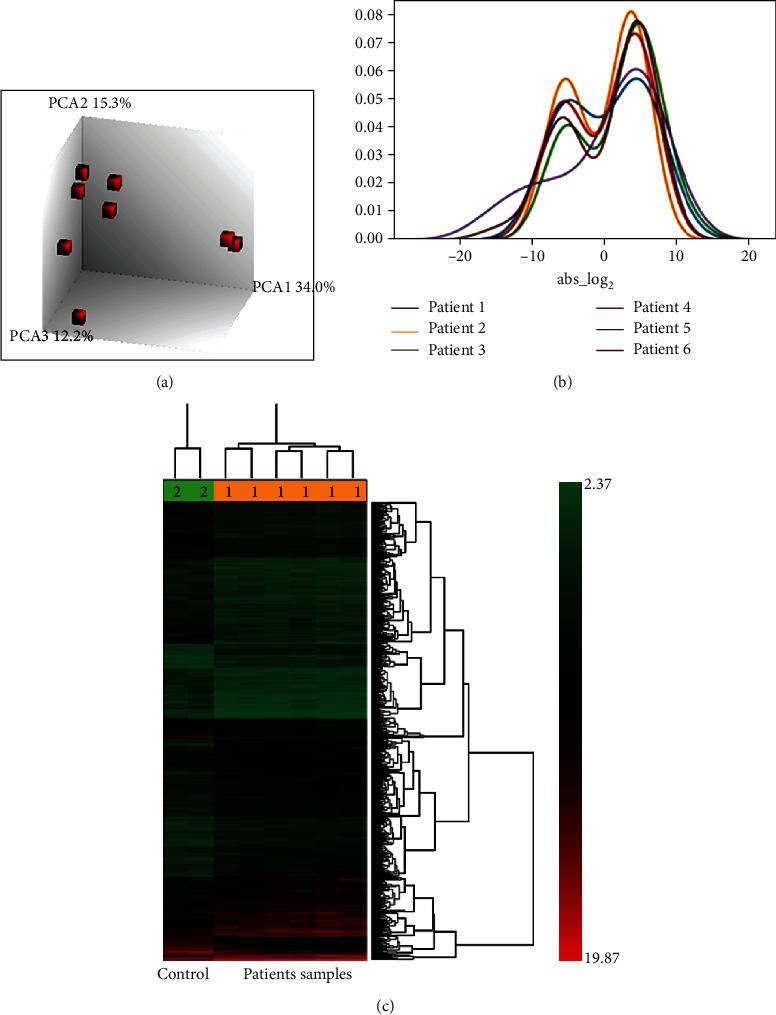
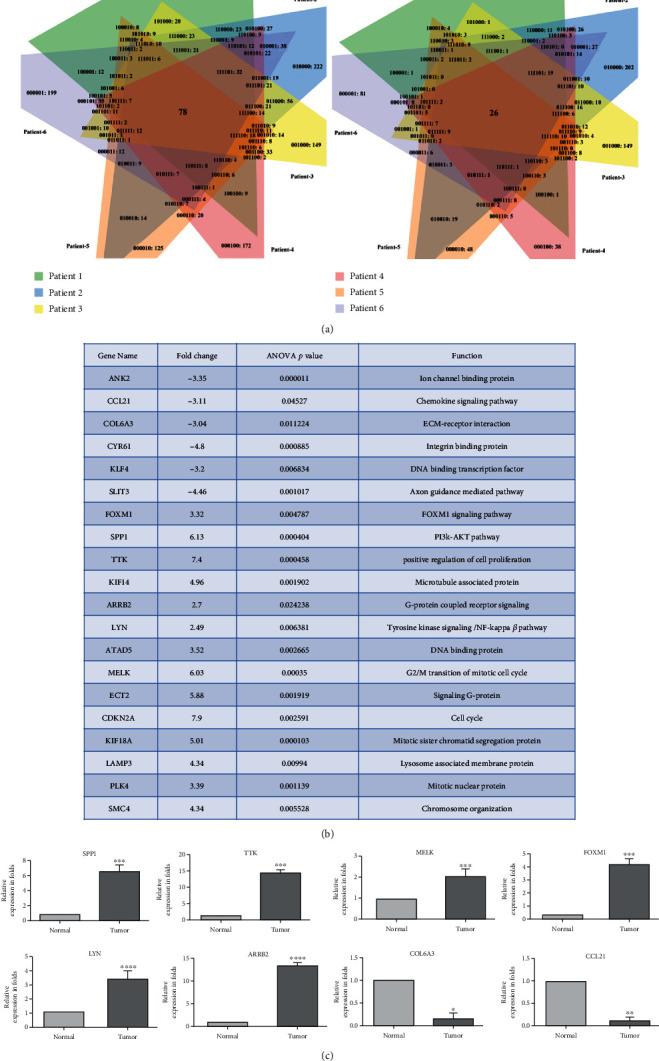
Cervical cancer is one of the most malignant reproductive diseases seen in women worldwide. The identification of dysregulated genes in clinical samples of cervical cancer may pave the way for development of better prognostic markers and therapeutic targets. To identify the dysregulated genes (DEGs), we have retrospectively collected 10 biopsies, seven from cervical cancer patients and three from normal subjects who underwent a hysterectomy. Total RNA isolated from biopsies was subjected to microarray analysis using the human Clariom D Affymetrix platform. Based on the results of principal component analysis (PCA), only eight samples are qualified for further studies; GO and KEGG were used to identify the key genes and were compared with TCGA and GEO datasets. Identified genes were further validated by quantitative real-time PCR and receiver operating characteristic (ROC) curves, and the highest Youden index was calculated in order to evaluate cutoff points (COPs) that allowed distinguishing of tissue samples of cervical squamous carcinoma patients from those of healthy individuals. By comparative microarray analysis, a total of 108 genes common across the six patients' samples were chosen; among these, 78 genes were upregulated and 26 genes were downregulated. The key genes identified were SPP1, LYN, ARRB2, COL6A3, FOXM1, CCL21, TTK, and MELK. Based on their relative expression, the genes were ordered as follows: TTK > ARRB2 > SPP1 > FOXM1 > LYN > MELK > CCL21 > COL6A3; this generated data is in sync with the TCGA datasets, except for ARRB2. Protein-protein interaction network analysis revealed that TTK and MELK are closely associated with SMC4, AURKA, PLK4, and KIF18A. The candidate genes SPP1, FOXM1, LYN, COL6A3, CCL21, TTK and MELK at mRNA level, emerge as promising candidate markers for cervical cancer prognosis and also emerge as potential therapeutic drug targets.
宫颈癌是全球女性中最常见的恶性生殖系统疾病之一。鉴定宫颈癌临床样本中的失调基因可能为开发更好的预后标志物和治疗靶点铺平道路。为了鉴定失调基因(DEGs),我们回顾性收集了 10 份活检样本,其中 7 份来自宫颈癌患者,3 份来自因子宫切除而接受手术的正常受试者。从活检组织中提取总 RNA,使用人类 Clariom D Affymetrix 平台进行微阵列分析。基于主成分分析(PCA)的结果,只有 8 个样本符合进一步研究的条件;GO 和 KEGG 用于鉴定关键基因,并与 TCGA 和 GEO 数据集进行比较。通过定量实时 PCR 和接收者操作特征(ROC)曲线进一步验证了鉴定出的基因,并计算了最高 Youden 指数,以评估区分宫颈癌鳞状细胞癌患者和健康个体组织样本的截止点(COPs)。通过比较微阵列分析,共选择了 6 个患者样本中共同存在的 108 个基因;其中,78 个基因上调,26 个基因下调。鉴定出的关键基因包括 SPP1、LYN、ARRB2、COL6A3、FOXM1、CCL21、TTK 和 MELK。根据它们的相对表达,这些基因的顺序如下:TTK>ARRb2>SPP1>FOXM1>LYN>MELK>CCL21>COL6A3;这与 TCGA 数据集的数据一致,除了 ARRB2。蛋白质-蛋白质相互作用网络分析表明,TTK 和 MELK 与 SMC4、AURKA、PLK4 和 KIF18A 密切相关。mRNA 水平的候选基因 SPP1、FOXM1、LYN、COL6A3、CCL21、TTK 和 MELK 作为宫颈癌预后的有前途的候选标志物出现,也作为潜在的治疗药物靶点出现。



 Zotero 插件