
转录组学揭示葡萄园产地的遗传特征并深入了解与年份无关的接种发酵结果。
Transcriptomics Provides a Genetic Signature of Vineyard Site and Offers Insight into Vintage-Independent Inoculated Fermentation Outcomes.
作者信息
Reiter Taylor, Montpetit Rachel, Byer Shelby, Frias Isadora, Leon Esmeralda, Viano Robert, Mcloughlin Michael, Halligan Thomas, Hernandez Desmon, Figueroa-Balderas Rosa, Cantu Dario, Steenwerth Kerri, Runnebaum Ron, Montpetit Ben
机构信息
Food Science Graduate Group, University of California Davis, Davis, California, USA.
Department of Viticulture and Enology, University of California Davis, Davis, California, USA.
出版信息
mSystems. 2021 Apr 13;6(2):e00033-21. doi: 10.1128/mSystems.00033-21.
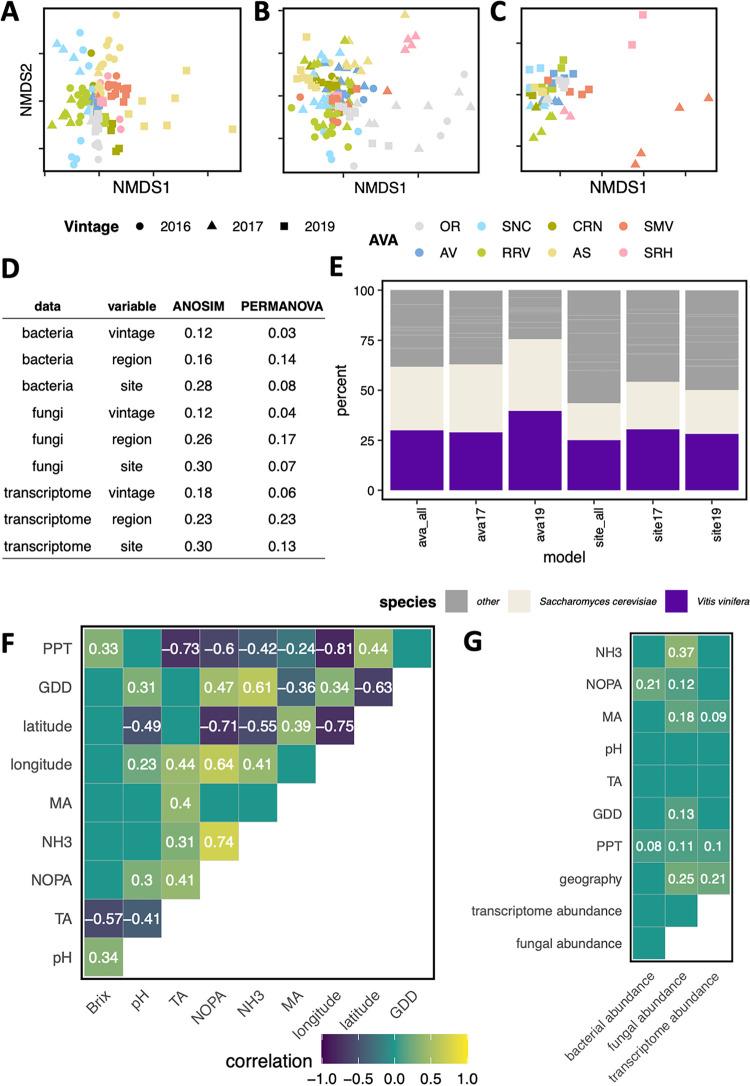
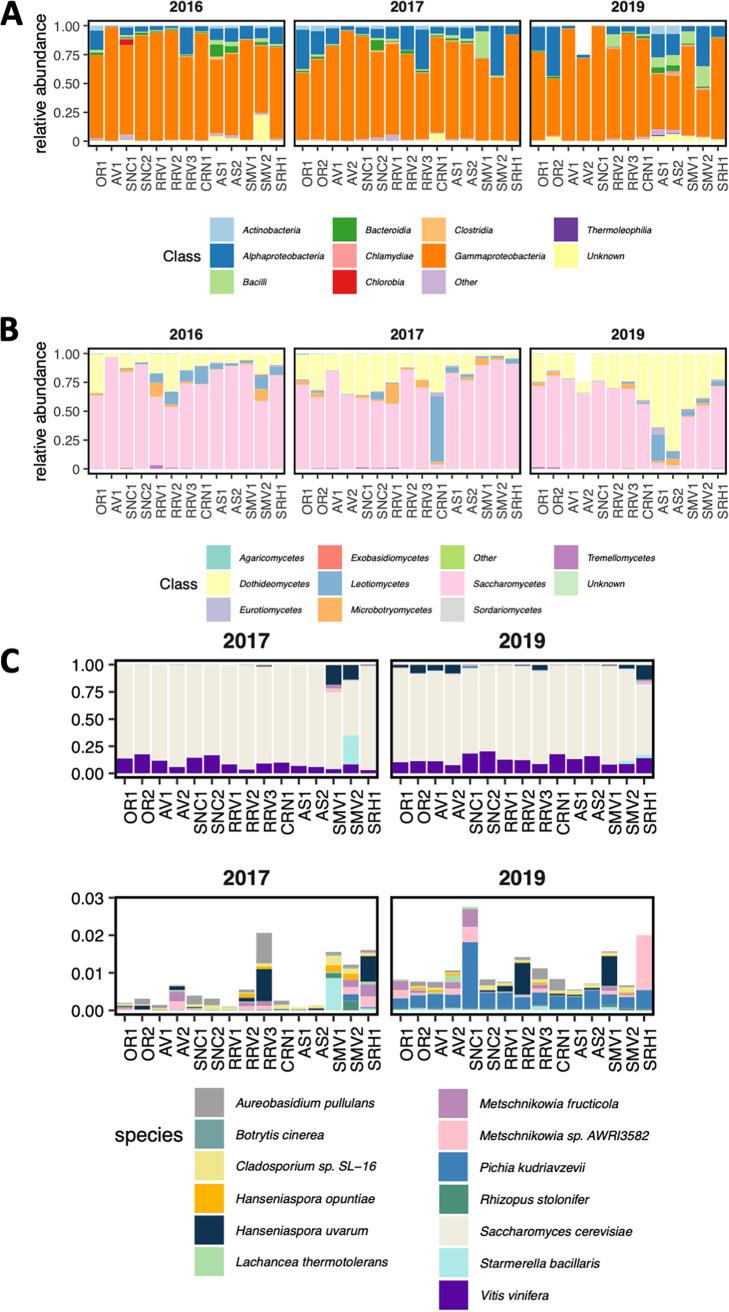
Ribosomal DNA amplicon sequencing of grape musts has demonstrated that microorganisms occur nonrandomly and are associated with the vineyard of origin, suggesting a role for the vineyard, grape, and wine microbiome in shaping wine fermentation outcomes. Here, ribosomal DNA amplicon sequencing from grape musts and RNA sequencing of eukaryotic transcripts from primary fermentations inoculated with the wine yeast RC212 were used to profile fermentations from 15 vineyards in California and Oregon across two vintages. These data demonstrate that the relative abundance of fungal organisms detected by ribosomal DNA amplicon sequencing correlated with neither transcript abundance from those same organisms within the RNA sequencing data nor gene expression of the inoculated RC212 yeast strain. These data suggest that the majority of the fungi detected in must by ribosomal DNA amplicon sequencing were not active during the primary stage of these inoculated fermentations and were not a major factor in determining RC212 gene expression. However, unique genetic signatures were detected within the ribosomal DNA amplicon and eukaryotic transcriptomic sequencing that were predictive of vineyard site and region. These signatures included gene expression patterns linked to nitrogen, sulfur, and thiamine metabolism. These genetic signatures of site offer insight into specific environmental factors to consider with respect to fermentation outcomes and vineyard site and regional wine characteristics. The wine industry generates billions of dollars of revenue annually, and economic productivity is in part associated with regional distinctiveness of wine sensory attributes. Microorganisms associated with grapes and wineries are influenced by region of origin, and given that some microorganisms play a role in fermentation, it is thought that microbes may contribute to the regional distinctiveness of wine. In this work, as in previous studies, it is demonstrated that specific bacteria and fungi are associated with individual wine regions and vineyard sites. However, this work further shows that their presence is not associated with detectable fungal gene expression during the primary fermentation or the expression of specific genes by the inoculate strain RC212. The detected RC212 gene expression signatures associated with region and vineyard site also allowed the identification of flavor-associated metabolic processes and environmental factors that could impact primary fermentation outcomes. These data offer novel insights into the complexities and subtleties of vineyard-specific inoculated wine fermentation and starting points for future investigations into factors that contribute to regional wine distinctiveness.
对葡萄汁进行核糖体DNA扩增子测序表明,微生物的出现并非随机,而是与葡萄的起源葡萄园相关,这表明葡萄园、葡萄和葡萄酒微生物群落在塑造葡萄酒发酵结果中发挥着作用。在此,利用来自葡萄汁的核糖体DNA扩增子测序以及对接种葡萄酒酵母RC212的初次发酵过程中的真核转录本进行RNA测序,对加利福尼亚州和俄勒冈州15个葡萄园两个年份的发酵过程进行了分析。这些数据表明,通过核糖体DNA扩增子测序检测到的真菌生物的相对丰度,与RNA测序数据中相同生物的转录本丰度以及接种的RC212酵母菌株的基因表达均无相关性。这些数据表明,通过核糖体DNA扩增子测序在葡萄汁中检测到的大多数真菌在这些接种发酵的初级阶段并不活跃,也不是决定RC212基因表达的主要因素。然而,在核糖体DNA扩增子和真核转录组测序中检测到了独特的基因特征,这些特征可预测葡萄园的位置和区域。这些特征包括与氮、硫和硫胺素代谢相关的基因表达模式。这些位置的基因特征为考虑发酵结果以及葡萄园位置和区域葡萄酒特征的特定环境因素提供了见解。葡萄酒行业每年创造数十亿美元的收入,经济生产力部分与葡萄酒感官属性的区域独特性相关。与葡萄和酿酒厂相关的微生物受到起源地区的影响,鉴于一些微生物在发酵中发挥作用,人们认为微生物可能有助于葡萄酒的区域独特性。在这项工作中,与之前的研究一样,证明了特定的细菌和真菌与各个葡萄酒产区和葡萄园位置相关。然而,这项工作进一步表明,它们的存在与初次发酵期间可检测到的真菌基因表达或接种菌株RC212的特定基因表达无关。检测到的与区域和葡萄园位置相关的RC212基因表达特征,也有助于识别可能影响初次发酵结果的风味相关代谢过程和环境因素。这些数据为葡萄园特定接种葡萄酒发酵的复杂性和微妙性提供了新的见解,并为未来研究有助于区域葡萄酒独特性的因素提供了起点。

 Zotero 插件