
特发性肺纤维化(IPF)中从正常肺解剖结构向最小和已建立的纤维化的转变。
The transition from normal lung anatomy to minimal and established fibrosis in idiopathic pulmonary fibrosis (IPF).
机构信息
Center for Heart Lung Innovation, The University of British Columbia, Vancouver, Canada.
Center for Heart Lung Innovation, The University of British Columbia, Vancouver, Canada; Department of Respiratory Medicine, Graduate School of Medicine, Kyoto University, Kyoto, Japan.
出版信息
EBioMedicine. 2021 Apr;66:103325. doi: 10.1016/j.ebiom.2021.103325. Epub 2021 Apr 13.
BACKGROUND
The transition from normal lung anatomy to minimal and established fibrosis is an important feature of the pathology of idiopathic pulmonary fibrosis (IPF). The purpose of this report is to examine the molecular and cellular mechanisms associated with this transition.
METHODS
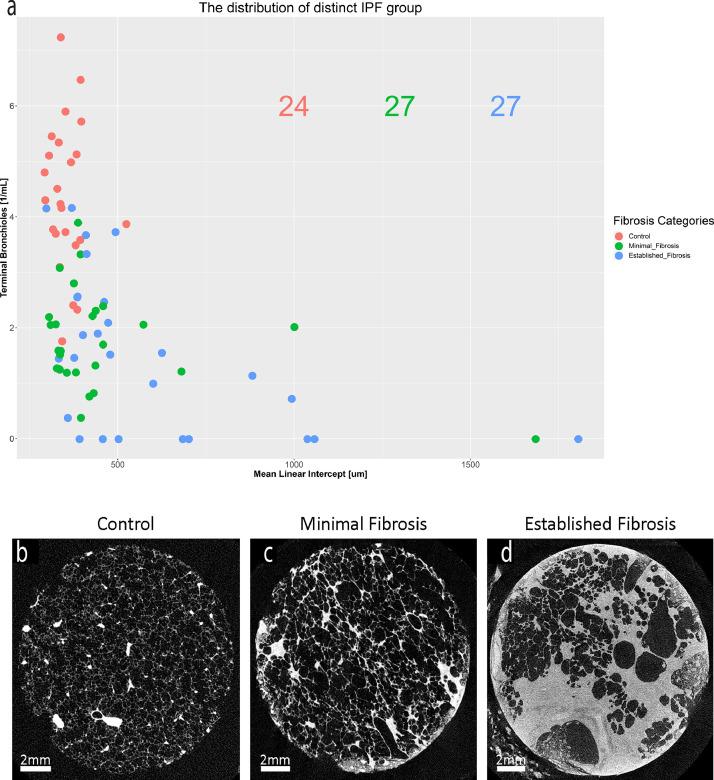
Pre-operative thoracic Multidetector Computed Tomography (MDCT) scans of patients with severe IPF (n = 9) were used to identify regions of minimal(n = 27) and established fibrosis(n = 27). MDCT, Micro-CT, quantitative histology, and next-generation sequencing were used to compare 24 samples from donor controls (n = 4) to minimal and established fibrosis samples.
FINDINGS
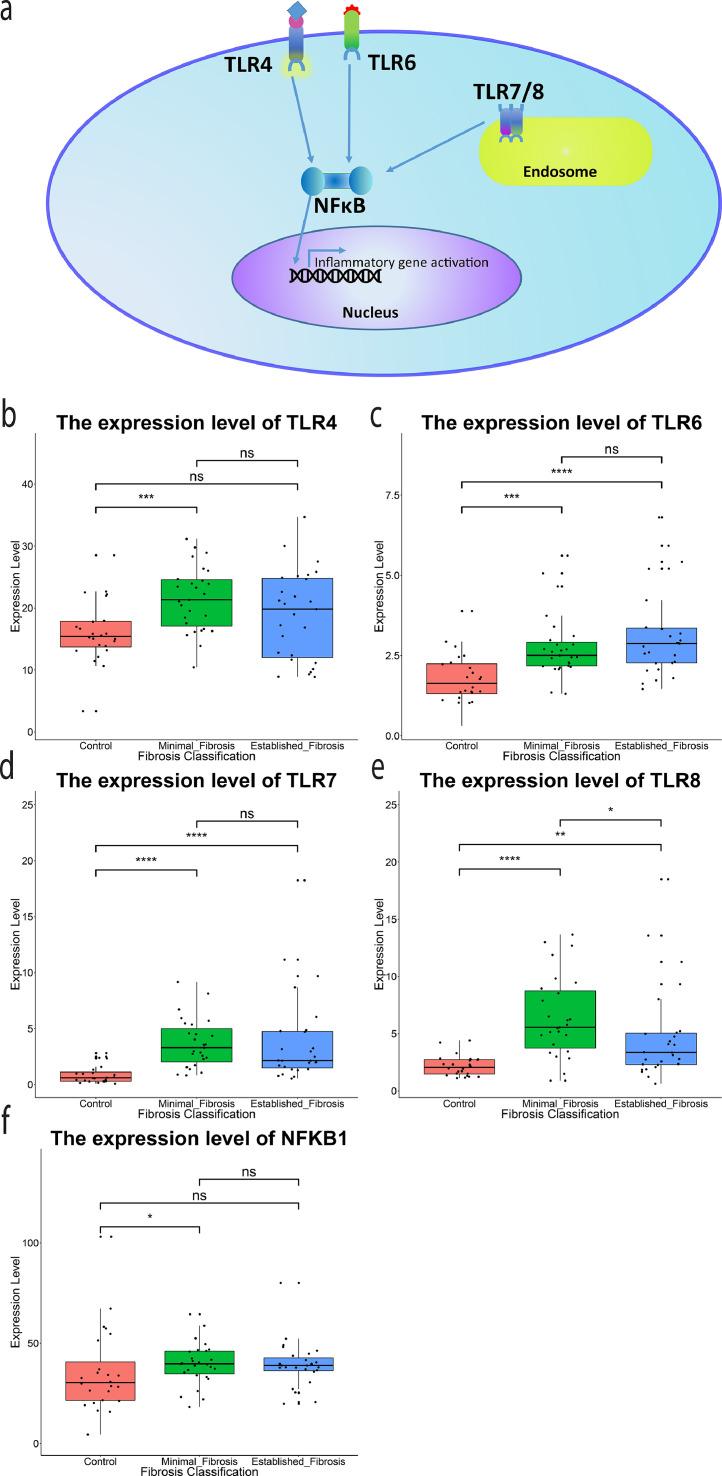
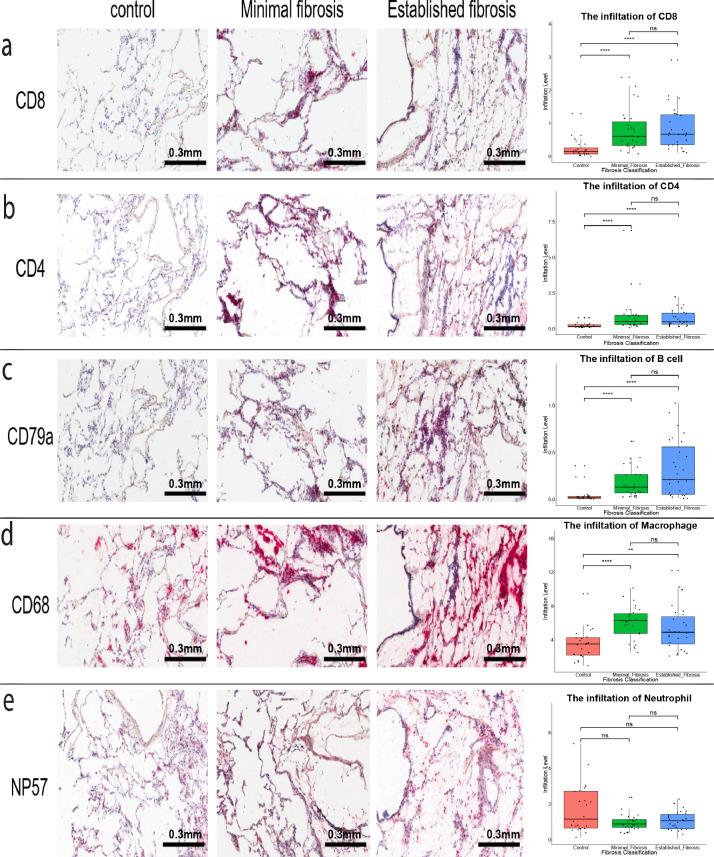
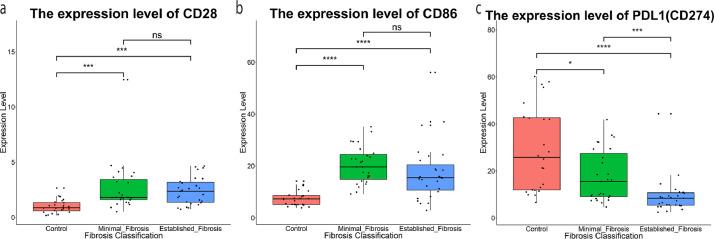
The present results extended earlier reports about the transition from normal lung anatomy to minimal and established fibrosis by showing that there are activations of TGFBI, T cell co-stimulatory genes, and the down-regulation of inhibitory immune-checkpoint genes compared to controls. The expression patterns of these genes indicated activation of a field immune response, which is further supported by the increased infiltration of inflammatory immune cells dominated by lymphocytes that are capable of forming lymphoid follicles. Moreover, fibrosis pathways, mucin secretion, surfactant, TLRs, and cytokine storm-related genes also participate in the transitions from normal lung anatomy to minimal and established fibrosis.
INTERPRETATION
The transition from normal lung anatomy to minimal and established fibrosis is associated with genes that are involved in the tissue repair processes, the activation of immune responses as well as the increased infiltration of CD4, CD8, B cell lymphocytes, and macrophages. These molecular and cellular events correlate with the development of structural abnormality of IPF and probably contribute to its pathogenesis.
背景
从正常肺解剖结构向最小和已建立的纤维化转变是特发性肺纤维化(IPF)病理学的一个重要特征。本报告的目的是研究与这种转变相关的分子和细胞机制。
方法
使用术前严重 IPF 患者的胸部多排螺旋 CT(MDCT)扫描来识别最小纤维化(n=27)和已建立纤维化(n=27)区域。使用 MDCT、Micro-CT、定量组织学和下一代测序将 24 个供体对照样本(n=4)与最小纤维化和已建立纤维化样本进行比较。
结果
本研究结果扩展了早期关于从正常肺解剖结构向最小纤维化和已建立纤维化转变的报告,表明与对照相比,存在 TGFBI、T 细胞共刺激基因的激活以及抑制性免疫检查点基因的下调。这些基因的表达模式表明了局部免疫反应的激活,这进一步得到了炎症免疫细胞浸润增加的支持,其中以能够形成淋巴滤泡的淋巴细胞为主。此外,纤维化途径、粘蛋白分泌、表面活性剂、TLRs 和细胞因子风暴相关基因也参与了从正常肺解剖结构向最小纤维化和已建立纤维化的转变。
解释
从正常肺解剖结构向最小纤维化和已建立纤维化的转变与参与组织修复过程、免疫反应激活以及 CD4、CD8、B 细胞淋巴细胞和巨噬细胞浸润增加的基因有关。这些分子和细胞事件与 IPF 的结构异常发展相关,可能有助于其发病机制。

 Zotero 插件