
东京一家前线医院医护人员中 SARS-CoV-2 的血清流行率。
SARS-CoV-2 seroprevalence in healthcare workers at a frontline hospital in Tokyo.
机构信息
Department of General Medicine, Juntendo University Graduate School of Medicine, Bunkyo, Tokyo, Japan.
Department of Safety and Health Promotion, Juntendo University, Bunkyo, Tokyo, Japan.
出版信息
Sci Rep. 2021 Apr 16;11(1):8380. doi: 10.1038/s41598-021-87688-9.
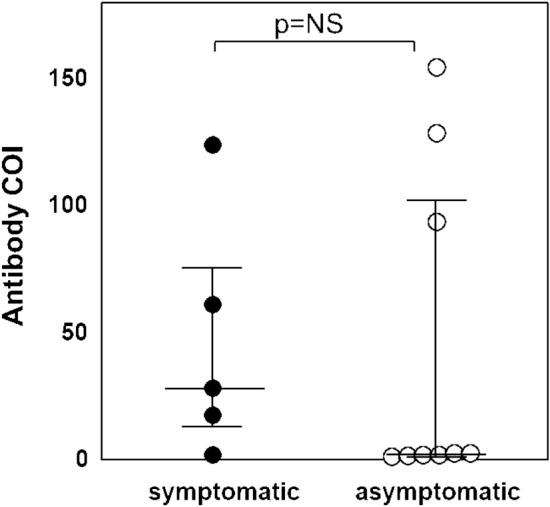
Healthcare workers (HCWs) are highly exposed to severe acute respiratory syndrome coronavirus 2 (SARS-CoV-2) infection. The actual coronavirus disease (COVID-19) situation, especially in regions that are less affected, has not yet been determined. This study aimed to assess the seroprevalence of SARS-CoV-2 in HCWs working in a frontline hospital in Tokyo, Japan. In this cross-sectional observational study, screening was performed on consented HCWs, including medical, nursing, and other workers, as part of a mandatory health checkup. The screening test results and clinical characteristics of the participants were recorded. The antibody seroprevalence rate among the 4147 participants screened between July 6 and August 21, 2020, was 0.34% (14/4147). There was no significant difference in the seroprevalence rate between frontline HCWs with a high exposure risk and HCWs working in other settings with a low exposure risk. Of those seropositive for SARS-CoV-2, 64% (9/14) were not aware of any symptoms and had not previously been diagnosed with COVID-19. In conclusion, this study provides insights into the extent of infection and immune status in HCWs in Japan, which has a relatively low prevalence of COVID-19. Our findings aid in formulating public health policies to control virus spread in regions with low-intensity COVID-19.
医护人员(HCWs)高度暴露于严重急性呼吸综合征冠状病毒 2(SARS-CoV-2)感染。实际的冠状病毒病(COVID-19)情况,尤其是在受影响较小的地区,尚未确定。本研究旨在评估在日本东京一家前线医院工作的 HCWs 中 SARS-CoV-2 的血清流行率。在这项横断面观察性研究中,作为强制性健康检查的一部分,对同意参加的 HCWs 进行了筛选,包括医务人员、护士和其他工作人员。记录了筛查测试结果和参与者的临床特征。在 2020 年 7 月 6 日至 8 月 21 日期间筛选的 4147 名参与者中,抗体血清流行率为 0.34%(14/4147)。高暴露风险的一线 HCWs 和低暴露风险的其他环境中的 HCWs 的血清流行率没有显著差异。在 SARS-CoV-2 血清阳性的人群中,64%(9/14)没有任何症状,并且之前没有被诊断出患有 COVID-19。总之,这项研究提供了日本 HCWs 感染和免疫状况的相关信息,日本 COVID-19 的发病率相对较低。我们的研究结果有助于制定公共卫生政策,以控制 COVID-19 低强度地区的病毒传播。
 Zotero 插件