
花生病原菌罗尔斯顿氏菌 Rs-P.362200 全基因组序列分析。
Complete genome sequence analysis of the peanut pathogen Ralstonia solanacearum strain Rs-P.362200.
机构信息
College of Plant Protection, Fujian Agriculture and Forestry University, Fuzhou, 350002, Fujian, China.
College of Agronomy, Fujian Agriculture and Forestry University, Fuzhou, 350002, Fujian, China.
出版信息
BMC Microbiol. 2021 Apr 19;21(1):118. doi: 10.1186/s12866-021-02157-7.
BACKGROUND
Bacterial wilt caused by Ralstonia solanacearum species complex is an important soil-borne disease worldwide that affects more than 450 plant species, including peanut, leading to great yield and quality losses. However, there are no effective measures to control bacterial wilt. The reason is the lack of research on the pathogenic mechanism of bacterial wilt.
RESULTS
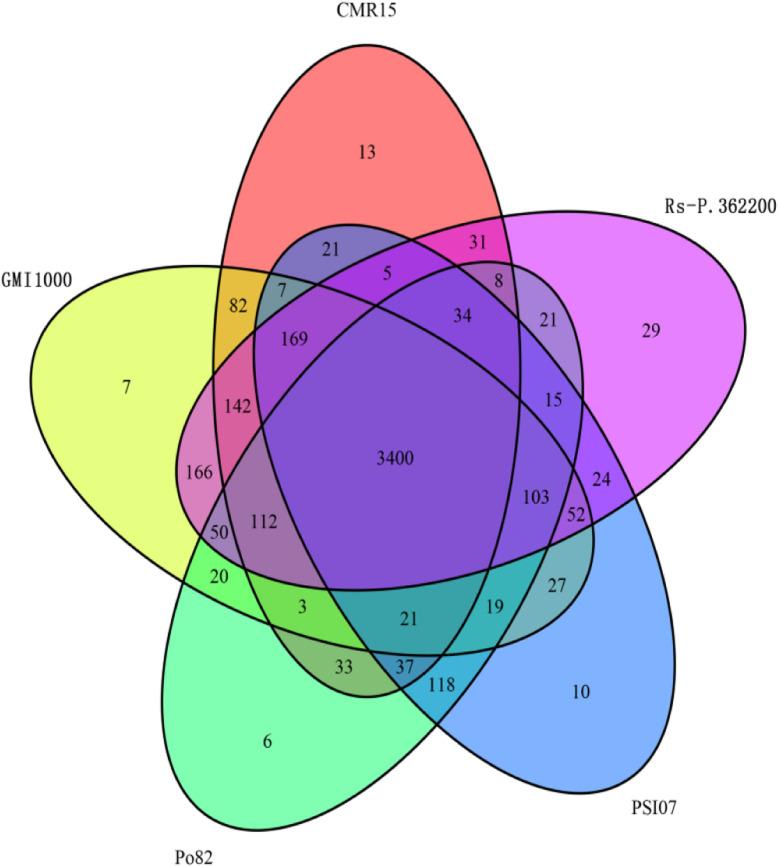
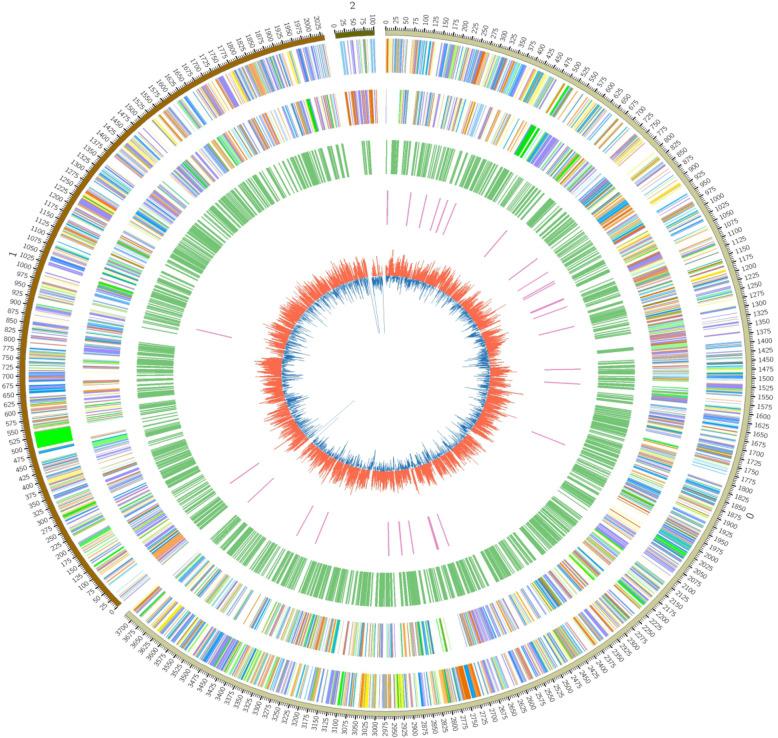
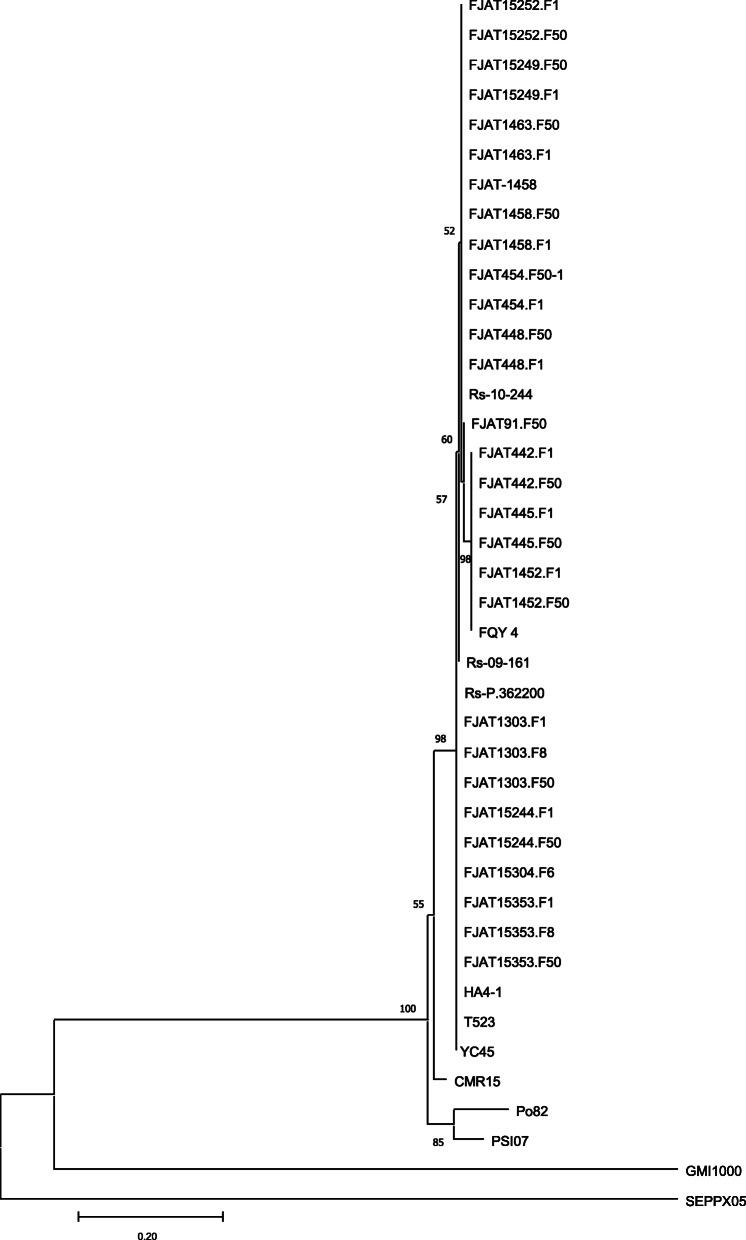
Here, we report the complete genome of a toxic Ralstonia solanacearum species complex strain, Rs-P.362200, a peanut pathogen, with a total genome size of 5.86 Mb, encoding 5056 genes and the average G + C content of 67%. Among the coding genes, 75 type III effector proteins and 12 pseudogenes were predicted. Phylogenetic analysis of 41 strains including Rs-P.362200 shows that genetic distance mainly depended on geographic origins then phylotypes and host species, which associated with the complexity of the strain. The distribution and numbers of effectors and other virulence factors changed among different strains. Comparative genomic analysis showed that 29 families of 113 genes were unique to this strain compared with the other four pathogenic strains. Through the analysis of specific genes, two homologous genes (gene ID: 2_657 and 3_83), encoding virulence protein (such as RipP1) may be associated with the host range of the Rs-P.362200 strain. It was found that the bacteria contained 30 pathogenicity islands and 6 prophages containing 378 genes, 7 effectors and 363 genes, 8 effectors, respectively, which may be related to the mechanism of horizontal gene transfer and pathogenicity evaluation. Although the hosts of HA4-1 and Rs-P.362200 strains are the same, they have specific genes to their own genomes. The number of genomic islands and prophages in HA4-1 genome is more than that in Rs-P.36220, indicating a rapid change of the bacterial wilt pathogens.
CONCLUSION
The complete genome sequence analysis of peanut bacterial wilt pathogen enhanced the information of R. solanacearum genome. This research lays a theoretical foundation for future research on the interaction between Ralstonia solanacearum and peanut.
背景
由青枯雷尔氏菌复合种引起的细菌性萎蔫病是一种重要的土传病害,全球有超过 450 种植物受到影响,包括花生,导致产量和质量的巨大损失。然而,目前还没有有效的方法来控制细菌性萎蔫病。原因是缺乏对细菌性萎蔫病发病机制的研究。
结果
在这里,我们报道了一种有毒的青枯雷尔氏菌复合种菌株 Rs-P.362200 的全基因组序列,该菌株是一种花生病原体,总基因组大小为 5.86 Mb,编码 5056 个基因,平均 G+C 含量为 67%。在编码基因中,预测到了 75 种 III 型效应蛋白和 12 种假基因。对包括 Rs-P.362200 在内的 41 个菌株的系统发育分析表明,遗传距离主要取决于地理起源,然后是菌株的类型和宿主种类,这与菌株的复杂性有关。效应子和其他毒力因子在不同菌株中的分布和数量发生了变化。比较基因组分析表明,与其他四个致病菌株相比,该菌株有 29 个家族的 113 个基因是独特的。通过对特定基因的分析,发现两个同源基因(基因 ID:2_657 和 3_83),编码的毒力蛋白(如 RipP1)可能与 Rs-P.362200 菌株的宿主范围有关。研究发现,该细菌含有 30 个致病性岛和 6 个前噬菌体,分别含有 378 个基因、7 个效应子和 363 个基因、8 个效应子,这可能与水平基因转移和致病性评估的机制有关。虽然 HA4-1 和 Rs-P.362200 菌株的宿主相同,但它们的基因组中都有特定的基因。HA4-1 基因组中的基因组岛和前噬菌体数量多于 Rs-P.36220,这表明细菌性萎蔫病病原体的变化很快。
结论
对花生细菌性萎蔫病病原体的全基因组序列分析增强了青枯雷尔氏菌基因组的信息。这项研究为今后研究青枯雷尔氏菌与花生的相互作用奠定了理论基础。


 Zotero 插件