
衰弱对老年稳定期慢性阻塞性肺疾病患者加重风险和全因死亡率的影响。
Impact of Frailty on the Risk of Exacerbations and All-Cause Mortality in Elderly Patients with Stable Chronic Obstructive Pulmonary Disease.
机构信息
Department of Geriatrics, Beijing Friendship Hospital, Capital Medical University, Beijing, 100050, People's Republic of China.
出版信息
Clin Interv Aging. 2021 Apr 13;16:593-601. doi: 10.2147/CIA.S303852. eCollection 2021.
RATIONALE
For the high prevalence of frail in patients with chronic obstructive pulmonary disease (COPD), further study should explore an in-depth understanding of the relationship between frailty and prognosis of COPD.
OBJECTIVE
To determine the correlation between frailty and risk of acute exacerbation, hospitalizations, and mortality in older patients with stable COPD.
PARTICIPANTS AND METHODS
Consecutive older adults (≥65) diagnosed with stable COPD from January 2018 to July 2019, with an average follow-up of 546 days (N = 309). Frailty was defined by the Fried frailty phenotype. Poisson regression was performed to assess the influence of frailty on the incidence of acute exacerbations of COPD (AECOPD) and all-cause hospitalizations in a year. Cox regression was performed to evaluate the effect of frailty on all-cause mortality in patients with stable COPD.
RESULTS
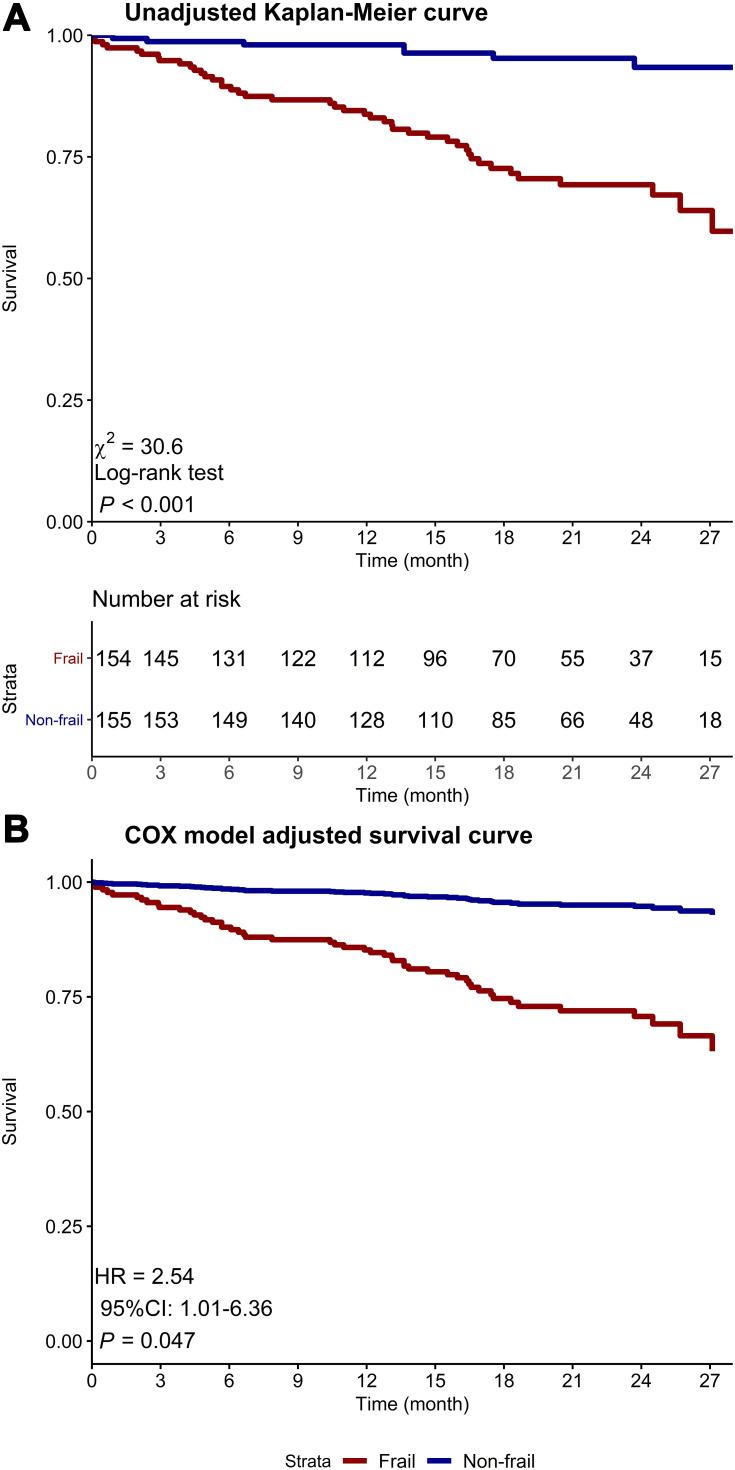
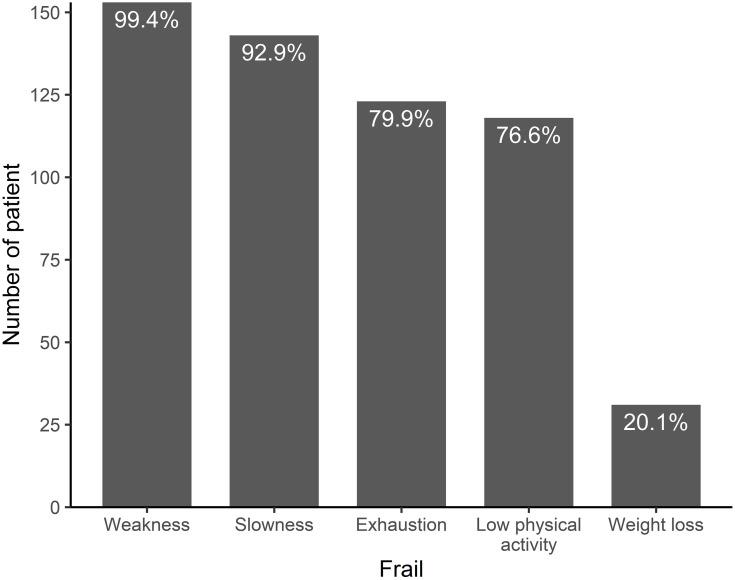
The prevalence of frailty was 49.8%. The most common phenotypic characteristics were weakness (99.4%) followed by slowness (92.9%). After adjustment, frailty increased the incidence of AECOPD (IRR = 1.75, 95% CI: 1.09-2.82) and all-cause hospitalizations (IRR = 1.39, 95% CI 1.04-1.87) within a year. Slowness was associated with AECOPD (IRR = 1.77, 95% CI: 1.03-3.03), and weakness was associated with increased all-cause hospitalizations (IRR = 1.53, 95% CI: 1.04-2.25). The all-cause mortality risk was more than twofold higher in frail patients (HR = 2.54, 95% CI: 1.01-6.36) than non-frail patients. Low physical activity (HR = 2.66, 95% CI: 1.17-6.05) and weight loss (HR = 2.15, 95% CI: 1.02-4.51) were significantly associated with increased all-cause mortality in patients with COPD.
CONCLUSION
Frailty increased the incidence of acute exacerbation and hospitalization, as well as increased mortality in older patients with stable COPD. This knowledge will help physicians identify high-risk groups with COPD and frailty who may benefit from targeted interventions to prevent disease progression.
背景
由于慢性阻塞性肺疾病(COPD)患者衰弱的高患病率,需要进一步研究深入了解衰弱与 COPD 预后之间的关系。
目的
确定衰弱与老年稳定期 COPD 患者急性加重、住院和死亡风险的相关性。
参与者和方法
2018 年 1 月至 2019 年 7 月连续确诊为稳定期 COPD 的老年患者(≥65 岁),平均随访 546 天(N=309)。衰弱采用 Fried 衰弱表型定义。采用泊松回归评估衰弱对 COPD 急性加重(AECOPD)和年度全因住院的影响。采用 Cox 回归评估衰弱对稳定期 COPD 患者全因死亡率的影响。
结果
衰弱的患病率为 49.8%。最常见的表型特征是乏力(99.4%),其次是行动缓慢(92.9%)。调整后,衰弱增加了 AECOPD 的发生率(IRR=1.75,95%CI:1.09-2.82)和年度全因住院率(IRR=1.39,95%CI 1.04-1.87)。行动缓慢与 AECOPD 相关(IRR=1.77,95%CI:1.03-3.03),乏力与全因住院增加相关(IRR=1.53,95%CI:1.04-2.25)。与非衰弱患者相比,衰弱患者的全因死亡风险增加两倍以上(HR=2.54,95%CI:1.01-6.36)。低体力活动(HR=2.66,95%CI:1.17-6.05)和体重减轻(HR=2.15,95%CI:1.02-4.51)与 COPD 患者全因死亡率增加显著相关。
结论
衰弱增加了老年稳定期 COPD 患者急性加重和住院的发生率,并增加了死亡率。这些知识将有助于医生识别 COPD 和衰弱的高危人群,这些人群可能受益于针对疾病进展的靶向干预。
 Zotero 插件