
丙泊酚诱导意识丧失的神经效应及其经丘脑刺激逆转。
Neural effects of propofol-induced unconsciousness and its reversal using thalamic stimulation.
机构信息
The Picower Institute for Learning and Memory and Department of Brain and Cognitive Sciences, Massachusetts Institute of Technology, Cambridge, United States.
The Department of Anesthesia, Critical Care and Pain Medicine, Massachusetts General Hospital/Harvard Medical School, Boston, United States.
出版信息
Elife. 2021 Apr 27;10:e60824. doi: 10.7554/eLife.60824.
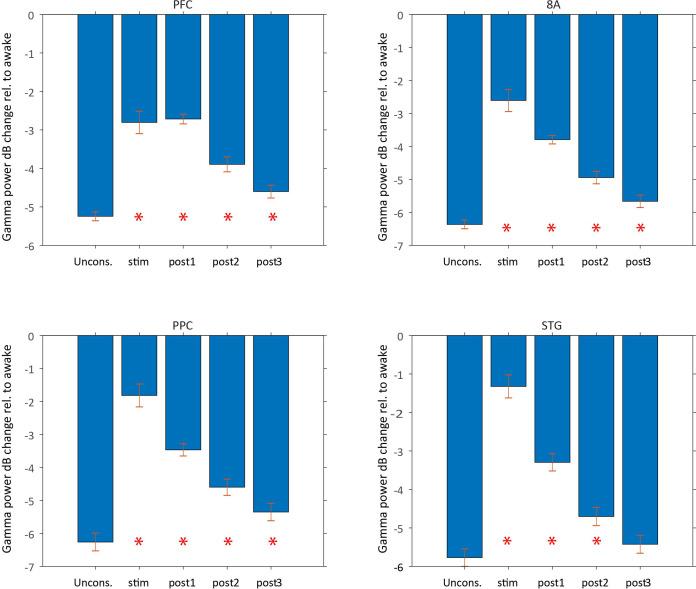
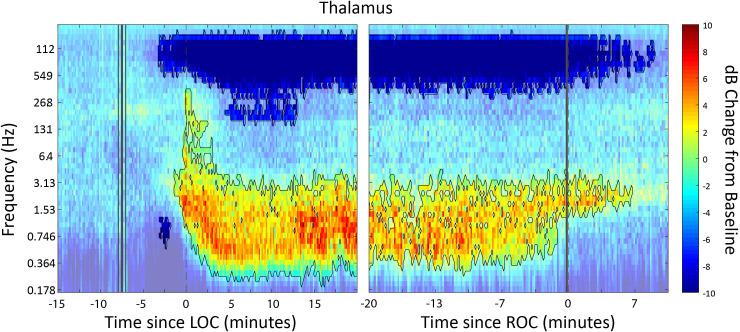
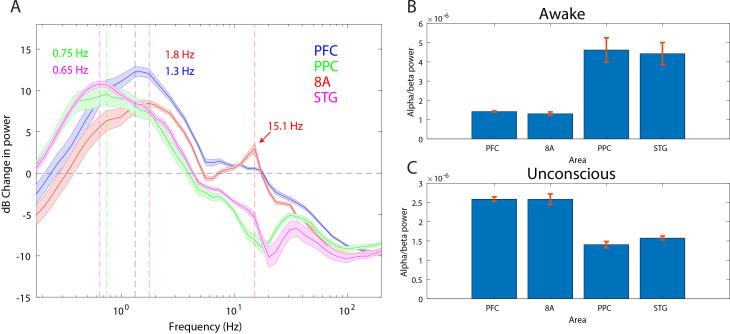
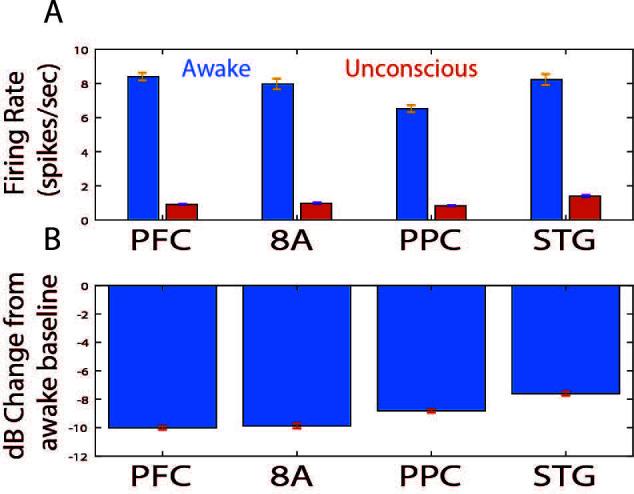
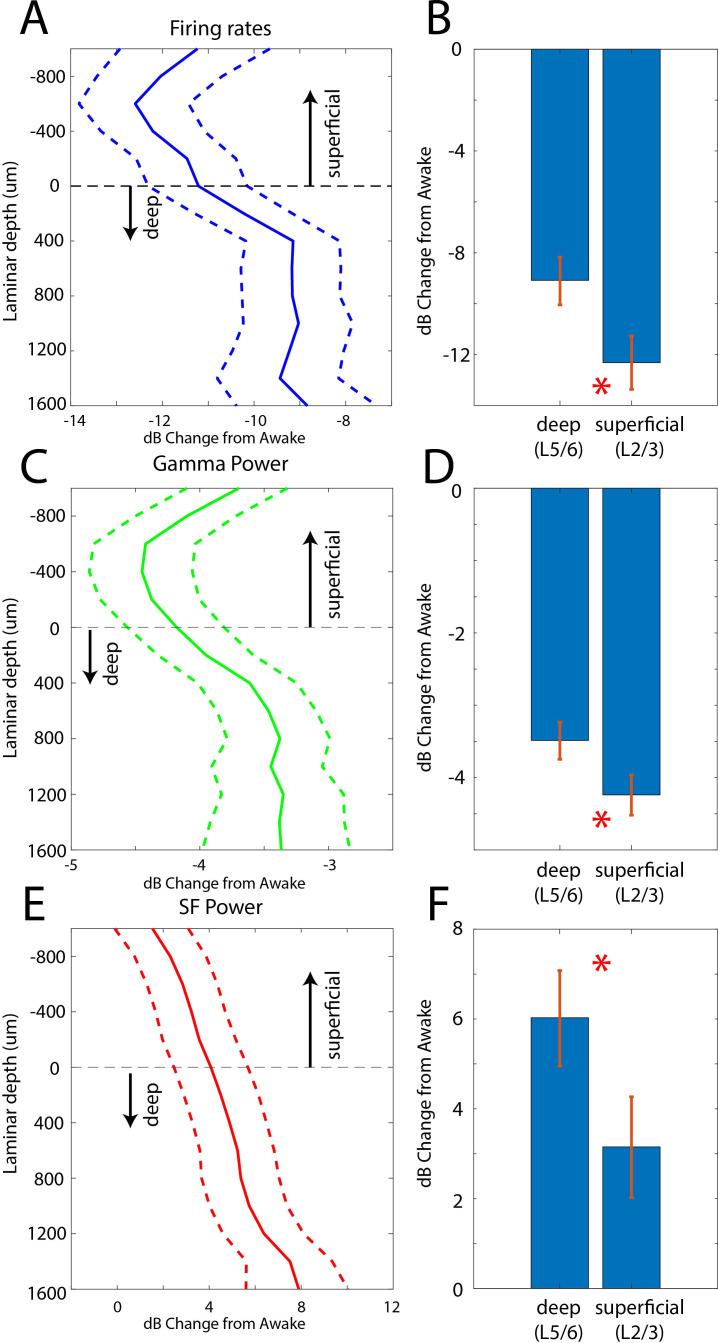
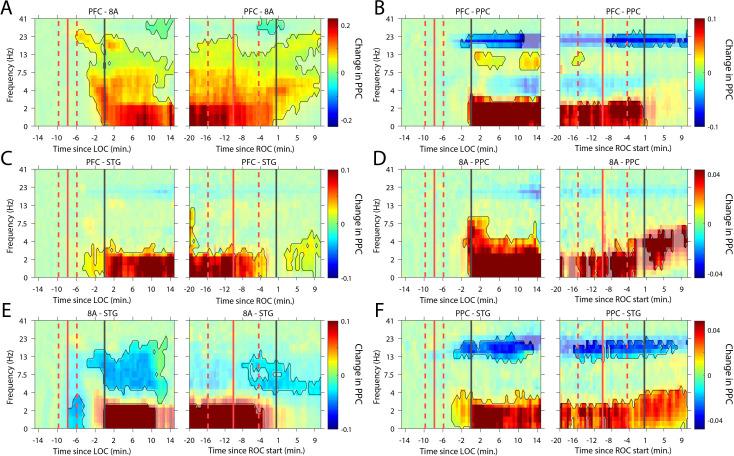
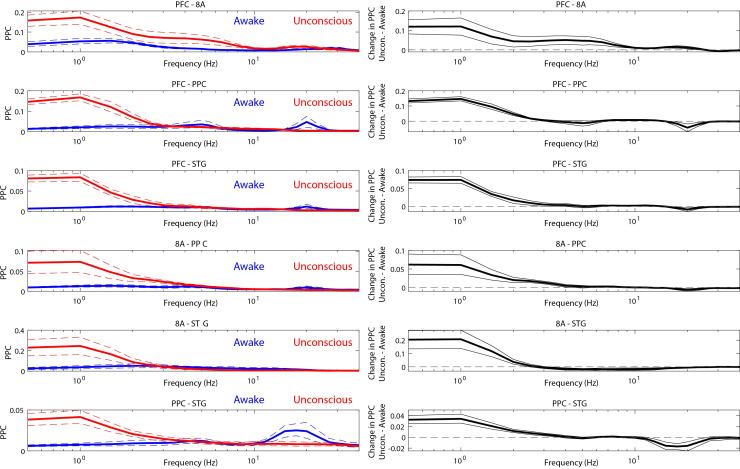
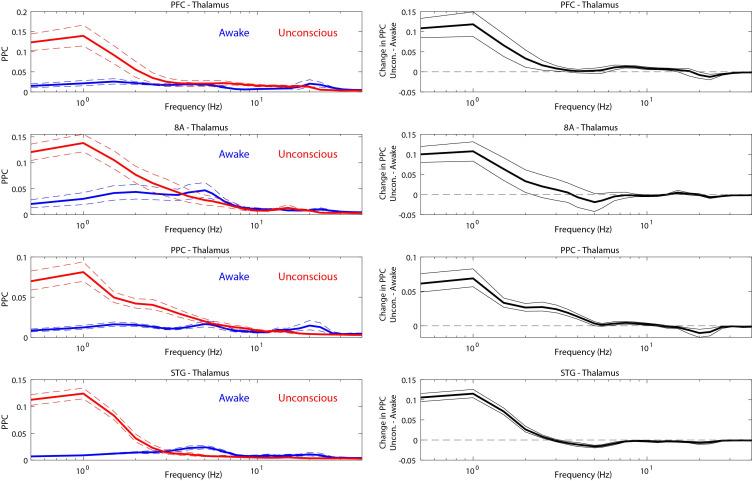
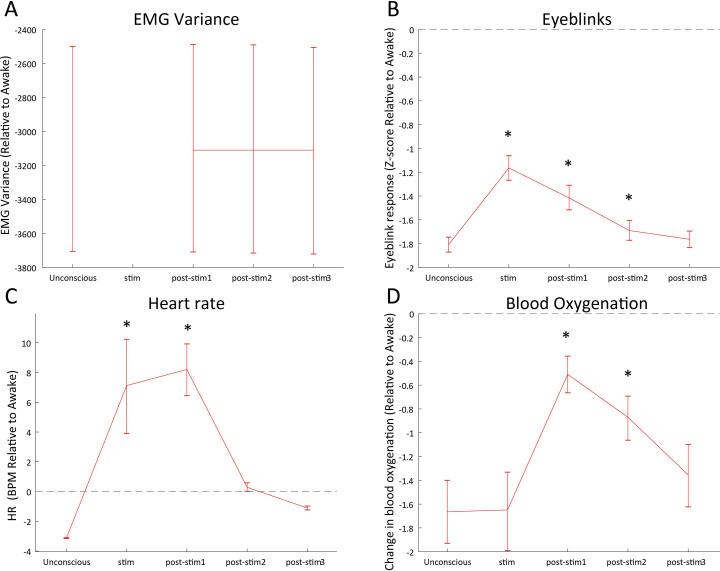
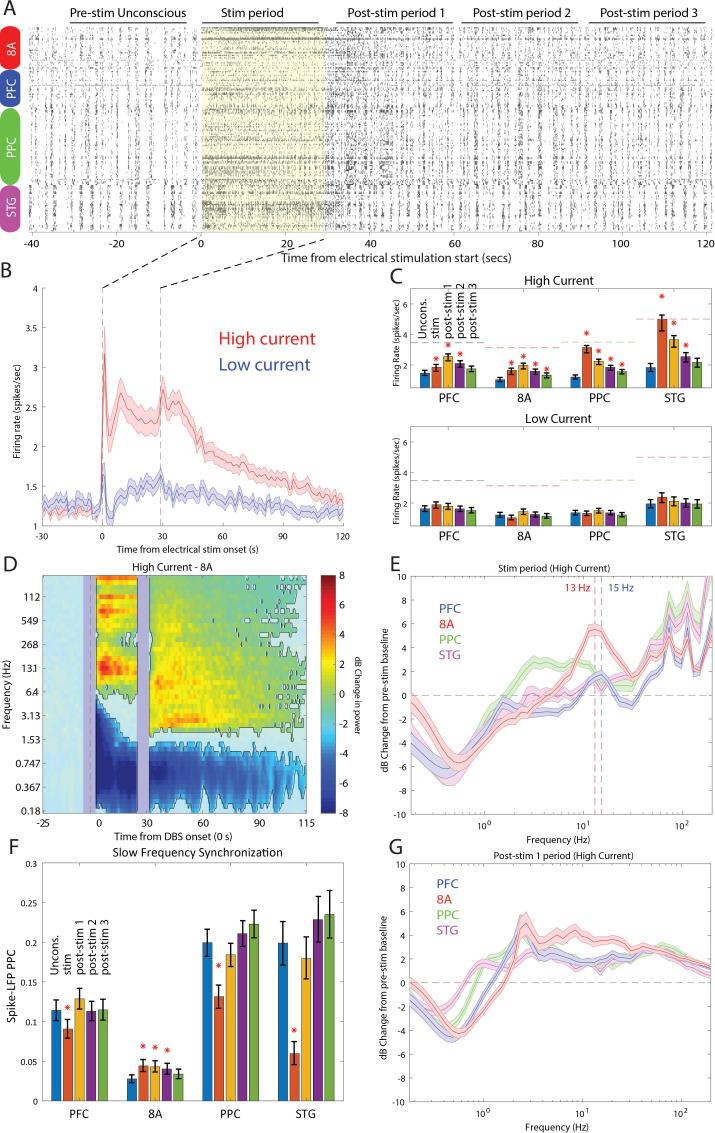
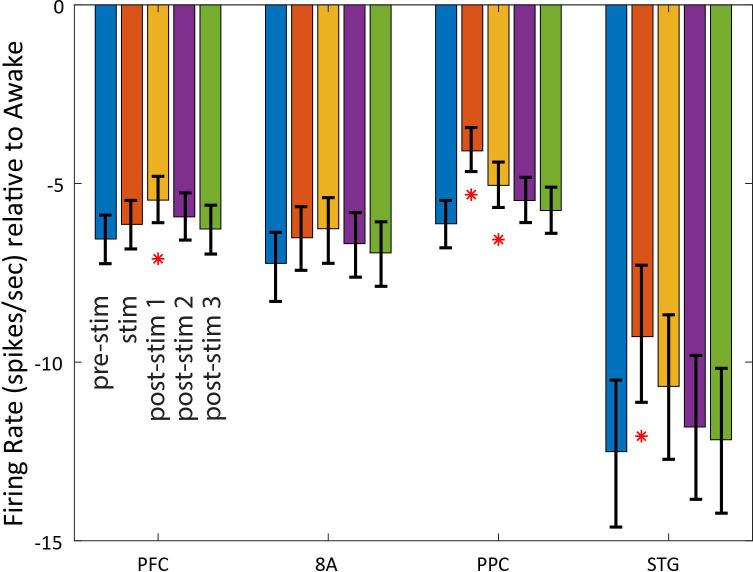
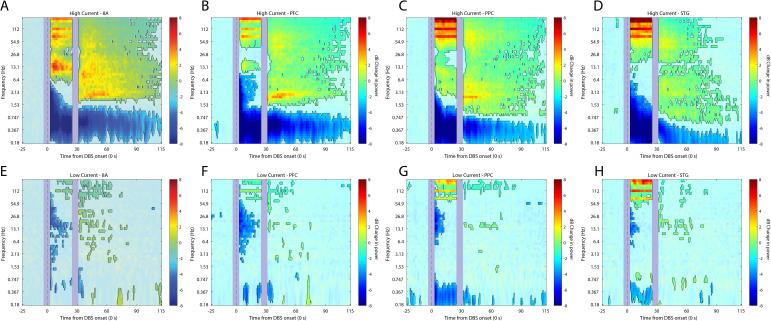
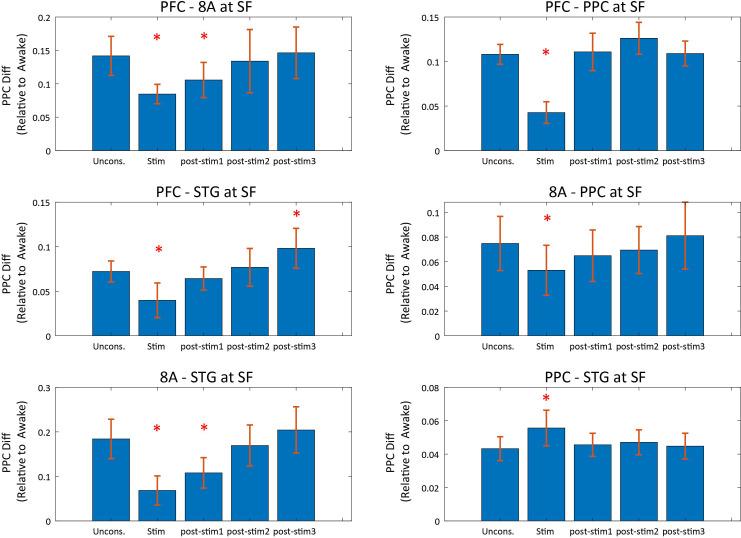
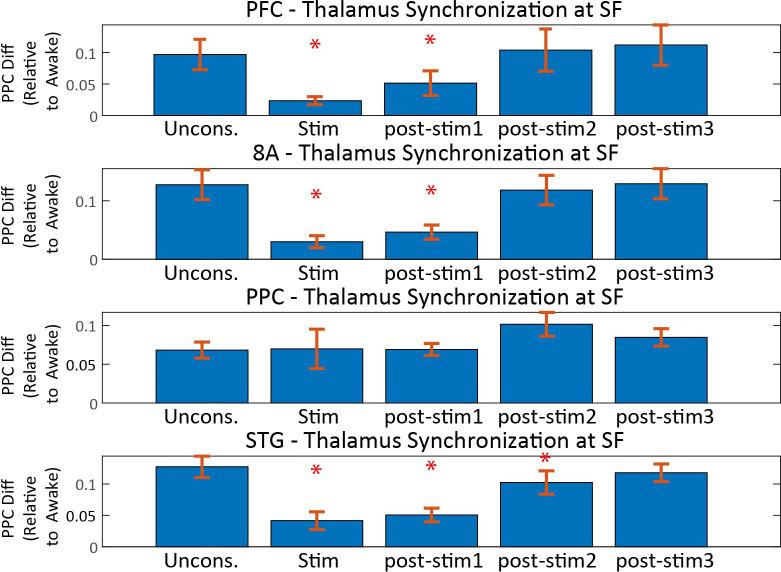
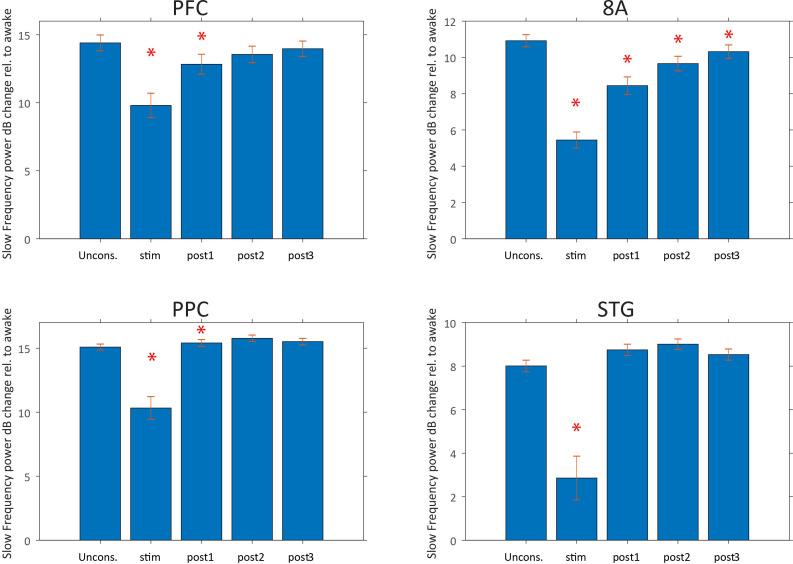
The specific circuit mechanisms through which anesthetics induce unconsciousness have not been completely characterized. We recorded neural activity from the frontal, parietal, and temporal cortices and thalamus while maintaining unconsciousness in non-human primates (NHPs) with the anesthetic propofol. Unconsciousness was marked by slow frequency (~1 Hz) oscillations in local field potentials, entrainment of local spiking to Up states alternating with Down states of little or no spiking activity, and decreased coherence in frequencies above 4 Hz. Thalamic stimulation 'awakened' anesthetized NHPs and reversed the electrophysiologic features of unconsciousness. Unconsciousness is linked to cortical and thalamic slow frequency synchrony coupled with decreased spiking, and loss of higher-frequency dynamics. This may disrupt cortical communication/integration.
麻醉诱导无意识的具体电路机制尚未完全阐明。我们在非人类灵长类动物(NHPs)中用麻醉药异丙酚维持无意识状态的同时,从额叶、顶叶和颞叶以及丘脑记录神经活动。无意识状态的特征是局部场电位中的慢频率(~1 Hz)振荡、局部尖峰的同步到与尖峰活动很少或没有的下状态交替的上状态、以及 4 Hz 以上频率的相干性降低。丘脑刺激“唤醒”麻醉的 NHPs,并逆转无意识的电生理特征。无意识与皮层和丘脑的慢频率同步相关,伴随着尖峰活动减少和高频动态丧失。这可能会破坏皮层通讯/整合。








 Zotero 插件