
特应性皮炎发病机制的分子机制。
Molecular Mechanisms of Atopic Dermatitis Pathogenesis.
机构信息
Department of Dermatology, Venereology and Allergology, Medical University of Gdansk, 80-214 Gdańsk, Poland.
出版信息
Int J Mol Sci. 2021 Apr 16;22(8):4130. doi: 10.3390/ijms22084130.
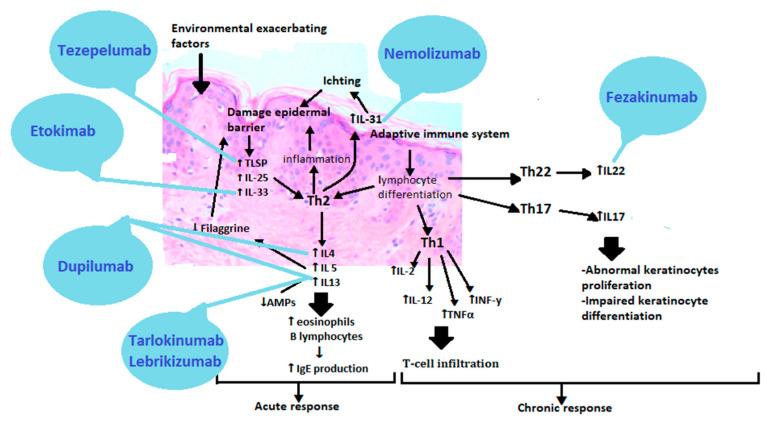
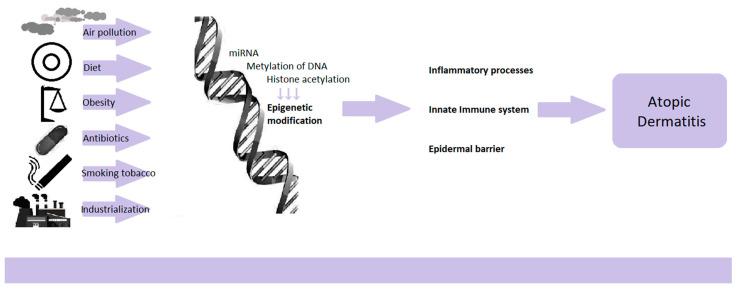
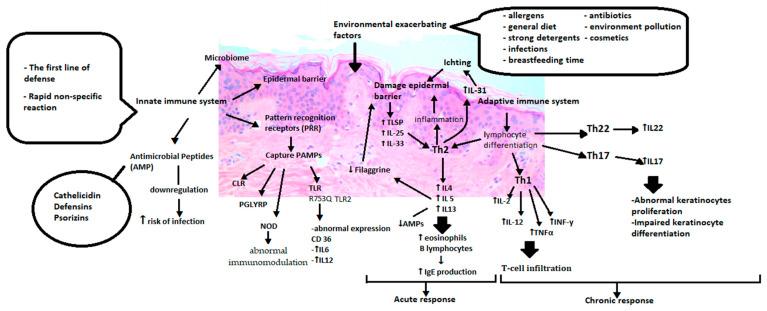
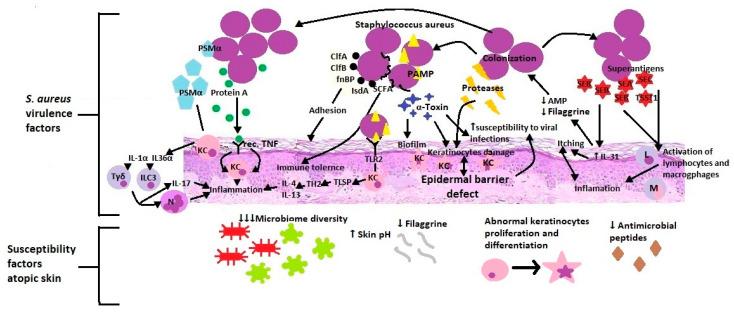
Atopic dermatitis is a chronic, non-infectious inflammatory dermatosis. Acharacteristic feature is persistent itching of the skin. The chronic, relapsing course of the disease, economic burden, and the whole family's involvement in the treatment process immensely reduce the quality of life of patients and their families. The disease emerges as a social problem by increasing indirect costs, such as visiting a doctor, absenteeism from work and school, and avoiding social interactions. Thepathophysiology of atopic dermatitis is complex and multifactorial. It includes genetic disorders, a defect in the epidermal barrier, an altered immune response, anddisruption of the skin's microbial balance. The numerous complex changes at thegenetic level and innate and adaptive immunity provide the basis for characterizing the various phenotypes and endotypes of atopic dermatitis. Emerging therapies rely on the action of specific molecules involved in the disease's pathogenesis. It may be the starting point for the individualization of atopic dermatitis treatment. This paper will try to present some molecular mechanisms of atopic dermatitis and their clinical implications.
特应性皮炎是一种慢性、非传染性炎症性皮肤病。其特征为皮肤持续瘙痒。该病慢性反复发作,经济负担沉重,且整个家庭都参与到治疗过程中,这极大地降低了患者及其家庭的生活质量。特应性皮炎通过增加间接成本(如就医、旷工和逃学以及避免社交互动)成为社会问题。特应性皮炎的发病机制复杂且具有多因素性。它包括遗传紊乱、表皮屏障缺陷、免疫反应改变以及皮肤微生物平衡破坏。在遗传水平和固有及适应性免疫方面的众多复杂变化为特应性皮炎的各种表型和内型特征提供了基础。新兴疗法依赖于参与疾病发病机制的特定分子的作用。它可能是特应性皮炎个体化治疗的起点。本文将尝试介绍特应性皮炎的一些分子机制及其临床意义。
 Zotero 插件