
鉴定和验证人类 CD4 T 细胞反应性的营养素状态依赖的血清蛋白介质。
Identification and Validation of Nutrient State-Dependent Serum Protein Mediators of Human CD4 T Cell Responsiveness.
机构信息
Laboratory of Mitochondrial Biology and Metabolism, National Heart, Lung, and Blood Institute, National Institutes of Health, Bethesda, MD 20892, USA.
Bioinformatics and Computational Core Facility, National Heart, Lung, and Blood Institute, National Institutes of Health, Bethesda, MD 20892, USA.
出版信息
Nutrients. 2021 Apr 28;13(5):1492. doi: 10.3390/nu13051492.
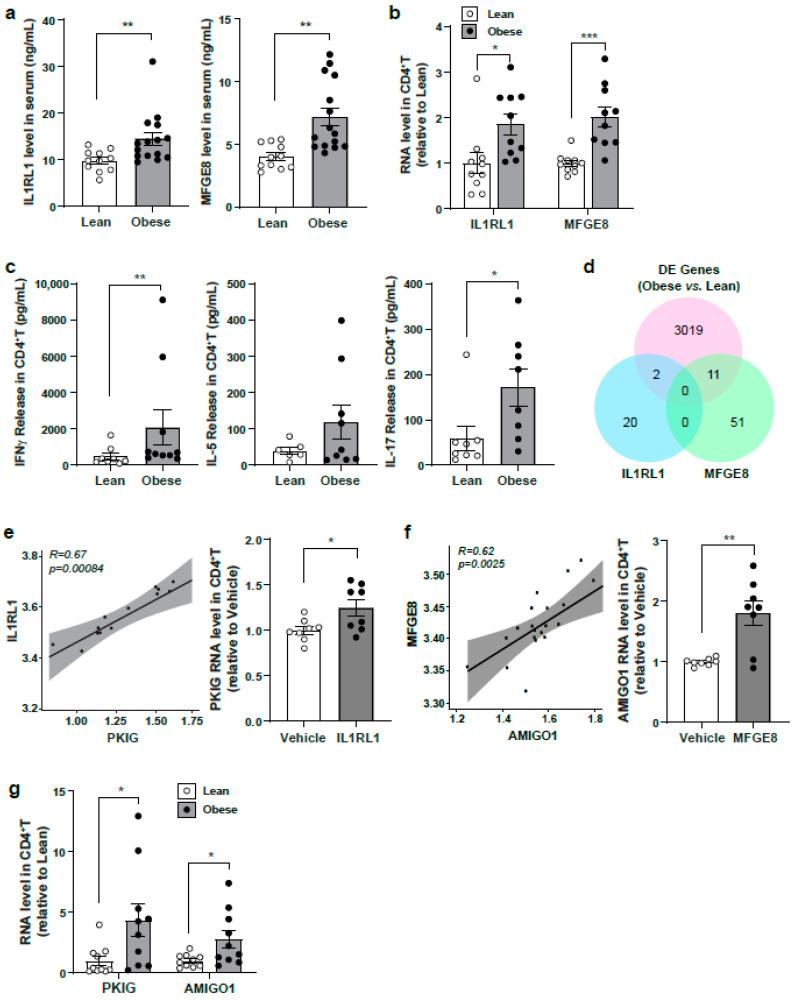
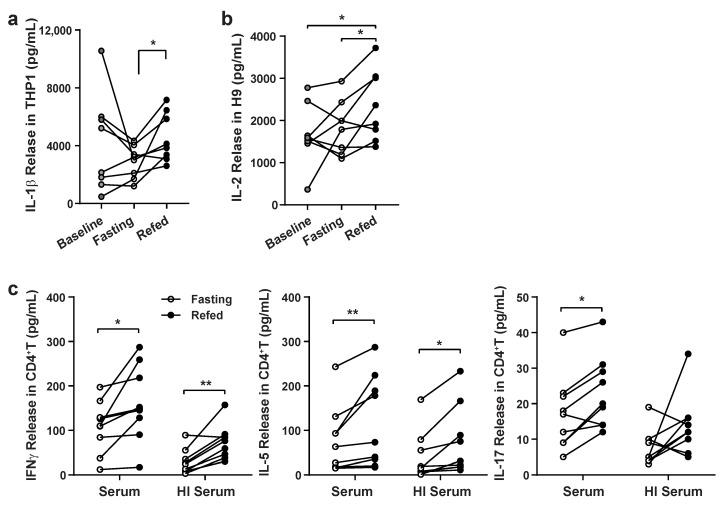
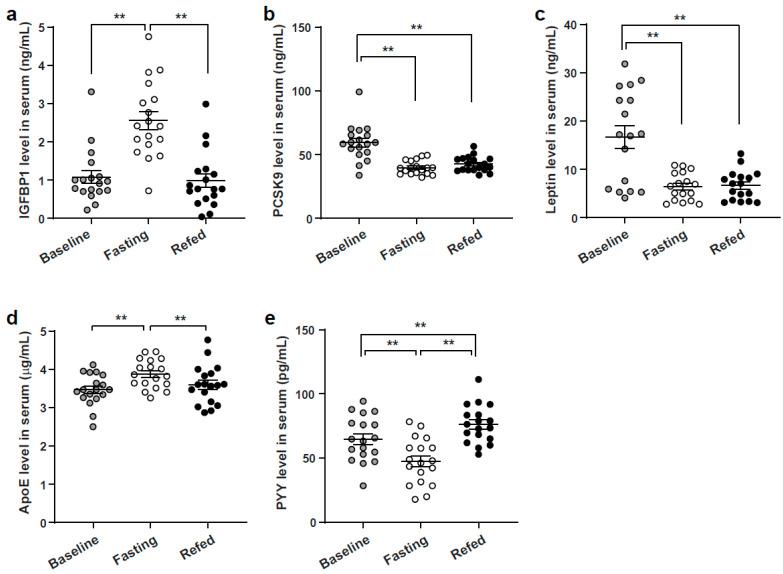
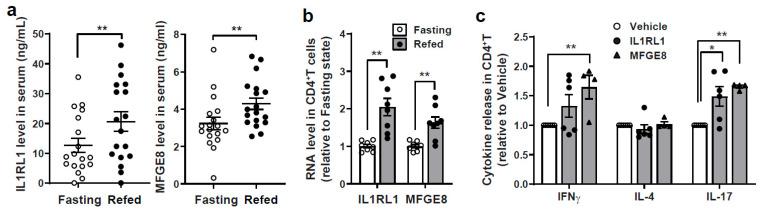
Intermittent fasting and fasting mimetic diets ameliorate inflammation. Similarly, serum extracted from fasted healthy and asthmatic subjects' blunt inflammation in vitro, implicating serum components in this immunomodulation. To identify the proteins orchestrating these effects, SOMAScan technology was employed to evaluate serum protein levels in healthy subjects following an overnight, 24-h fast and 3 h after refeeding. Partial least square discriminant analysis identified several serum proteins as potential candidates to confer feeding status immunomodulation. The characterization of recombinant IGFBP1 (elevated following 24 h of fasting) and PYY (elevated following refeeding) in primary human CD4 T cells found that they blunted and induced immune activation, respectively. Furthermore, integrated univariate serum protein analysis compared to RNA-seq analysis from peripheral blood mononuclear cells identified the induction of IL1RL1 and MFGE8 levels in refeeding compared to the 24-h fasting in the same study. Subsequent quantitation of these candidate proteins in lean versus obese individuals identified an inverse regulation of serum levels in the fasted subjects compared to the obese subjects. In parallel, IL1RL1 and MFGE8 supplementation promoted increased CD4 T responsiveness to T cell receptor activation. Together, these data show that caloric load-linked conditions evoke serological protein changes, which in turn confer biological effects on circulating CD4 T cell immune responsiveness.
间歇性禁食和禁食模拟饮食可改善炎症。同样,从禁食的健康和哮喘患者的血清中提取的物质在体外也能缓解炎症,这表明血清成分在这种免疫调节中起作用。为了确定协调这些效应的蛋白质,我们采用 SOMAScan 技术来评估健康受试者在隔夜禁食、24 小时禁食和 3 小时后再进食后的血清蛋白水平。偏最小二乘判别分析确定了几种血清蛋白作为潜在的候选蛋白,可调节进食状态的免疫调节。在原代人 CD4 T 细胞中对重组 IGFBP1(禁食 24 小时后升高)和 PYY(再进食后升高)进行的特征描述发现,它们分别抑制和诱导免疫激活。此外,与外周血单核细胞的 RNA-seq 分析相比,综合的单变量血清蛋白分析确定了与 24 小时禁食相比,再进食时 IL1RL1 和 MFGE8 水平的诱导。在同一研究中,对这些候选蛋白在瘦人和肥胖个体中的定量分析确定了禁食个体与肥胖个体相比,血清水平的反向调节。同时,IL1RL1 和 MFGE8 的补充促进了 CD4 T 细胞对 T 细胞受体激活的反应性增加。总之,这些数据表明,热量负荷相关条件会引起血清蛋白变化,进而对循环 CD4 T 细胞免疫反应性产生生物学影响。


 Zotero 插件