
基于三羧基纤维素和聚乙烯醇的水凝胶用作钴离子保留的生物吸附剂。
Hydrogel Based on Tricarboxi-Cellulose and Poly(Vinyl Alcohol) Used as Biosorbent for Cobalt Ions Retention.
作者信息
Nica Iulia, Zaharia Carmen, Suteu Daniela
机构信息
Department of Organic, Biochemical and Food Engineering, 'Cristofor Simionescu' Faculty of Chemical Engineering and Environment Protection, "Gheorghe Asachi" Technical University of Iasi, 73 D. Mangeron Blvd., 700050 Iasi, Romania.
Department of Environmental Engineering and Management, 'Cristofor Simionescu' Faculty of Chemical Engineering and Environment Protection, "Gheorghe Asachi" Technical University of Iasi, 73 D. Mangeron Blvd., 700050 Iasi, Romania.
出版信息
Polymers (Basel). 2021 Apr 29;13(9):1444. doi: 10.3390/polym13091444.
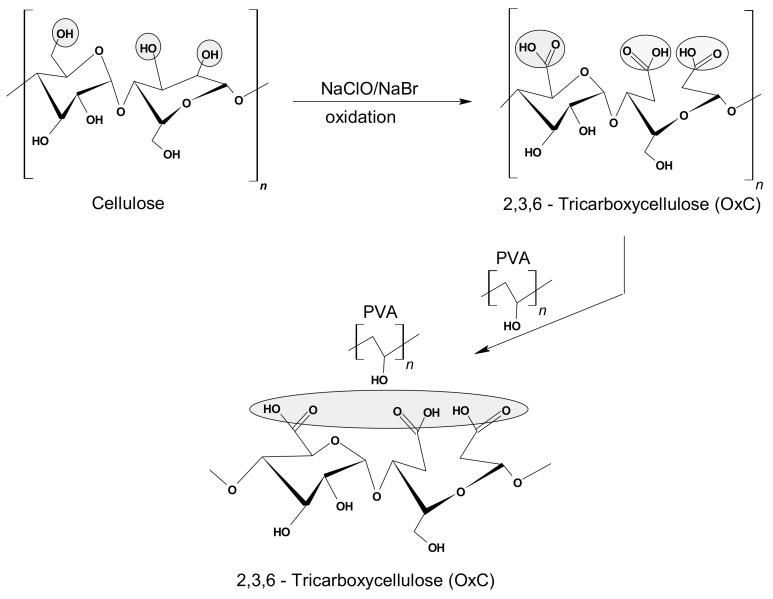
A biomaterial based on poly(vinyl alcohol) reticulated with tricarboxi-cellulose obtained by TEMPO oxidation (OxC25) was used as a new biosorbent for Co(II) ions retention from aqueous solutions. The biosorption process of Co(II) ions was studied while mainly considering the operational factors that can influence it (i.e., biosorbent concentration, pH of the aqueous media, temperature and contact time of the phases). The maximum adsorption capacity was 181.82 mg/g, with the biosorption well fitted by the Langmuir model. The kinetic modeling of the biosorption process was based on certain models: Lagergreen (pseudo first order model), Ho (pseudo second order model), Elovich (heterogeneous biosorbent model), Webber-Morris (intraparticle diffusion model) and McKay (film diffusion model). The corresponding kinetic model suggests that this biosorption process followed a pseudo-second order kinetic model and was developed in two controlled steps beginning with film diffusion and followed by intraparticles diffusion.
一种基于用通过TEMPO氧化(OxC25)获得的三羧基纤维素网状化的聚乙烯醇的生物材料被用作从水溶液中保留Co(II)离子的新型生物吸附剂。研究了Co(II)离子的生物吸附过程,同时主要考虑了可能影响它的操作因素(即生物吸附剂浓度、水相介质的pH值、温度和各相的接触时间)。最大吸附容量为181.82 mg/g,生物吸附符合Langmuir模型。生物吸附过程的动力学建模基于某些模型:Lagergreen(伪一级模型)、Ho(伪二级模型)、Elovich(非均相生物吸附剂模型)、Webber-Morris(颗粒内扩散模型)和McKay(膜扩散模型)。相应的动力学模型表明,该生物吸附过程遵循伪二级动力学模型,并且在两个受控步骤中进行,首先是膜扩散,然后是颗粒内扩散。
 Zotero 插件