
高分辨率熔解曲线(HRM)技术在伊朗东南部疟疾流行区消除计划下无症状疟疾检测中的应用
Application of High-Resolution Melting (HRM) Technique towards the Detection of Asymptomatic Malaria in a Malaria Endemic Area of Southeastern Iran under Elimination Program.
作者信息
Ouma Francan Felix, Nateghpour Mehdi, Haghi Afsaneh Motevalli, Mohebali Mehdi, Farivar Leila, Hosseini-Safa Ahmad, Mosawi Sayed Hussain
机构信息
Department of Medical Parasitology and Mycology, School of Public Health, Tehran University of Medical Sciences, Tehran, Iran.
Center for Research of Endemic Parasites of Iran, Tehran University of Medical Sciences, Tehran, Iran.
出版信息
J Arthropod Borne Dis. 2020 Dec 31;14(4):353-362. doi: 10.18502/jad.v14i4.5272. eCollection 2020 Dec.
BACKGROUND
Asymptomatic malaria, which usually exists in low parasitemia, acts as the Plasmodium species reservoirs contributing towards malaria transmission. This situation hinders malaria elimination programs in endemic areas, thus necessitating an active case detection with a high sensitive method and treatment of cases. This is why we used a High Resolution Melting (HRM) assay to monitor the trend of asymptomatic malaria in a malaria endemic area of Iran which is under elimination program.
METHODS
The peripheral blood was sampled from 271 clinically approved non-febrile individuals from a malaria endemic zone of southeastern Iran for asymptomatic malaria prevalence detection by microscopy, Rapid Diagnostic Tests (RDTs) and HRM methods. The HRM assay was done based on the amplification of 18S SSU rRNA gene.
RESULTS
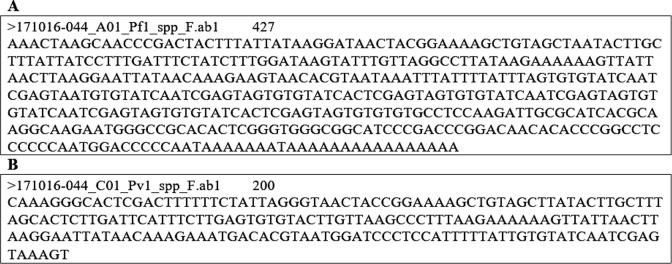
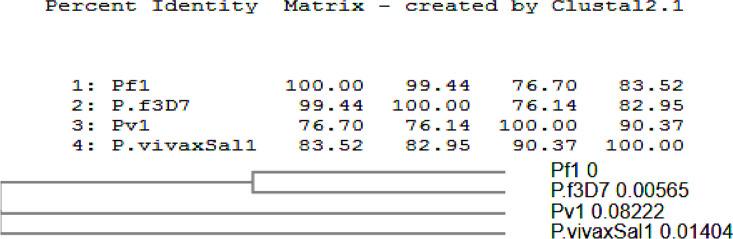
The HRM assay revealed infections from three individuals out of 271 (1.1% asymptomatic malaria prevalence) from the participants, two Iranian natives with infection and one Pakistani immigrant with infection. Neither microscopy nor RDTs detected spp infections from the 271 non-febrile individuals. The nucleotide sequencing analysis of the positive controls used in this study showed a close homology with the reference gene bank sequences of 3D7 (CPO16995.1) and Sal-1(UO3079.1).
CONCLUSION
This study revealed a low frequency of asymptomatic malaria trend within malaria endemic areas of southeastern Iran which are under intense elimination program and also the ability of HRM assay in detecting low spp parasitemia beyond the limits of microscopy and RDTs.
背景
无症状疟疾通常以低寄生虫血症形式存在,是疟原虫物种的储存宿主,有助于疟疾传播。这种情况阻碍了疟疾流行地区的疟疾消除计划,因此需要采用高灵敏度方法进行主动病例检测并治疗病例。这就是我们使用高分辨率熔解(HRM)分析来监测伊朗一个正在实施消除计划的疟疾流行地区无症状疟疾趋势的原因。
方法
从伊朗东南部疟疾流行区271名临床诊断无发热的个体采集外周血,通过显微镜检查、快速诊断测试(RDT)和HRM方法检测无症状疟疾的流行情况。HRM分析基于18S小亚基核糖体RNA(rRNA)基因的扩增进行。
结果
HRM分析显示,271名参与者中有3人感染(无症状疟疾流行率为1.1%),其中两名伊朗本土感染者和一名巴基斯坦移民感染者。在这271名无发热个体中,显微镜检查和RDT均未检测到疟原虫感染。本研究中使用的阳性对照的核苷酸测序分析显示,其与恶性疟原虫3D7(CPO16995.1)和间日疟原虫Sal-1(UO3079.1)的参考基因库序列具有高度同源性。
结论
本研究揭示了在伊朗东南部正在大力实施消除计划的疟疾流行地区,无症状疟疾的流行趋势频率较低,同时也表明HRM分析能够检测到低疟原虫血症,其检测能力超过了显微镜检查和RDT的极限。


 Zotero 插件