
N-芳基吡啶氰染料衍生物是双光子和超分辨成像的核和细胞器 DNA 标记物。
N-aryl pyrido cyanine derivatives are nuclear and organelle DNA markers for two-photon and super-resolution imaging.
机构信息
Graduate School of Science, Nagoya University, Nagoya, Japan.
Department of NanoBiophotonics, Max Planck Institute for Biophysical Chemistry, Göttingen, Germany.
出版信息
Nat Commun. 2021 May 11;12(1):2650. doi: 10.1038/s41467-021-23019-w.
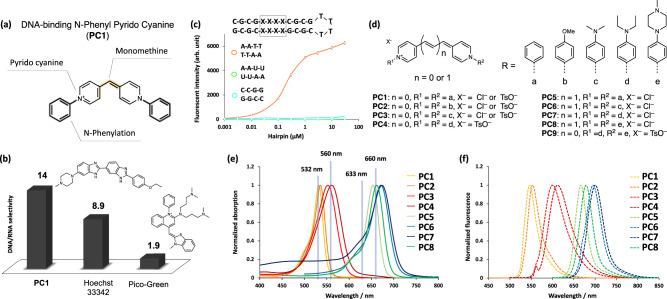
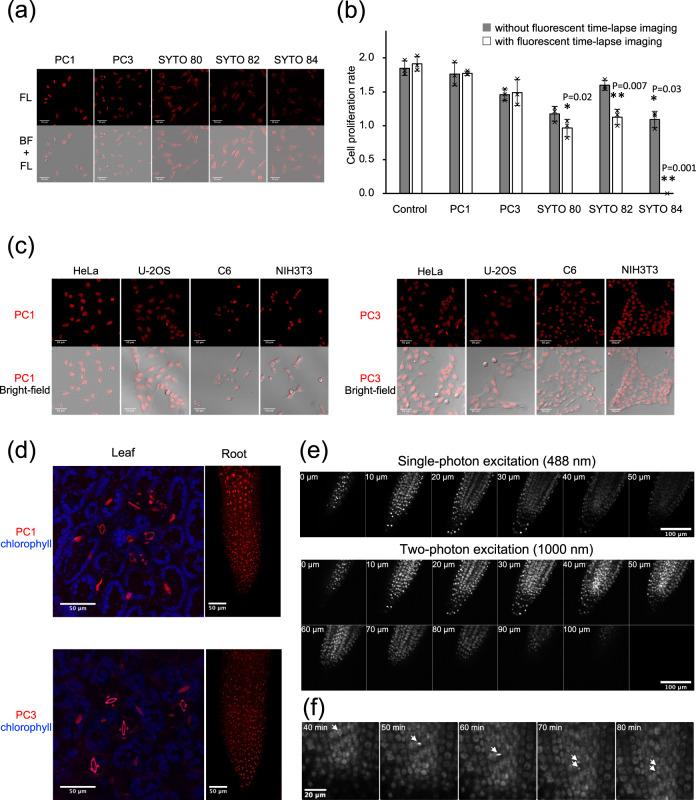
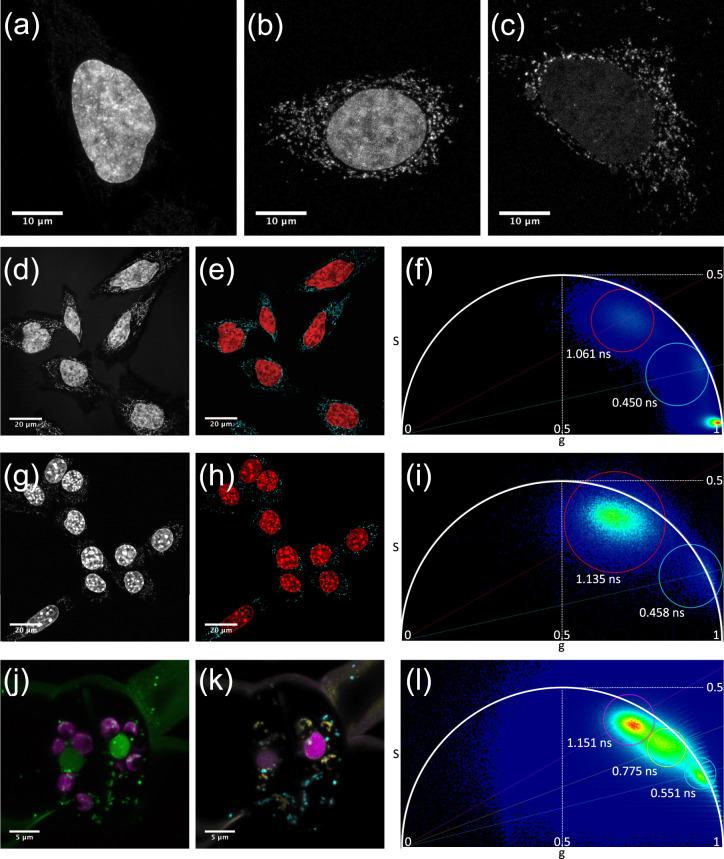
Live cell imaging using fluorescent DNA markers are an indispensable molecular tool in various biological and biomedical fields. It is a challenge to develop DNA probes that avoid UV light photo-excitation, have high specificity for DNA, are cell-permeable and are compatible with cutting-edge imaging techniques such as super-resolution microscopy. Herein, we present N-aryl pyrido cyanine (N-aryl-PC) derivatives as a class of long absorption DNA markers with absorption in the wide range of visible light. The high DNA specificity and membrane permeability allow the staining of both organelle DNA as well as nuclear DNA, in various cell types, including plant tissues, without the need for washing post-staining. N-aryl-PC dyes are also highly compatible with a separation of photon by lifetime tuning method in stimulated emission depletion microscopy (SPLIT-STED) for super-resolution imaging as well as two-photon microscopy for deep tissue imaging, making it a powerful tool in the life sciences.
使用荧光 DNA 标记物进行活细胞成像,是各个生物学和生物医学领域不可或缺的分子工具。开发避免紫外光光激发、对 DNA 具有高特异性、可穿透细胞膜且与超分辨率显微镜等前沿成像技术兼容的 DNA 探针,是一项挑战。在此,我们介绍 N-芳基吡啶氰(N-aryl-PC)衍生物,作为一类具有宽可见光吸收范围的长吸收 DNA 标记物。高 DNA 特异性和膜通透性允许对细胞器 DNA 和核 DNA 进行染色,适用于各种细胞类型,包括植物组织,无需染色后洗涤。N-芳基-PC 染料也高度兼容通过寿命调谐方法在受激发射损耗显微镜(SPLIT-STED)中分离光子的方法,用于超分辨率成像以及双光子显微镜用于深层组织成像,使其成为生命科学领域的有力工具。

 Zotero 插件