
开发并鉴定一种基于高灵敏度 NanoLuciferase 的免疫沉淀系统,用于检测抗流感病毒 HA 抗体。
Development and Characterization of a Highly Sensitive NanoLuciferase-Based Immunoprecipitation System for the Detection of Anti-Influenza Virus HA Antibodies.
机构信息
Department of Microbiology and Cell Biology, Tokyo Metropolitan Institute of Medical Science, Tokyo, Japan.
Laboratory of Immunosenescence, National Institutes of Biomedical Innovation, Health and Nutrition, Osaka, Japan.
出版信息
mSphere. 2021 May 12;6(3):e01342-20. doi: 10.1128/mSphere.01342-20.
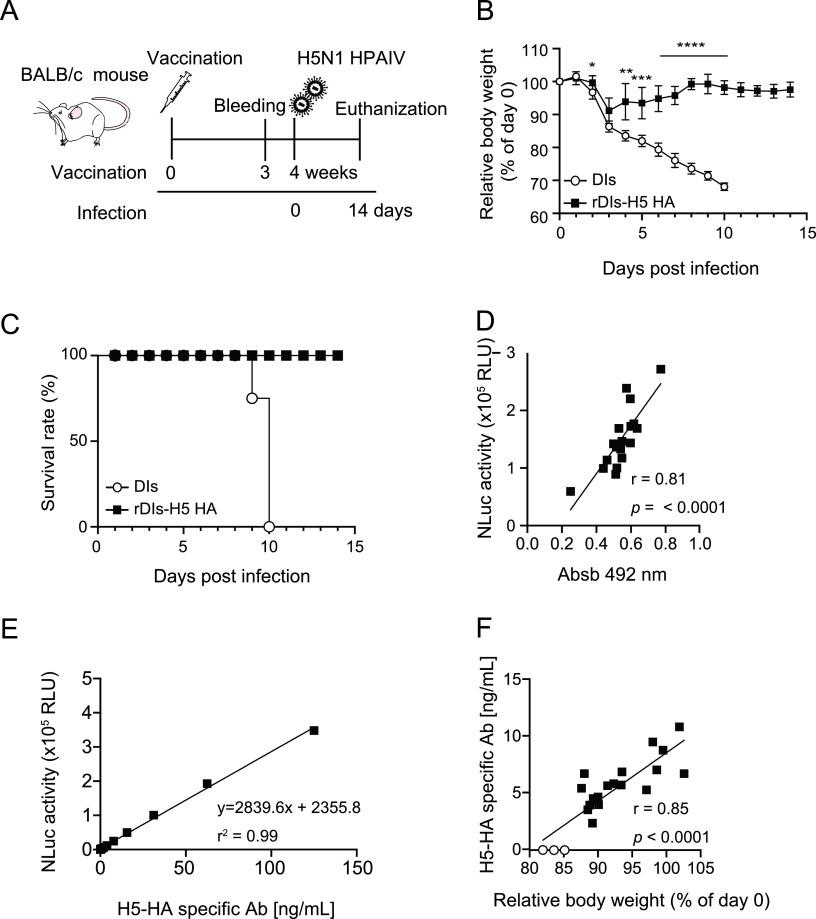
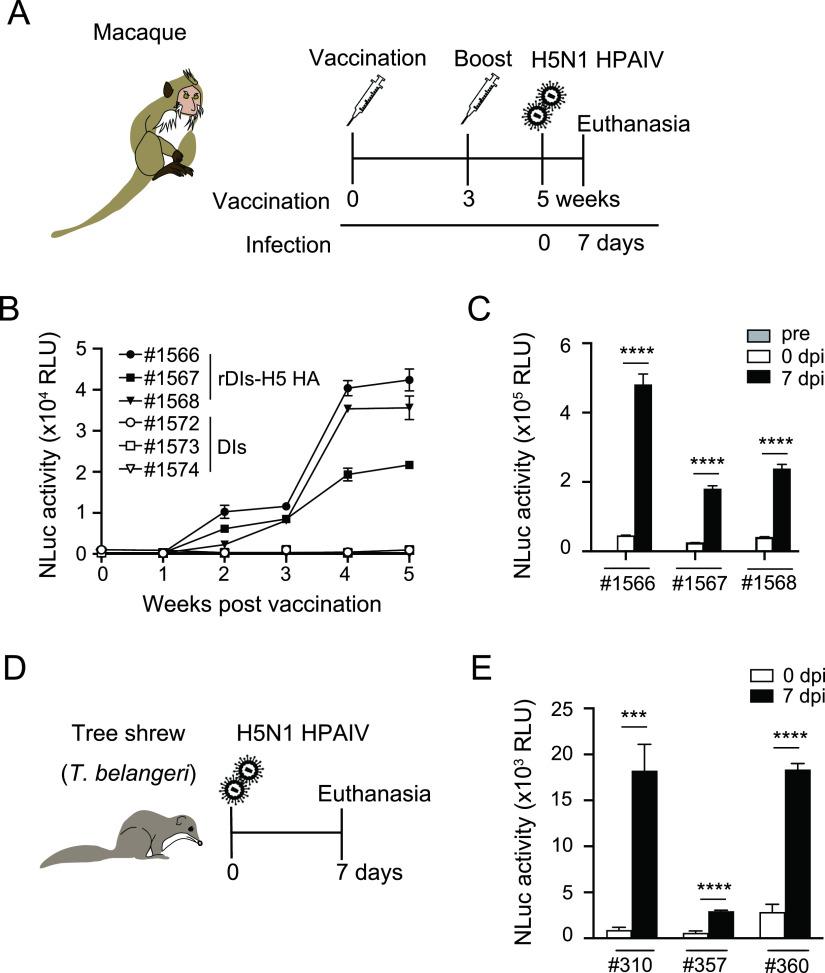
Antibody detection is crucial for monitoring host immune responses to specific pathogen antigens (Ags) and evaluating vaccine efficacies. The luciferase immunoprecipitation system (LIPS) was developed for sensitive detection of Ag-specific antibodies in sera from various species. In this study, we describe NanoLIPS, an improved LIPS assay based on NanoLuciferase (NLuc), and employ the assay for monitoring antibody responses following influenza virus infection or vaccination. We generated recombinant influenza virus hemagglutinin (HA) proteins tagged with N-terminal (N-NLuc-HA) or C-terminal (C-NLuc-HA) NLuc reporters. NLuc-HA yielded an at least 20-fold higher signal-to-noise ratio than did a LIPS assay employing a recombinant HA- luciferase (GLuc) fusion protein. NanoLIPS-based detection of anti-HA antibodies yielded highly reproducible results with a broad dynamic range. The levels of antibodies against C-NLuc-HA generated by mice vaccinated with recombinant vaccinia virus DIs strain expressing an influenza virus HA protein (rDIs-HA) was significantly correlated with the protective effect elicited by the rDIs-HA vaccine. C-NLuc-HA underwent glycosylation with native conformations and assembly to form a trimeric structure and was detected by monoclonal antibodies that detect conformational epitopes present on the globular head or stalk domain of HA. Therefore, NanoLIPS is applicable for evaluating vaccine efficacy. We also showed that C-NLuc-HA is applicable for detection of HA-specific antibodies in sera from various experimental species, including mouse, cynomolgus macaque, and tree shrew. Thus, NanoLIPS-based detection of HA offers a simple and high-sensitivity method that detects native conformational epitopes and can be used in various experimental animal models. Influenza virus HA-specific antibodies can be detected via the hemagglutination inhibition (HI) assay, the neutralization (NT) assay, and the enzyme-linked immunosorbent assay (ELISA). However, these assays have some drawbacks, including narrow dynamic range and the requirement for large amounts of sera. As an alternative to an ELISA-based method, luciferase immunoprecipitation system (LIPS) was developed. We focused on NanoLuciferase (NLuc), which has a small size, higher intensity, and longer stability. In this study, we developed a technically feasible and highly sensitive method for detecting influenza virus-specific antibodies using a NLuc-tagged recombinant HA protein produced in mammalian cells. HA with a C-terminal NLuc extension (C-NLuc-HA) was glycosylated and formed trimeric complexes when expressed in mammalian cells. Furthermore, C-NLuc-HA was recognized not only by monoclonal antibodies that bind to the globular head domain but also by those that bind to the stalk domain. We also demonstrated that the data obtained by this assay correlate with the protection of an experimental vaccine in animal models.
抗体检测对于监测宿主针对特定病原体抗原 (Ag) 的免疫反应和评估疫苗功效至关重要。荧光素酶免疫沉淀系统 (LIPS) 是为了灵敏检测来自各种物种的血清中 Ag 特异性抗体而开发的。在本研究中,我们描述了 NanoLIPS,这是一种基于纳米荧光素酶 (NLuc) 的改进 LIPS 检测方法,并利用该检测方法监测流感病毒感染或接种后的抗体反应。我们生成了带有 N 端 (N-NLuc-HA) 或 C 端 (C-NLuc-HA) NLuc 报告基因的重组流感病毒血凝素 (HA) 蛋白。NLuc-HA 产生的信号与噪声比至少比使用重组 HA-荧光素酶 (GLuc) 融合蛋白的 LIPS 检测高 20 倍。基于 NanoLIPS 的抗 HA 抗体检测具有高度可重复性和宽动态范围。用表达流感病毒 HA 蛋白的重组痘苗病毒 DIs 株 (rDIs-HA) 接种的小鼠产生的针对 C-NLuc-HA 的抗体水平与 rDIs-HA 疫苗引起的保护作用显著相关。C-NLuc-HA 发生糖基化,具有天然构象,并组装成三聚体结构,可被识别构象表位的单克隆抗体检测到,这些表位存在于 HA 的球形头部或茎部结构域。因此,NanoLIPS 适用于评估疫苗功效。我们还表明,C-NLuc-HA 可用于检测来自各种实验动物物种(包括小鼠、食蟹猴和树鼩)的血清中的 HA 特异性抗体。因此,基于 NanoLIPS 的 HA 检测提供了一种简单且高灵敏度的方法,可以检测到天然构象表位,并且可以在各种实验动物模型中使用。流感病毒 HA 特异性抗体可通过血凝抑制 (HI) 测定、中和 (NT) 测定和酶联免疫吸附测定 (ELISA) 检测。然而,这些测定方法存在一些缺点,包括动态范围较窄和需要大量的血清。作为 ELISA 方法的替代方法,开发了荧光素酶免疫沉淀系统 (LIPS)。我们专注于纳米荧光素酶 (NLuc),它体积小、强度高、稳定性好。在这项研究中,我们开发了一种在哺乳动物细胞中生产的具有技术可行性和高灵敏度的检测流感病毒特异性抗体的方法,该方法使用了带有 N 端 NLuc 标签的重组 HA 蛋白。带有 C 端 NLuc 延伸 (C-NLuc-HA) 的 HA 在哺乳动物细胞中表达时会发生糖基化并形成三聚体复合物。此外,C-NLuc-HA 不仅被结合球形头部结构域的单克隆抗体识别,也被结合茎部结构域的单克隆抗体识别。我们还证明,该测定法获得的数据与动物模型中实验性疫苗的保护作用相关。


 Zotero 插件