
深度学习可从组织病理学图像预测染色体不稳定性。
Deep learning predicts chromosomal instability from histopathology images.
作者信息
Xu Zhuoran, Verma Akanksha, Naveed Uska, Bakhoum Samuel F, Khosravi Pegah, Elemento Olivier
机构信息
Caryl and Israel Englander Institute for Precision Medicine, Weill Cornell Medicine, New York 10065, USA.
Pathology and Laboratory Medicine, Weill Cornell Medicine, New York 10065, USA.
出版信息
iScience. 2021 Apr 3;24(5):102394. doi: 10.1016/j.isci.2021.102394. eCollection 2021 May 21.
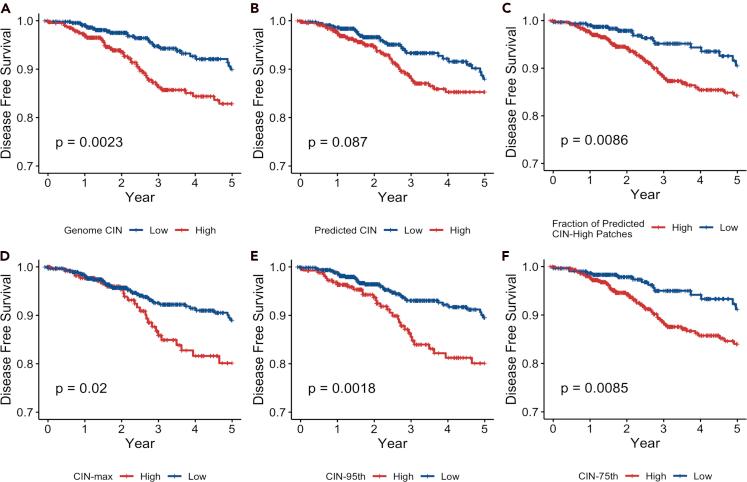
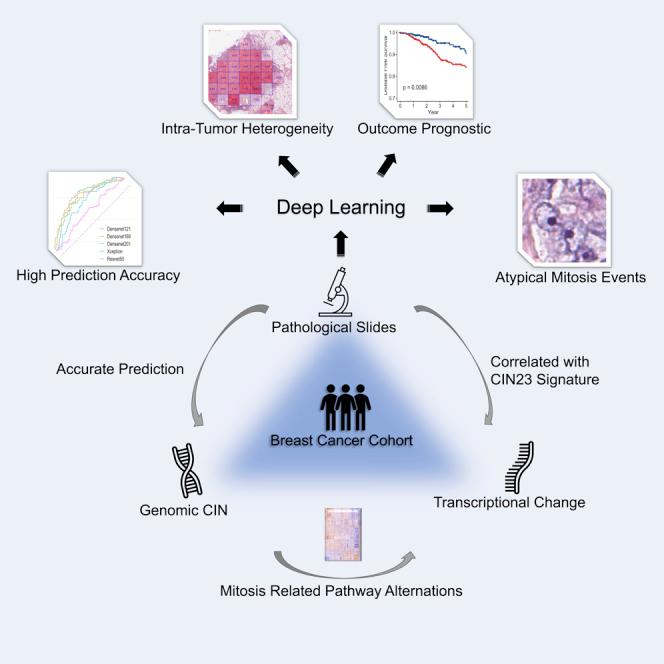
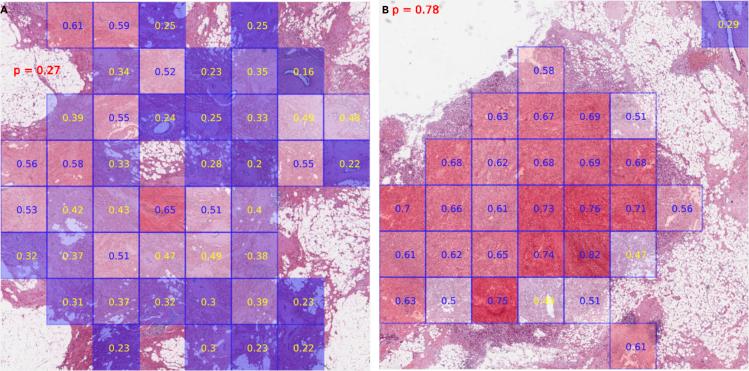
Chromosomal instability (CIN) is a hallmark of human cancer yet not readily testable for patients with cancer in routine clinical setting. In this study, we sought to explore whether CIN status can be predicted using ubiquitously available hematoxylin and eosin histology through a deep learning-based model. When applied to a cohort of 1,010 patients with breast cancer (Training set: n = 858, Test set: n = 152) from The Cancer Genome Atlas where 485 patients have high CIN status, our model accurately classified CIN status, achieving an area under the curve of 0.822 with 81.2% sensitivity and 68.7% specificity in the test set. Patch-level predictions of CIN status suggested intra-tumor heterogeneity within slides. Moreover, presence of patches with high predicted CIN score within an entire slide was more predictive of clinical outcome than the average CIN score of the slide, thus underscoring the clinical importance of intra-tumor heterogeneity.
染色体不稳定(CIN)是人类癌症的一个标志,但在常规临床环境中,癌症患者却难以对其进行检测。在本研究中,我们试图探索能否通过基于深度学习的模型,利用广泛可用的苏木精和伊红组织学来预测CIN状态。当将该模型应用于来自癌症基因组图谱的1010例乳腺癌患者队列(训练集:n = 858,测试集:n = 152)时,其中485例患者具有高CIN状态,我们的模型能够准确分类CIN状态,在测试集中曲线下面积达到0.822,灵敏度为81.2%,特异性为68.7%。CIN状态的斑块水平预测表明载玻片内存在肿瘤内异质性。此外,与载玻片的平均CIN评分相比,整个载玻片中具有高预测CIN评分的斑块的存在对临床结果的预测性更强,从而突出了肿瘤内异质性的临床重要性。


 Zotero 插件