
下肢骨折在成年人中的流行病学变化-一项全国住院患者登记研究。
Changing epidemiology of lower extremity fractures in adults over a 15-year period - a National Hospital Discharge Registry study.
机构信息
Department of Traumatology and Reconstructive Surgery, BG Trauma Centre Tuebingen, Eberhard Karls University Tuebingen, Schnarrenbergstrasse 95, 72076, Tuebingen, Germany.
Eberhard Karls University Tuebingen, Medical School, Geissweg 5, 72076, Tuebingen, Germany.
出版信息
BMC Musculoskelet Disord. 2021 May 19;22(1):456. doi: 10.1186/s12891-021-04291-9.
BACKGROUND
Demographic changes led to an increasingly ageing population in Germany and thus to possible changes in the frequency of fractures. The primary aim of this study was to report changes in fracture rates of the lower extremities in Germany in 2002 compared to 2017 and to evaluate those changes.
METHODS
Inpatient data from the German National Hospital Discharge Registry (ICD10) for 2002 and 2017 were evaluated. Changes in total counts and incidence rates were analysed for fractures in the following locations: femoral neck, pertrochanteric, subtrochanteric, distal femur, femoral shaft, proximal and distal tibia, tibial shaft, medial and lateral malleolus, and other parts of the lower leg (including bi- and trimalleolar fractures), calcaneus, talus, other tarsal bones, metatarsal bones, greater toe, lesser toe, other fractures of foot or unspecific fractures of foot and toe. Patients were classed into age groups by sex: 15-24, 25-34,35-44, 45-54, 55-64, 65-74, 75-84, 85-90 and > 90 years.
RESULTS
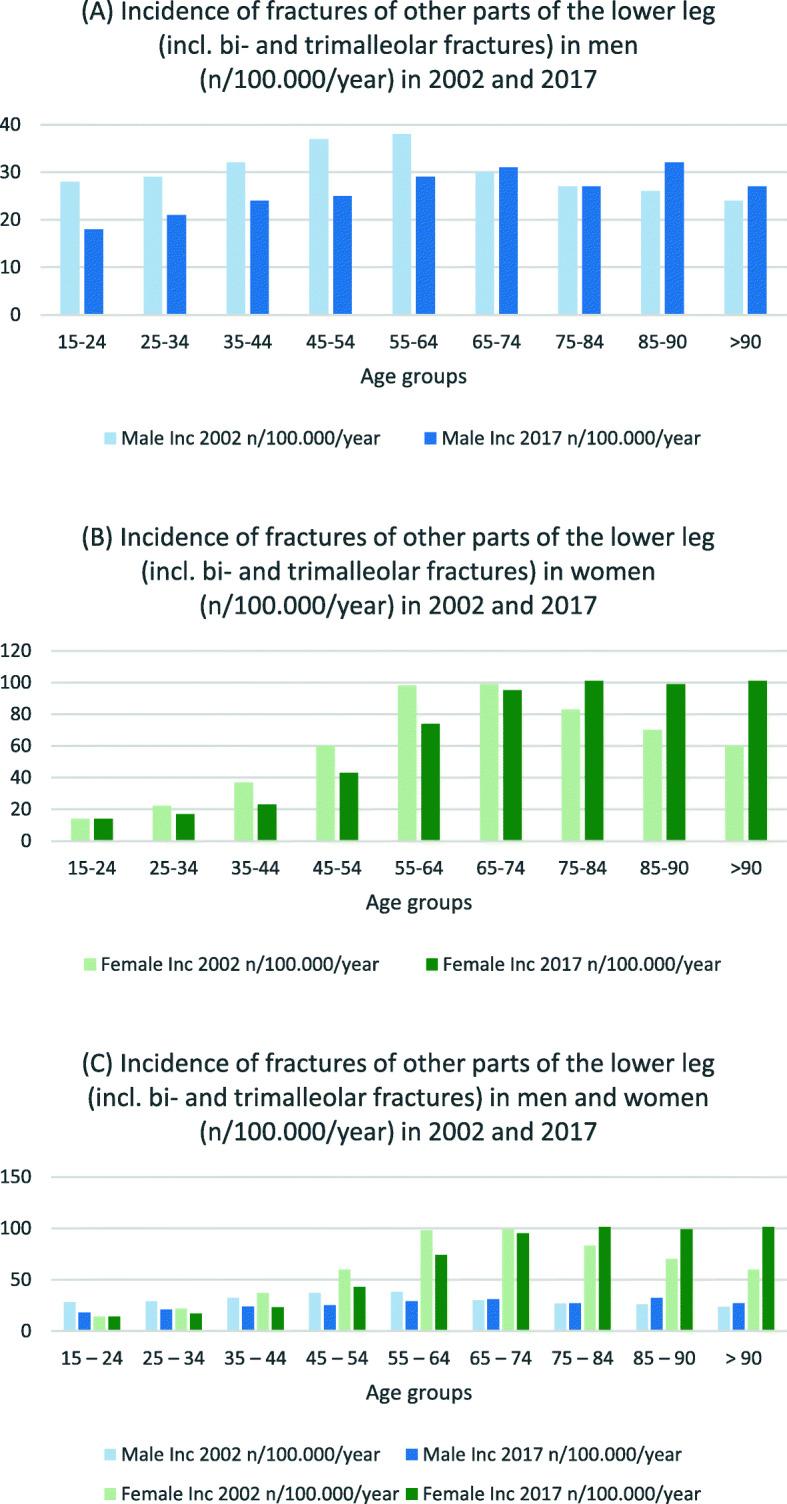
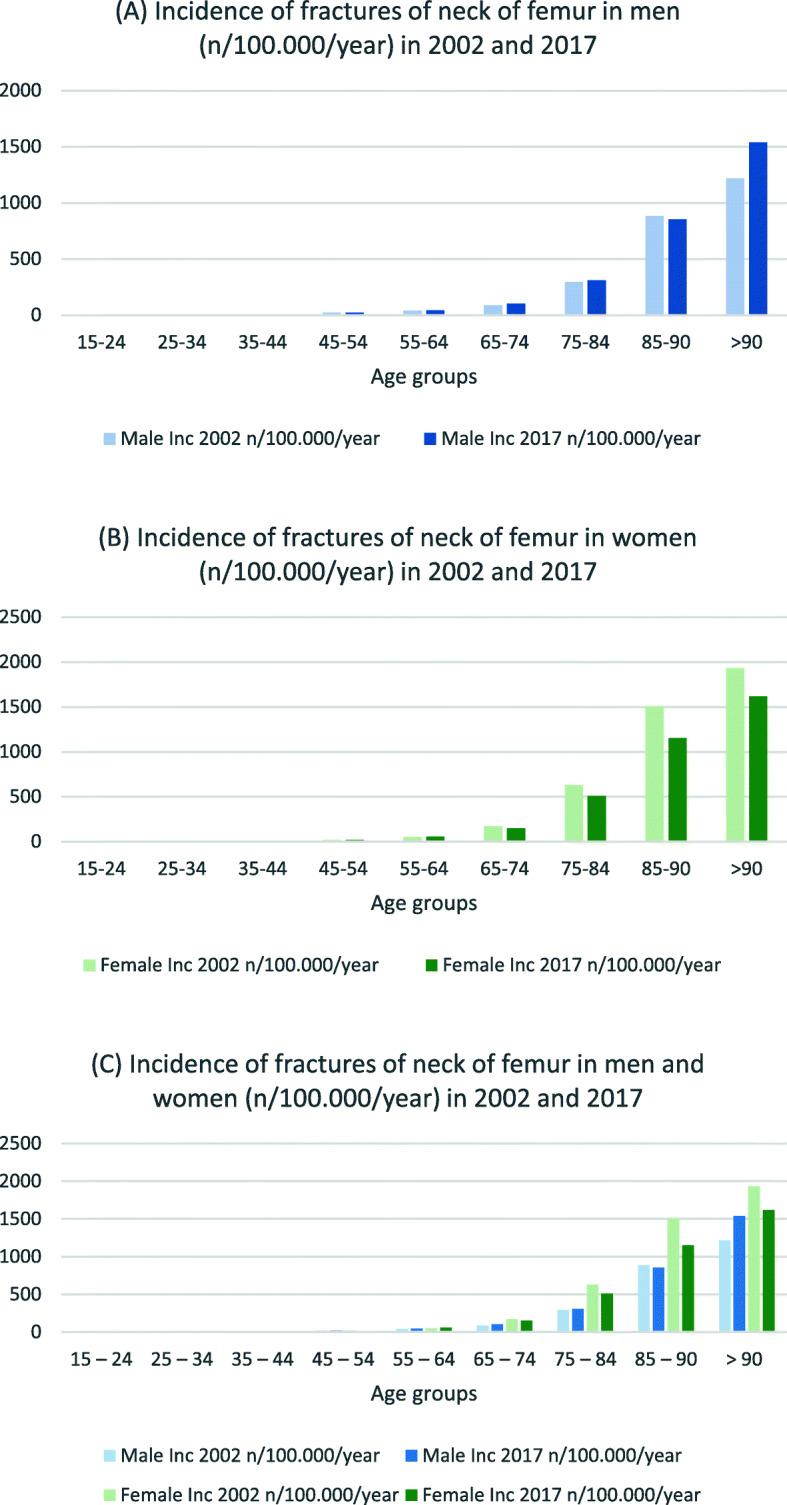
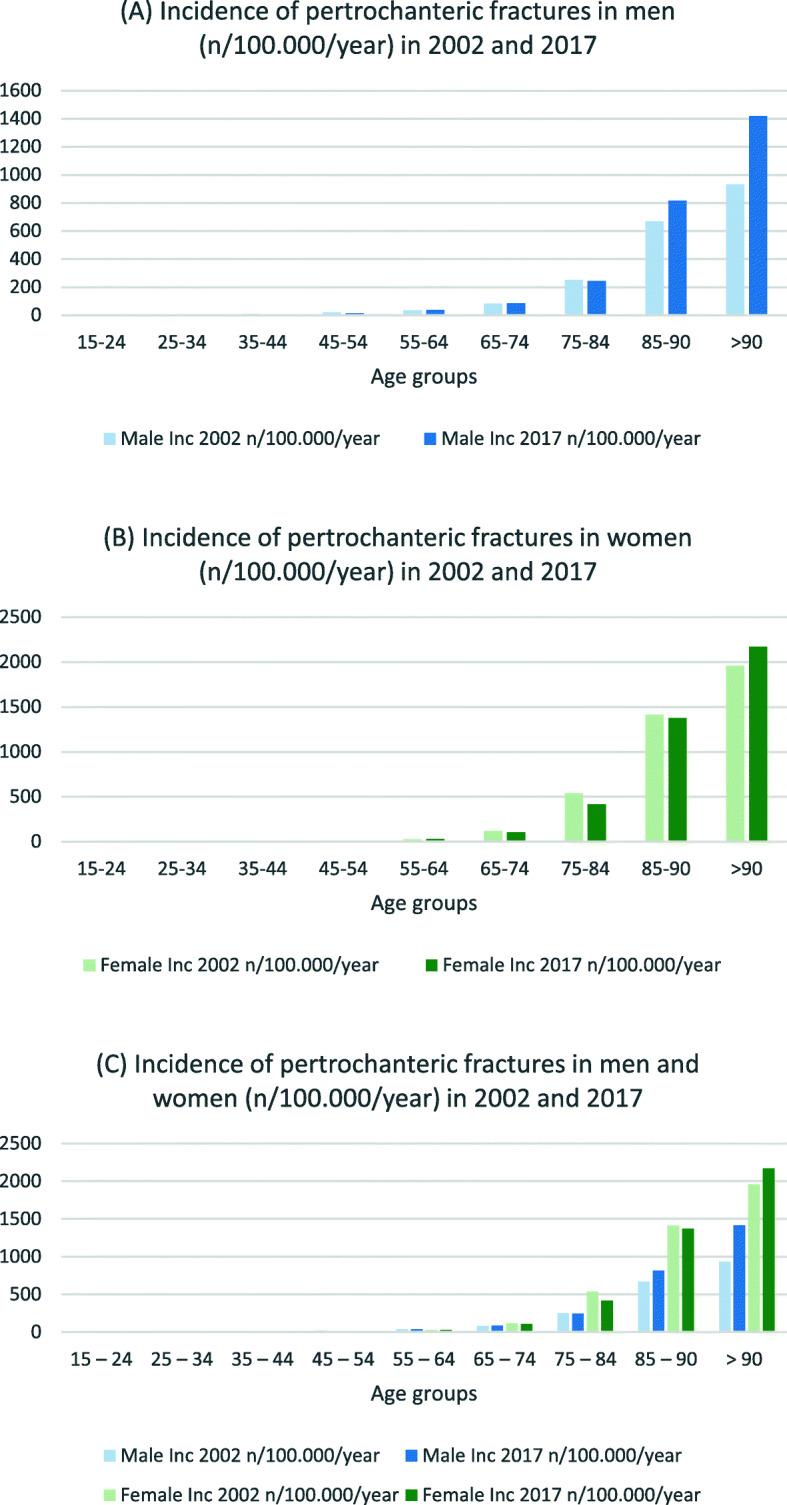
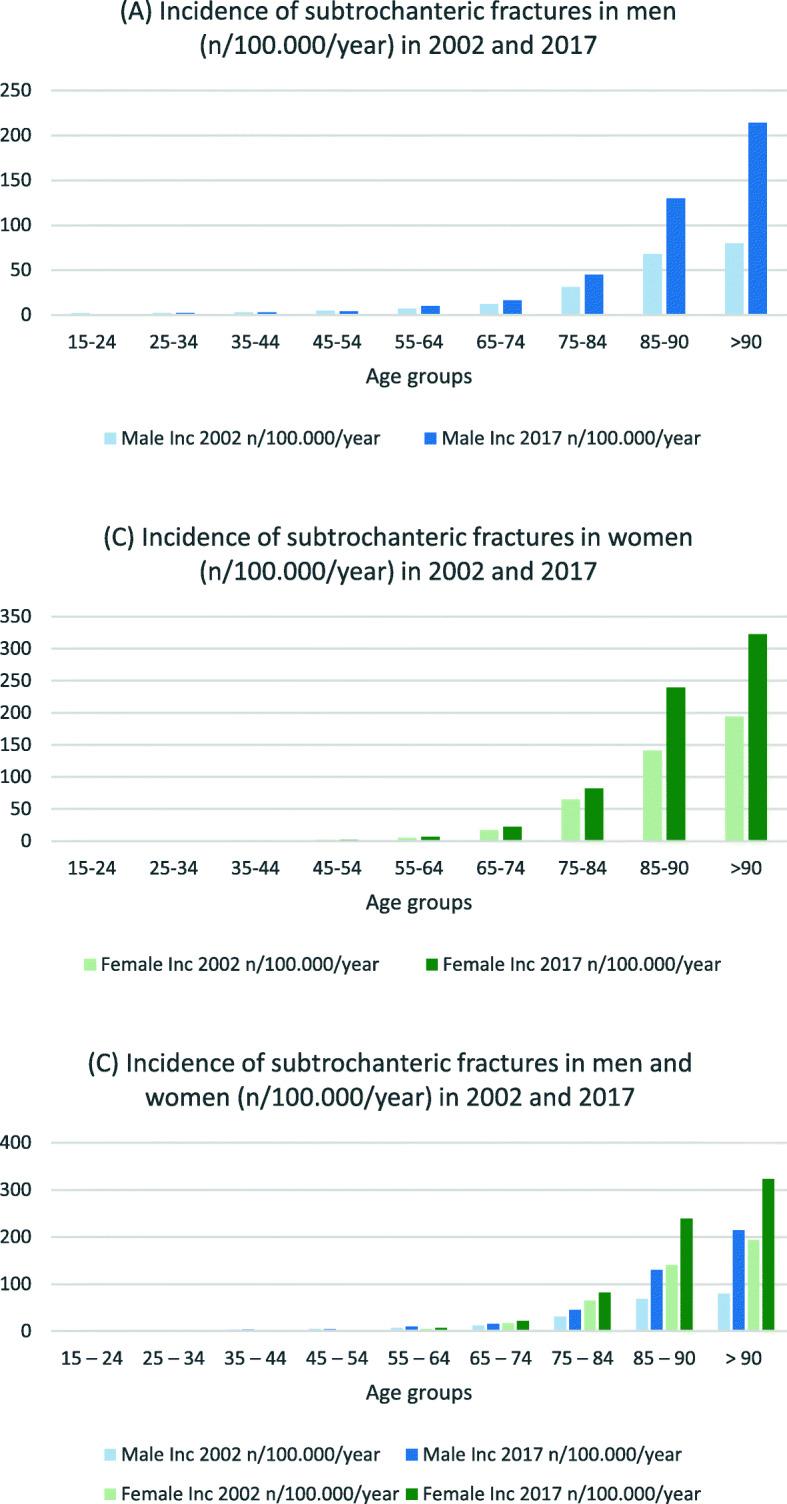
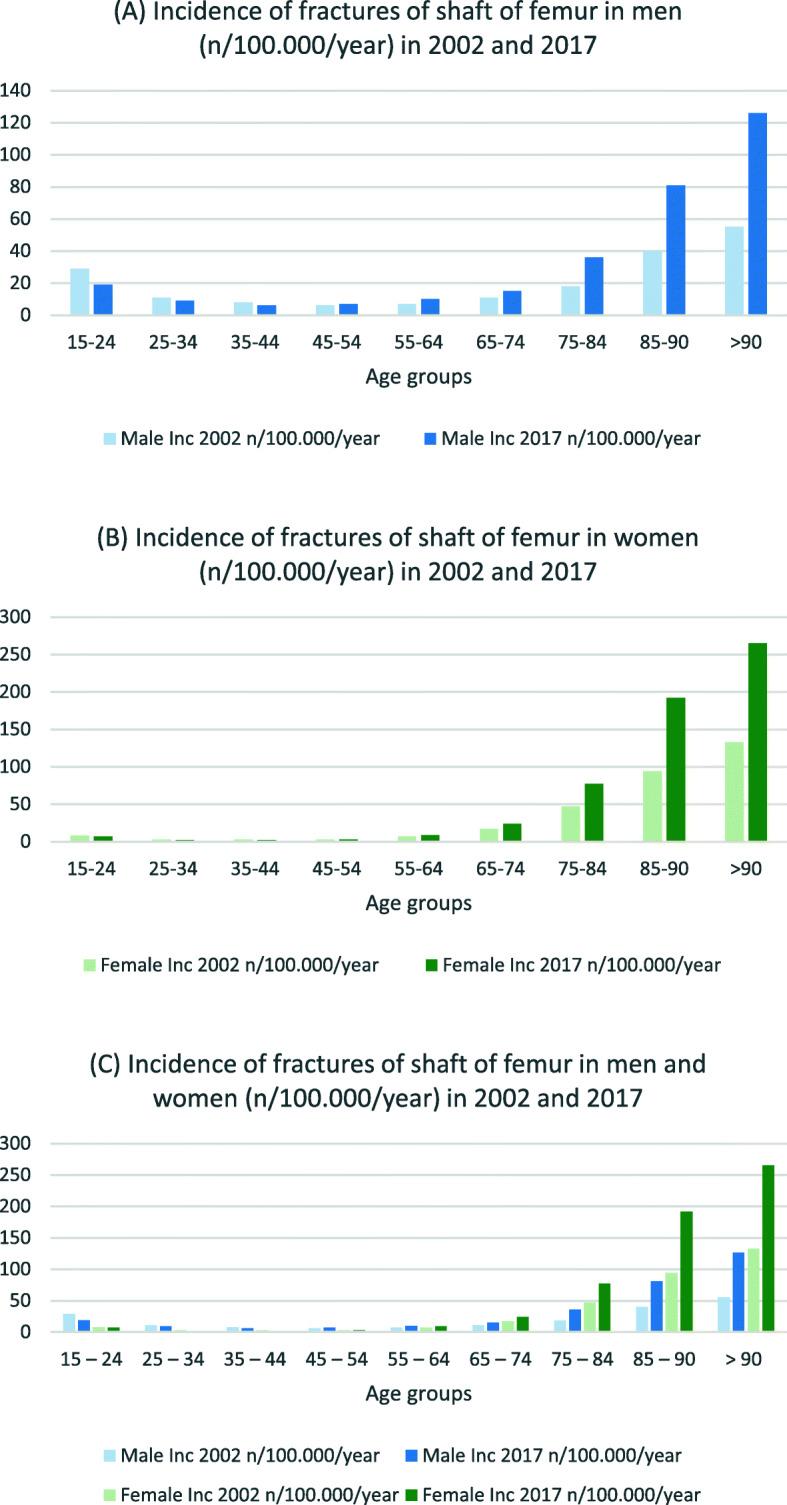
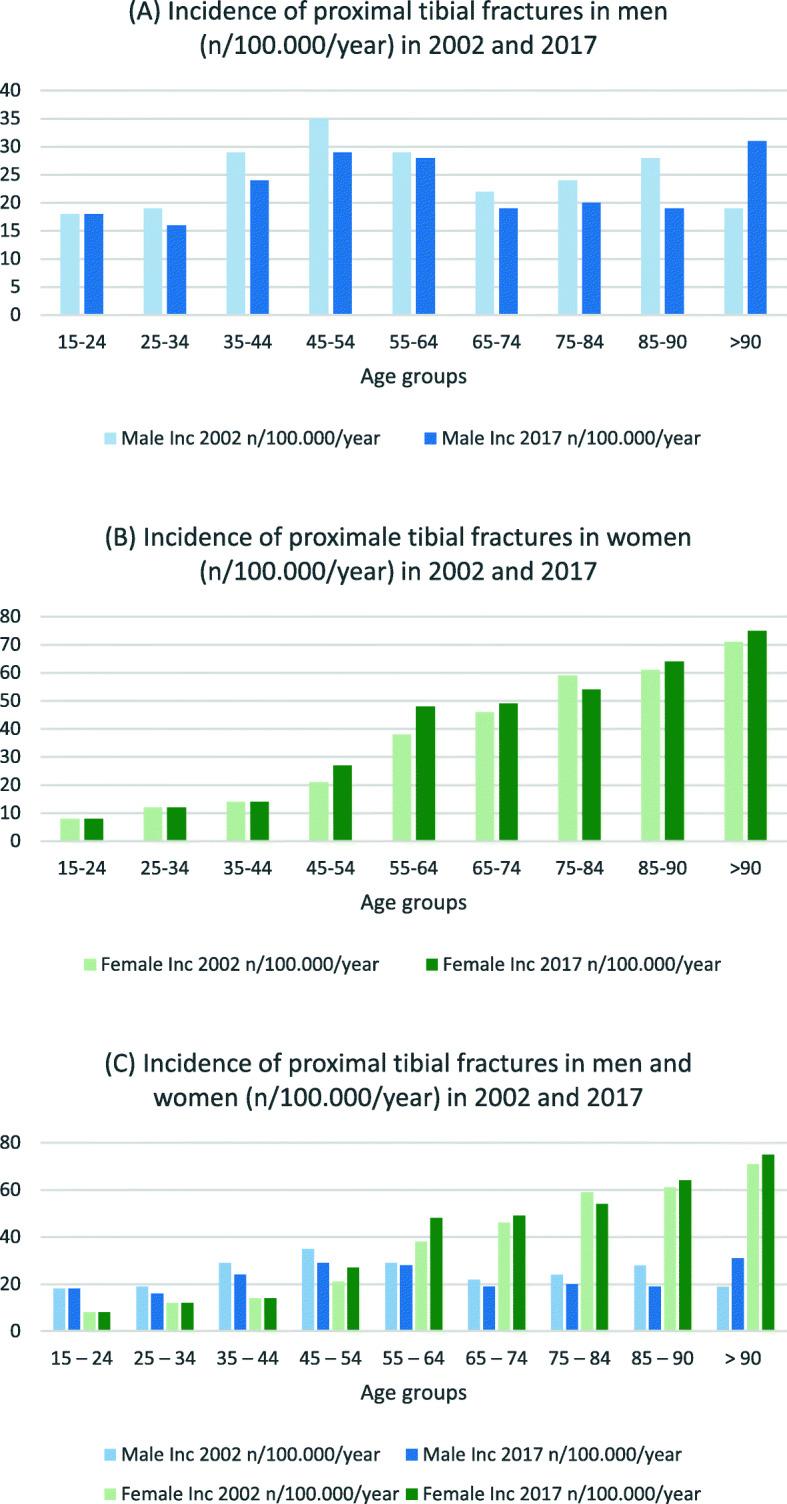
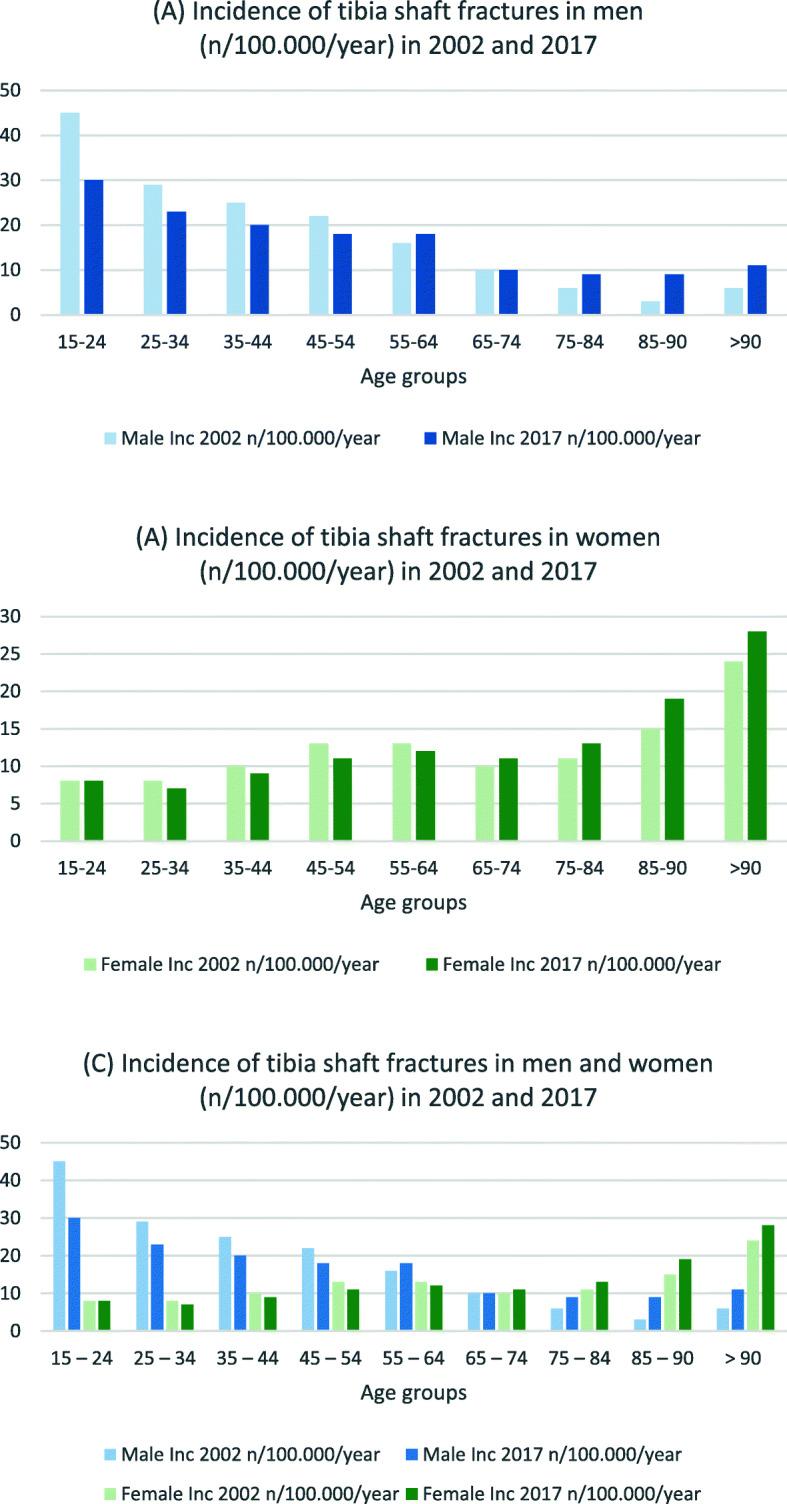
The total count for lower extremity fractures in men and women increased slightly by 4.5% from 305,764 in 2002 to 319,422 in 2017. Hip and femur fractures increased by 23.5% from 150,565 in 2002 to 185,979 in 2017. The number of these fractures among men increased by 46% and among women by 15.3%. The total count of lower leg fractures decreased by 15.4% from 131,162 in 2002 to 110,924 in 2017. Especially, younger age groups showed a decline for all tibial segments and ankle fractures. For both sexes, the number of lower leg fractures in those 75 years or older increased in all lower leg fracture locations. Most femur and lower leg fractures occurred in women. The incidence of fractures rose sharply from 2002 to 2017, especially for older cohorts.
CONCLUSION
The total numbers of lower extremity fractures increased slightly in 2017 compared to 2002 - especially hip and femur fractures among men. The incidence of almost all lower extremity fracture types among older people increased during this time. Women were particularly affected. Therefore, focused prevention programmes should be considered including an extended fracture spectrum in the elderly.
背景
人口结构的变化导致德国人口老龄化加剧,因此可能会改变骨折的频率。本研究的主要目的是报告 2002 年和 2017 年德国下肢骨折率的变化,并对这些变化进行评估。
方法
评估了德国国家医院出院登记处(ICD10)2002 年和 2017 年的住院数据。分析了以下部位骨折的总数和发病率变化:股骨颈、股骨粗隆间、股骨转子下、股骨远端、股骨干、胫骨近端和远端、胫骨骨干、内踝和外踝,以及小腿其他部位(包括双踝和三踝骨折)、跟骨、距骨、其他跗骨、跖骨、大脚趾、小脚趾、足部其他部位骨折或足部和脚趾未特指部位骨折。患者按性别分为年龄组:15-24 岁、25-34 岁、35-44 岁、45-54 岁、55-64 岁、65-74 岁、75-84 岁、85-90 岁和>90 岁。
结果
2002 年至 2017 年,男性和女性下肢骨折总数分别增加了 4.5%,从 305764 例增至 319422 例。髋部和股骨骨折增加了 23.5%,从 2002 年的 150565 例增至 2017 年的 185979 例。男性骨折数增加了 46%,女性增加了 15.3%。2002 年至 2017 年,小腿骨折总数从 131162 例减少了 15.4%,至 110924 例。特别是,所有胫骨段和踝关节骨折在年轻人群中均呈下降趋势。对于两性,75 岁及以上人群的所有小腿骨折部位的小腿骨折数量均有所增加。大多数股骨和小腿骨折发生在女性。从 2002 年到 2017 年,骨折发病率急剧上升,尤其是对于年龄较大的人群。
结论
与 2002 年相比,2017 年下肢骨折总数略有增加,尤其是男性的髋部和股骨骨折。在此期间,老年人几乎所有下肢骨折类型的发生率都有所增加。女性受影响尤为严重。因此,应考虑制定有针对性的预防计划,包括扩大老年人骨折范围。

 Zotero 插件