
新冠疫情风暴下的年龄因素:基于证据的决策制定
The age again in the eye of the COVID-19 storm: evidence-based decision making.
作者信息
Martín María C, Jurado Aurora, Abad-Molina Cristina, Orduña Antonio, Yarce Oscar, Navas Ana M, Cunill Vanesa, Escobar Danilo, Boix Francisco, Burillo-Sanz Sergio, Vegas-Sánchez María C, Jiménez-de Las Pozas Yesenia, Melero Josefa, Aguilar Marta, Sobieschi Oana Irina, López-Hoyos Marcos, Ocejo-Vinyals Gonzalo, San Segundo David, Almeida Delia, Medina Silvia, Fernández Luis, Vergara Esther, Quirant Bibiana, Martínez-Cáceres Eva, Boiges Marc, Alonso Marta, Esparcia-Pinedo Laura, López-Sanz Celia, Muñoz-Vico Javier, López-Palmero Serafín, Trujillo Antonio, Álvarez Paula, Prada Álvaro, Monzón David, Ontañón Jesús, Marco Francisco M, Mora Sergio, Rojo Ricardo, González-Martínez Gema, Martínez-Saavedra María T, Gil-Herrera Juana, Cantenys-Molina Sergi, Hernández Manuel, Perurena-Prieto Janire, Rodríguez-Bayona Beatriz, Martínez Alba, Ocaña Esther, Molina Juan
机构信息
Centro de Hemoterapia y Hemodonación de Castilla y León, Valladolid, Spain.
Department of Immunology and Allergology, Hospital Universitario Reina Sofía-Instituto de Investigación Biomédica de Córdoba (IMIBIC), Avd. Menéndez Pidal s/n, 14004, Córdoba, Spain.
出版信息
Immun Ageing. 2021 May 20;18(1):24. doi: 10.1186/s12979-021-00237-w.
BACKGROUND
One hundred fifty million contagions, more than 3 million deaths and little more than 1 year of COVID-19 have changed our lives and our health management systems forever. Ageing is known to be one of the significant determinants for COVID-19 severity. Two main reasons underlie this: immunosenescence and age correlation with main COVID-19 comorbidities such as hypertension or dyslipidaemia. This study has two aims. The first is to obtain cut-off points for laboratory parameters that can help us in clinical decision-making. The second one is to analyse the effect of pandemic lockdown on epidemiological, clinical, and laboratory parameters concerning the severity of the COVID-19. For these purposes, 257 of SARSCoV2 inpatients during pandemic confinement were included in this study. Moreover, 584 case records from a previously analysed series, were compared with the present study data.
RESULTS
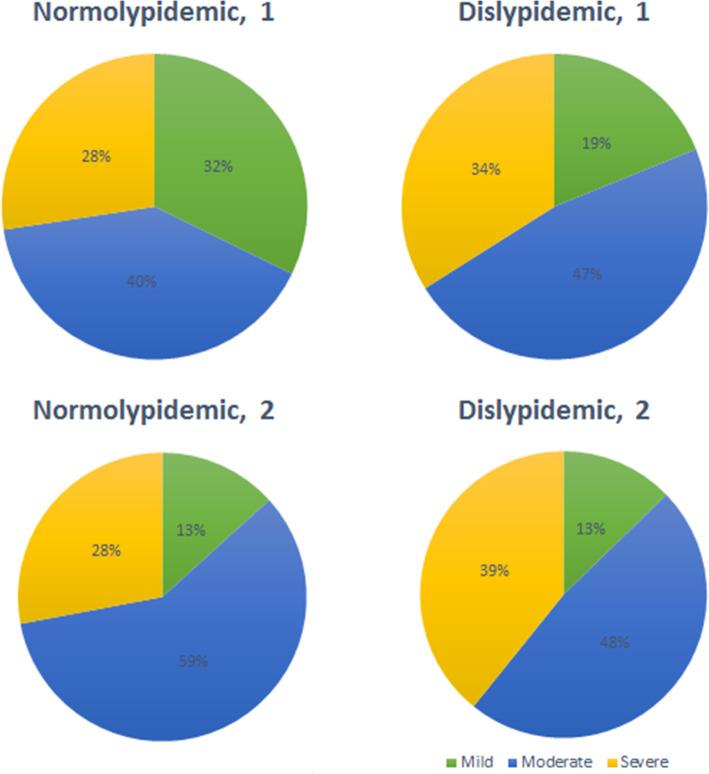
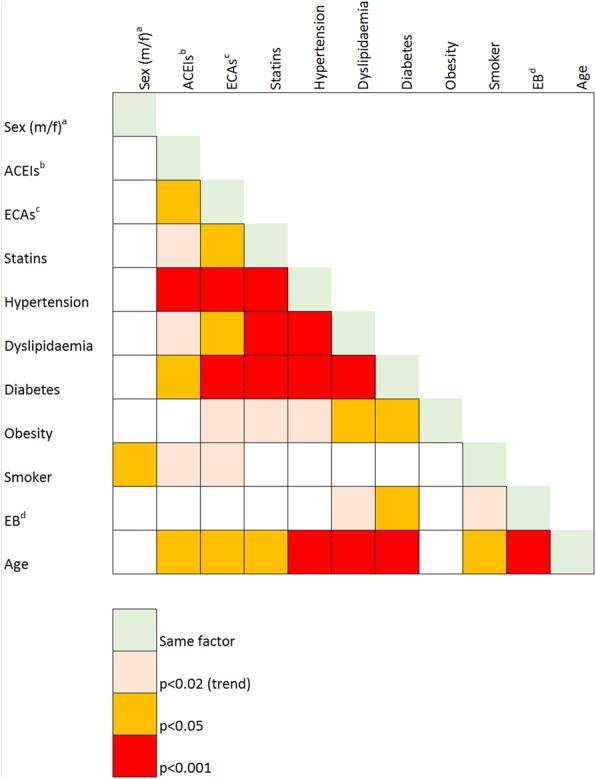
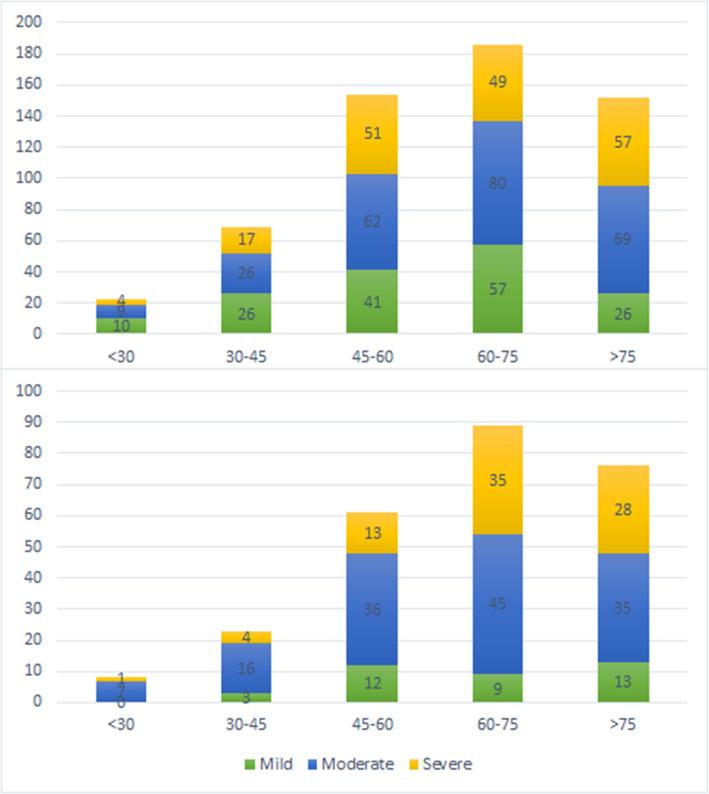
Concerning the characteristics of lockdown series, mild cases accounted for 14.4, 54.1% were moderate and 31.5%, severe. There were 32.5% of home contagions, 26.3% community transmissions, 22.5% nursing home contagions, and 8.8% corresponding to frontline worker contagions regarding epidemiological features. Age > 60 and male sex are hereby confirmed as severity determinants. Equally, higher severity was significantly associated with higher IL6, CRP, ferritin, LDH, and leukocyte counts, and a lower percentage of lymphocyte, CD4 and CD8 count. Comparing this cohort with a previous 584-cases series, mild cases were less than those analysed in the first moment of the pandemic and dyslipidaemia became more frequent than before. IL-6, CRP and LDH values above 69 pg/mL, 97 mg/L and 328 U/L respectively, as well as a CD4 T-cell count below 535 cells/μL, were the best cut-offs predicting severity since these parameters offered reliable areas under the curve.
CONCLUSION
Age and sex together with selected laboratory parameters on admission can help us predict COVID-19 severity and, therefore, make clinical and resource management decisions. Demographic features associated with lockdown might affect the homogeneity of the data and the robustness of the results.
背景
1.5亿次感染、300多万人死亡,且新冠疫情仅持续了一年多一点的时间,这永远改变了我们的生活和健康管理系统。众所周知,年龄是新冠疫情严重程度的重要决定因素之一。这背后有两个主要原因:免疫衰老以及年龄与新冠主要合并症(如高血压或血脂异常)的相关性。本研究有两个目的。第一个目的是获取实验室参数的临界值,以帮助我们进行临床决策。第二个目的是分析疫情封锁对与新冠严重程度相关的流行病学、临床和实验室参数的影响。为了这些目的,本研究纳入了疫情封锁期间257名感染新冠病毒的住院患者。此外,还将先前分析系列中的584份病例记录与本研究数据进行了比较。
结果
关于封锁期间系列病例的特征,轻症病例占14.4%,中症病例占54.1%,重症病例占31.5%。就流行病学特征而言,32.5%为家庭感染,26.3%为社区传播,22.5%为养老院感染,8.8%为一线工作人员感染。年龄>60岁和男性被确认为严重程度的决定因素。同样,更高的严重程度与更高的白细胞介素6(IL6)、C反应蛋白(CRP)、铁蛋白、乳酸脱氢酶(LDH)和白细胞计数显著相关,以及更低的淋巴细胞、CD4和CD8计数百分比相关。将该队列与先前的584例病例系列进行比较,轻症病例比疫情初期分析的病例少,血脂异常比以前更常见。IL-6、CRP和LDH值分别高于69 pg/mL、97 mg/L和328 U/L,以及CD4 T细胞计数低于535个细胞/μL,是预测严重程度的最佳临界值,因为这些参数在曲线下提供了可靠的面积。
结论
年龄、性别以及入院时选定的实验室参数可以帮助我们预测新冠严重程度,从而做出临床和资源管理决策。与封锁相关的人口统计学特征可能会影响数据的同质性和结果的稳健性。

 Zotero 插件