
对法匹拉韦耐药的流感 A 病毒具有潜在的传播能力。
Favipiravir-resistant influenza A virus shows potential for transmission.
机构信息
Department of Infectious Disease, Imperial College, London, United Kingdom.
Department of Infectious Disease Epidemiology, Imperial College, London, United Kingdom.
出版信息
PLoS Pathog. 2021 Jun 1;17(6):e1008937. doi: 10.1371/journal.ppat.1008937. eCollection 2021 Jun.
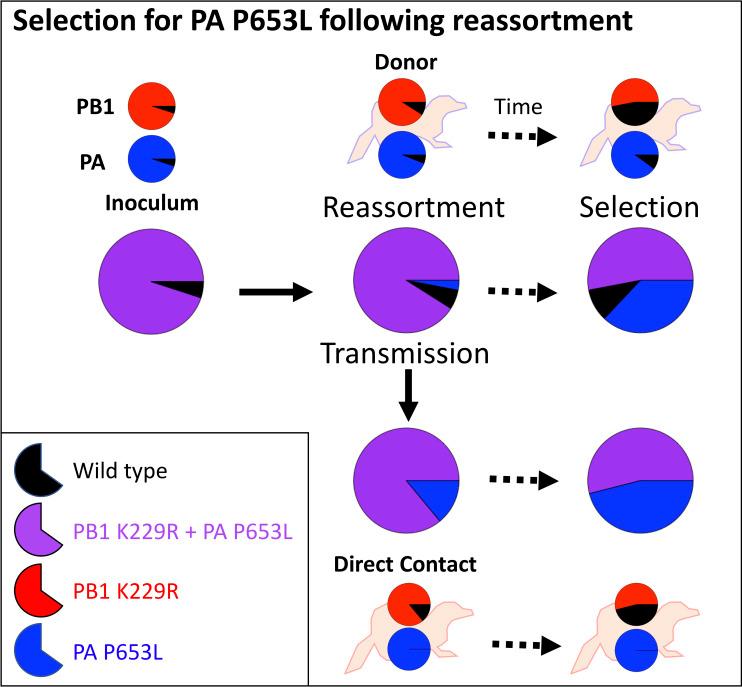
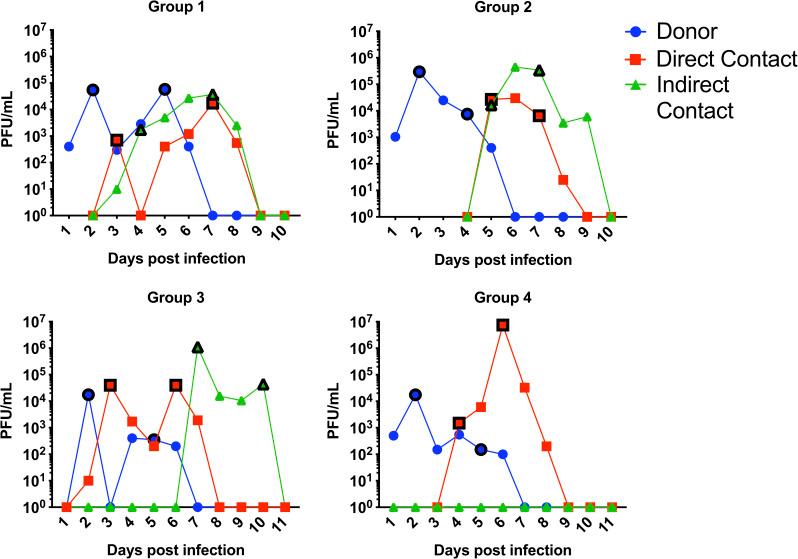
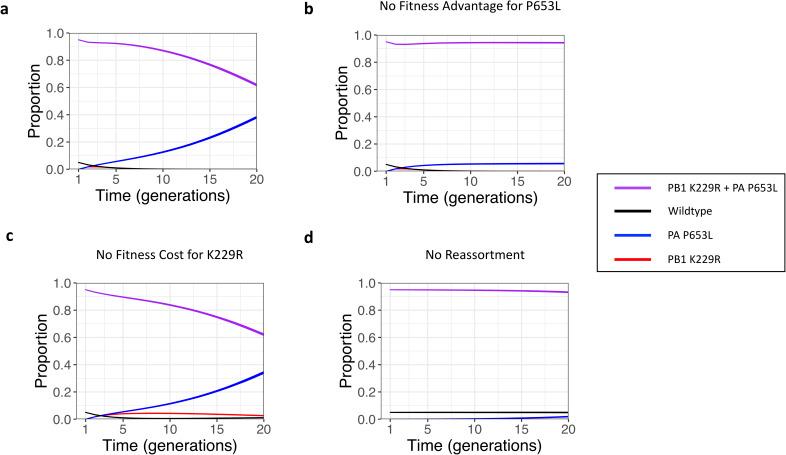
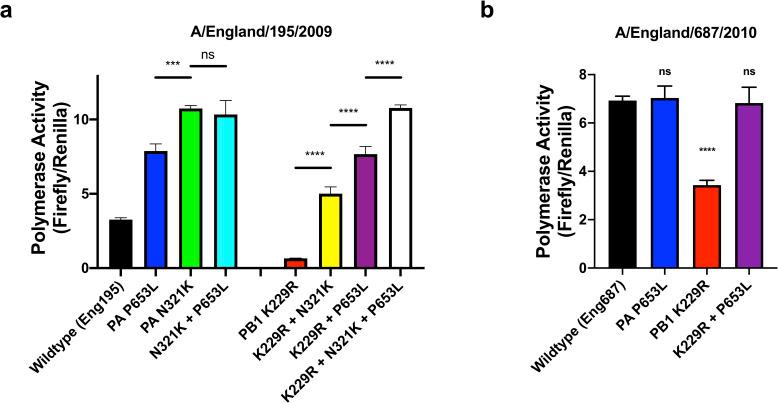
Favipiravir is a nucleoside analogue which has been licensed to treat influenza in the event of a new pandemic. We previously described a favipiravir resistant influenza A virus generated by in vitro passage in presence of drug with two mutations: K229R in PB1, which conferred resistance at a cost to polymerase activity, and P653L in PA, which compensated for the cost of polymerase activity. However, the clinical relevance of these mutations is unclear as the mutations have not been found in natural isolates and it is unknown whether viruses harbouring these mutations would replicate or transmit in vivo. Here, we infected ferrets with a mix of wild type p(H1N1) 2009 and corresponding favipiravir-resistant virus and tested for replication and transmission in the absence of drug. Favipiravir-resistant virus successfully infected ferrets and was transmitted by both contact transmission and respiratory droplet routes. However, sequencing revealed the mutation that conferred resistance, K229R, decreased in frequency over time within ferrets. Modelling revealed that due to a fitness advantage for the PA P653L mutant, reassortment with the wild-type virus to gain wild-type PB1 segment in vivo resulted in the loss of the PB1 resistance mutation K229R. We demonstrated that this fitness advantage of PA P653L in the background of our starting virus A/England/195/2009 was due to a maladapted PA in first wave isolates from the 2009 pandemic. We show there is no fitness advantage of P653L in more recent pH1N1 influenza A viruses. Therefore, whilst favipiravir-resistant virus can transmit in vivo, the likelihood that the resistance mutation is retained in the absence of drug pressure may vary depending on the genetic background of the starting viral strain.
法匹拉韦是一种核苷类似物,已获得许可用于治疗新大流行时的流感。我们之前描述了一种在药物存在的情况下通过体外传代产生的抗法匹拉韦的甲型流感病毒,该病毒具有两个突变:聚合酶活性降低的 PB1 中的 K229R 突变,以及补偿聚合酶活性代价的 PA 中的 P653L 突变。然而,这些突变的临床相关性尚不清楚,因为在天然分离株中尚未发现这些突变,也不知道携带这些突变的病毒是否会在体内复制或传播。在这里,我们用野生型 p(H1N1)2009 和相应的抗法匹拉韦病毒混合物感染雪貂,并在没有药物的情况下检测其复制和传播。抗法匹拉韦的病毒成功感染了雪貂,并通过接触传播和呼吸道飞沫途径传播。然而,测序结果显示,赋予耐药性的突变 K229R 在雪貂体内随时间推移频率降低。建模结果表明,由于 PA P653L 突变体具有适应性优势,与野生型病毒在体内重组以获得野生型 PB1 节段,导致体内 PB1 耐药性突变 K229R 丢失。我们证明了在我们起始病毒 A/England/195/2009 的背景下,PA P653L 的这种适应性优势是由于来自 2009 大流行的第一波分离株中 PA 的适应性不良。我们表明,在最近的 pH1N1 甲型流感病毒中,PA P653L 没有适应性优势。因此,虽然抗法匹拉韦的病毒可以在体内传播,但在没有药物压力的情况下,耐药突变保留的可能性可能因起始病毒株的遗传背景而异。

 Zotero 插件