
噬菌体PPPL-1,一种控制猕猴桃细菌性溃疡病的新型生物制剂。(注:原文中“pv.”后面内容缺失,这里按完整句子结构进行了大致翻译)
Phage PPPL-1, A New Biological Agent to Control Bacterial Canker Caused by pv. in Kiwifruit.
作者信息
Song Yu-Rim, Vu Nguyen Trung, Park Jungkum, Hwang In Sun, Jeong Hyeon-Ju, Cho Youn-Sup, Oh Chang-Sik
机构信息
Department of Horticultural Biotechnology, College of Life Science, Kyung Hee University, Yongin 17104, Korea.
Fruit Research Institute, Jeollanamdo Agricultural Research and Extension Services, Haenam-gun 59021, Korea.
出版信息
Antibiotics (Basel). 2021 May 10;10(5):554. doi: 10.3390/antibiotics10050554.
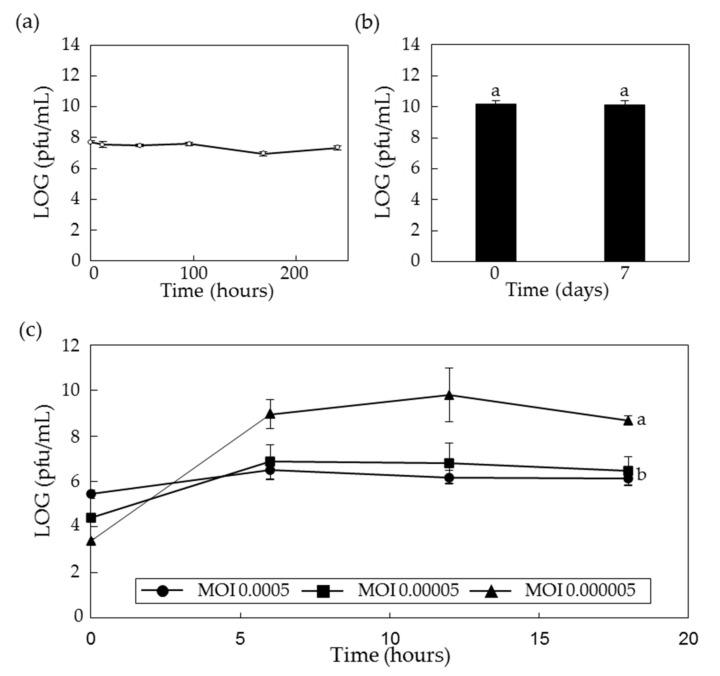
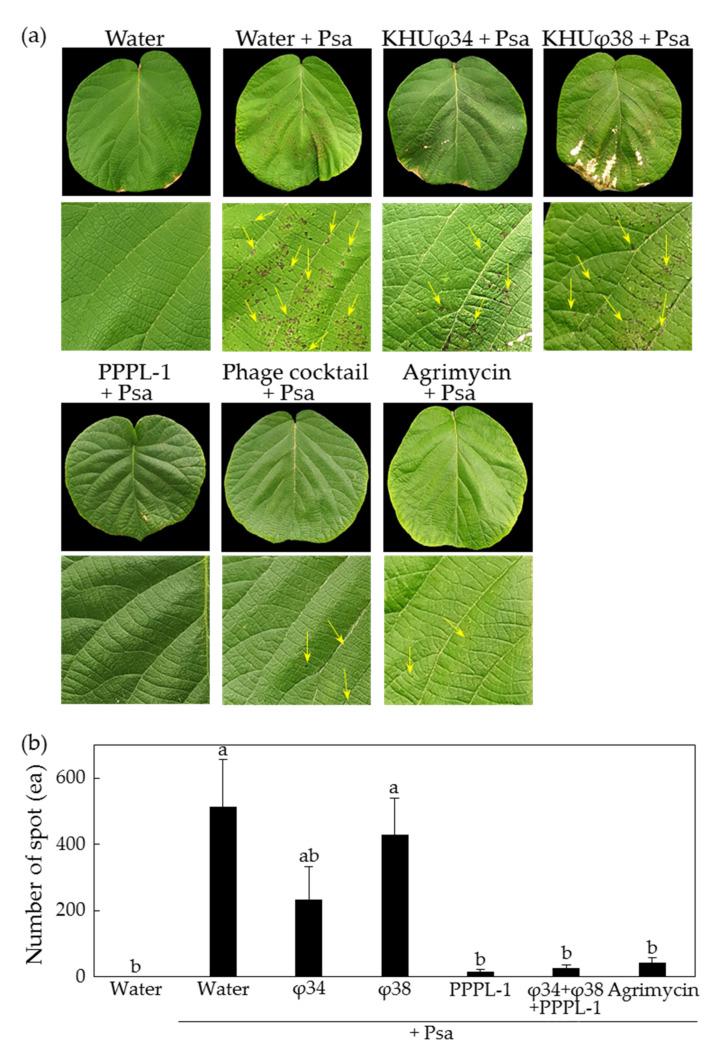
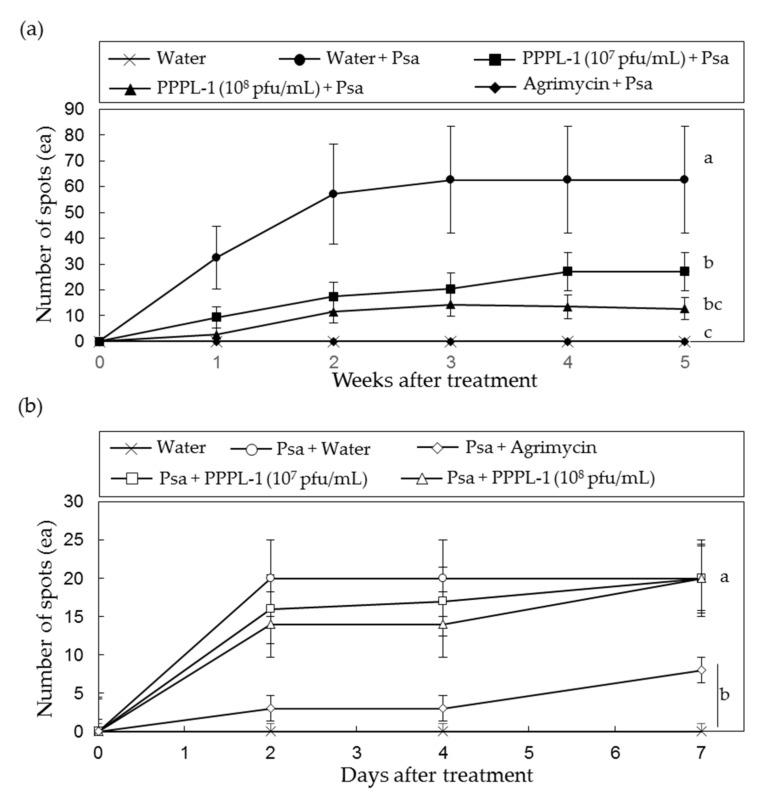
pv. (Psa) is a Gram-negative bacterium that causes bacterial canker disease in kiwifruit. Copper or antibiotics have been used in orchards to control this disease, but the recent emergence of antibiotic-resistant Psa has called for the development of a new control agent. We previously reported that the bacteriophage (or phage) PPPL-1 showed antibacterial activity for both biovar 2 and 3 of Psa. To investigate the possibility of PPPL-1 to control bacterial canker in kiwifruit, we further tested the efficacy of PPPL-1 and its phage cocktail with two other phages on suppressing disease development under greenhouse conditions using 6 weeks old kiwifruit plants. Our results showed that the disease control efficacy of PPPL-1 treatment was statistically similar to those of phage cocktail treatment or Agrimycin, which contains streptomycin and oxytetracycline antibiotics as active ingredients. Moreover, PPPL-1 could successfully kill streptomycin-resistant Psa isolates, of which the treatment of Buramycin carrying only streptomycin as an active ingredient had no effect in vitro. The phage PPPL-1 was further characterized, and stability assays showed that the phage was stable in the field soil and at low temperature of 0 ± 2 °C. In addition, the phage could be scaled up quickly up to 10 pfu/mL at 12 h later from initial multiplicity of infection of 0.000005. Our results indicate that PPPL-1 phage is a useful candidate as a biocontrol agent and could be a tool to control the bacterial canker in kiwifruit by Psa infection in the field conditions.
丁香假单胞菌猕猴桃致病变种(Psa)是一种革兰氏阴性细菌,可引发猕猴桃细菌性溃疡病。果园中曾使用铜或抗生素来控制这种病害,但近期出现的抗生素抗性Psa促使人们研发新的防治药剂。我们之前报道过噬菌体PPPL - 1对Psa的生物变种2和3均具有抗菌活性。为了研究PPPL - 1防治猕猴桃细菌性溃疡病的可能性,我们使用6周龄的猕猴桃植株,在温室条件下进一步测试了PPPL - 1及其与另外两种噬菌体组成的噬菌体混合物对抑制病害发展的效果。我们的结果表明,PPPL - 1处理的病害防治效果在统计学上与噬菌体混合物处理或含有链霉素和土霉素作为活性成分的农用链霉素处理相似。此外,PPPL - 1能够成功杀灭对链霉素具有抗性的Psa分离株,而仅以链霉素作为活性成分的布拉霉素处理在体外对此无效。对噬菌体PPPL - 1进行了进一步的特性分析,稳定性试验表明该噬菌体在田间土壤和0±2°C的低温环境下均很稳定。此外,从初始感染复数0.000005开始,12小时后噬菌体数量可快速扩增至10 pfu/mL。我们的结果表明,PPPL - 1噬菌体是一种有用的生物防治候选药剂,可作为在田间条件下控制由Psa感染引发的猕猴桃细菌性溃疡病的工具。


 Zotero 插件