
hCOMET 项目:人类生物监测中彗星试验结果的国际数据库比较。DNA 损伤的基线频率和主要混杂因素的影响。
The hCOMET project: International database comparison of results with the comet assay in human biomonitoring. Baseline frequency of DNA damage and effect of main confounders.
机构信息
Mutagenesis Unit, Institute for Medical Research and Occupational Health, Ksaverska cesta 2, 10000, Zagreb, Croatia.
Biostatistics Unit, San Martino Policlinic Hospital, Genoa, Italy.
出版信息
Mutat Res Rev Mutat Res. 2021 Jan-Jun;787:108371. doi: 10.1016/j.mrrev.2021.108371. Epub 2021 Feb 6.
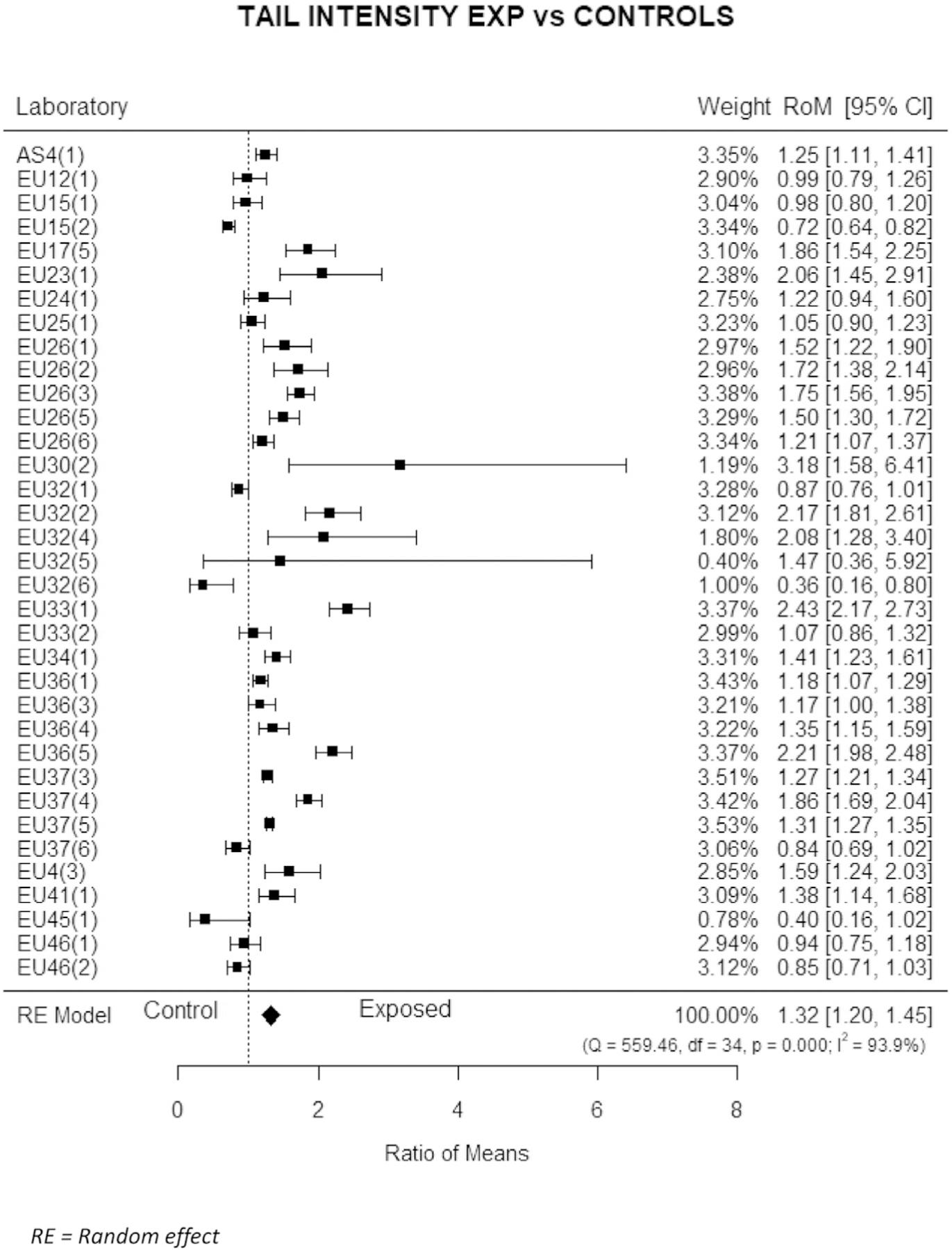
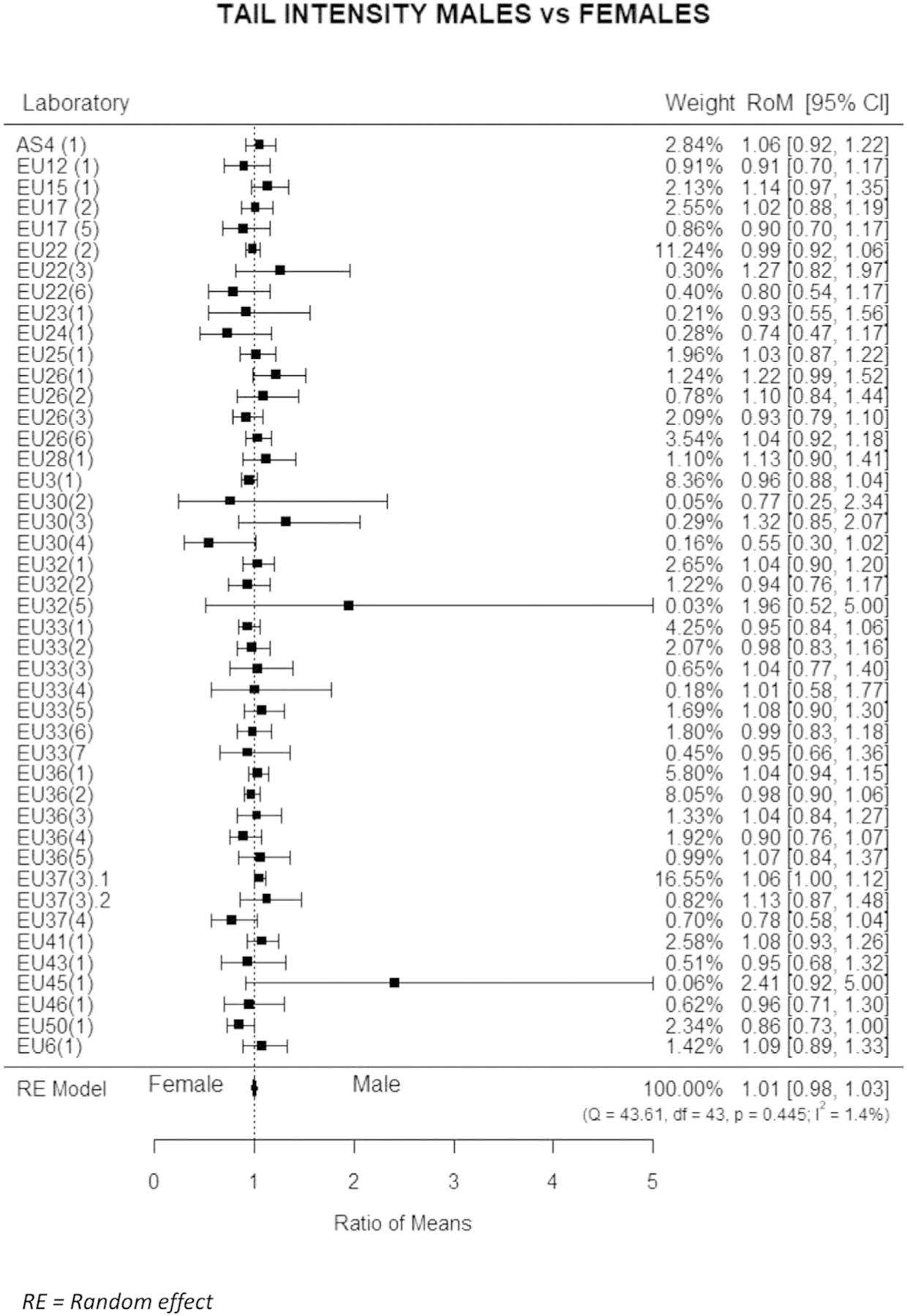
The alkaline comet assay, or single cell gel electrophoresis, is one of the most popular methods for assessing DNA damage in human population. One of the open issues concerning this assay is the identification of those factors that can explain the large inter-individual and inter-laboratory variation. International collaborative initiatives such as the hCOMET project - a COST Action launched in 2016 - represent a valuable tool to meet this challenge. The aims of hCOMET were to establish reference values for the level of DNA damage in humans, to investigate the effect of host factors, lifestyle and exposure to genotoxic agents, and to compare different sources of assay variability. A database of 19,320 subjects was generated, pooling data from 105 studies run by 44 laboratories in 26 countries between 1999 and 2019. A mixed random effect log-linear model, in parallel with a classic meta-analysis, was applied to take into account the extensive heterogeneity of data, due to descriptor, specimen and protocol variability. As a result of this analysis interquartile intervals of DNA strand breaks (which includes alkali-labile sites) were reported for tail intensity, tail length, and tail moment (comet assay descriptors). A small variation by age was reported in some datasets, suggesting higher DNA damage in oldest age-classes, while no effect could be shown for sex or smoking habit, although the lack of data on heavy smokers has still to be considered. Finally, highly significant differences in DNA damage were found for most exposures investigated in specific studies. In conclusion, these data, which confirm that DNA damage measured by the comet assay is an excellent biomarker of exposure in several conditions, may contribute to improving the quality of study design and to the standardization of results of the comet assay in human populations.
碱性彗星试验,或单细胞凝胶电泳,是评估人群中 DNA 损伤的最常用方法之一。该试验存在一个尚未解决的问题,即需要确定哪些因素可以解释个体间和实验室间的巨大差异。国际合作倡议,如 hCOMET 项目——这是 2016 年启动的一项 COST 行动,是应对这一挑战的宝贵工具。hCOMET 的目标是确定人类 DNA 损伤水平的参考值,研究宿主因素、生活方式和暴露于遗传毒性物质的影响,并比较不同来源的试验变异性。该数据库共纳入了 19320 名受试者的数据,这些数据来自 1999 年至 2019 年间 26 个国家的 44 个实验室开展的 105 项研究。该数据库采用混合随机效应对数线性模型,同时结合经典的荟萃分析,以考虑数据描述符、样本和方案变异性引起的广泛异质性。分析结果报告了 DNA 链断裂(包括碱不稳定位点)的四分位间距,用于尾部强度、尾部长度和尾部矩(彗星试验描述符)。在一些数据集报告了年龄的微小变化,表明在最年长的年龄组中 DNA 损伤较高,而性别或吸烟习惯没有影响,尽管还需要考虑到对重度吸烟者的数据缺乏。最后,在特定研究中调查的大多数暴露因素都发现了 DNA 损伤的显著差异。总之,这些数据证实,彗星试验测量的 DNA 损伤是多种情况下暴露的优秀生物标志物,有助于提高研究设计的质量,并使彗星试验在人类群体中的结果标准化。


 Zotero 插件