
Wnt 特异性星孢菌素蛋白酶 HAS-7 限制了水螅头部组织者的形成。
The Wnt-specific astacin proteinase HAS-7 restricts head organizer formation in Hydra.
机构信息
Centre for Organismal Studies, Department of Molecular Evolution and Genomics, University of Heidelberg, Im Neuenheimer Feld 230, 69120, Heidelberg, Germany.
Institute of Molecular Physiology, Cell and Matrix Biology, Johannes Gutenberg University Mainz, 55099, Mainz, Germany.
出版信息
BMC Biol. 2021 Jun 9;19(1):120. doi: 10.1186/s12915-021-01046-9.
BACKGROUND
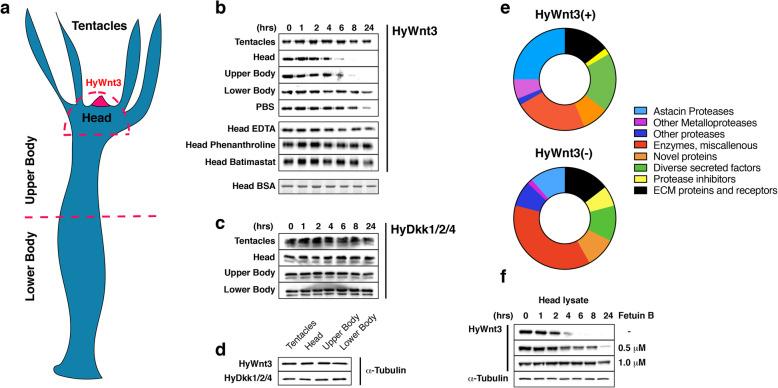
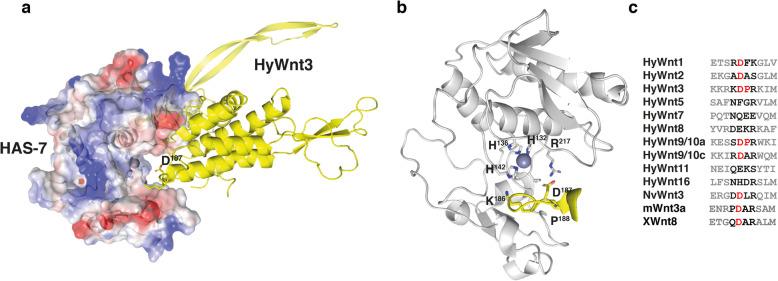
The Hydra head organizer acts as a signaling center that initiates and maintains the primary body axis in steady state polyps and during budding or regeneration. Wnt/beta-Catenin signaling functions as a primary cue controlling this process, but how Wnt ligand activity is locally restricted at the protein level is poorly understood. Here we report a proteomic analysis of Hydra head tissue leading to the identification of an astacin family proteinase as a Wnt processing factor.
RESULTS
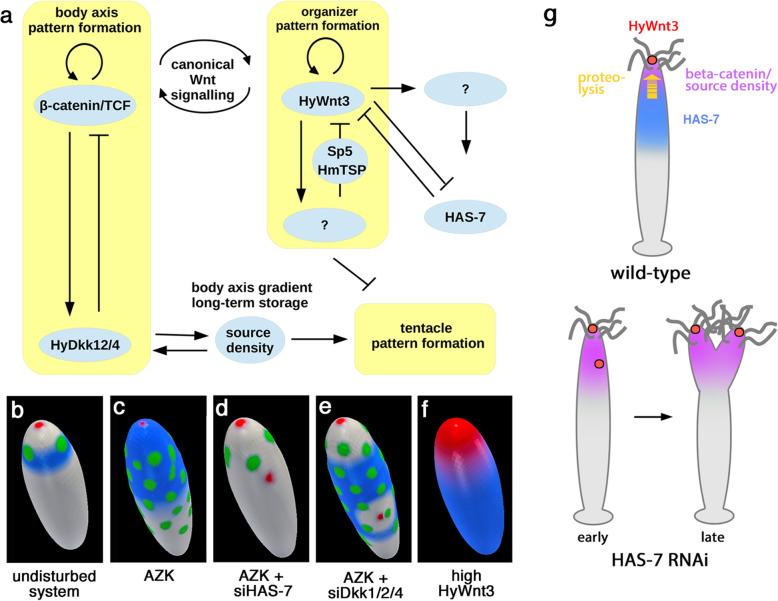
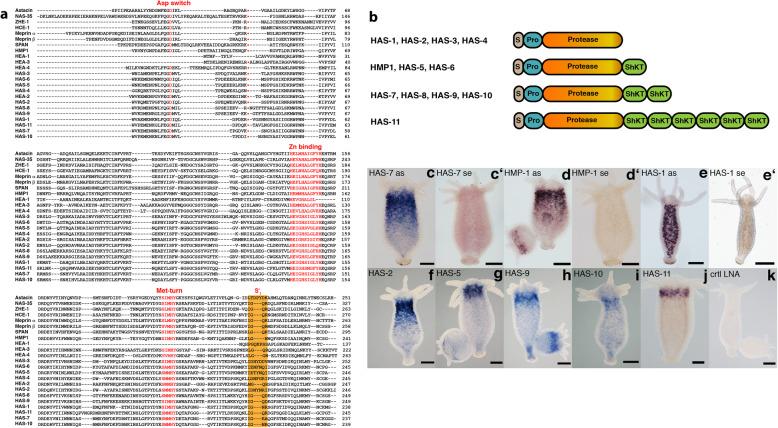
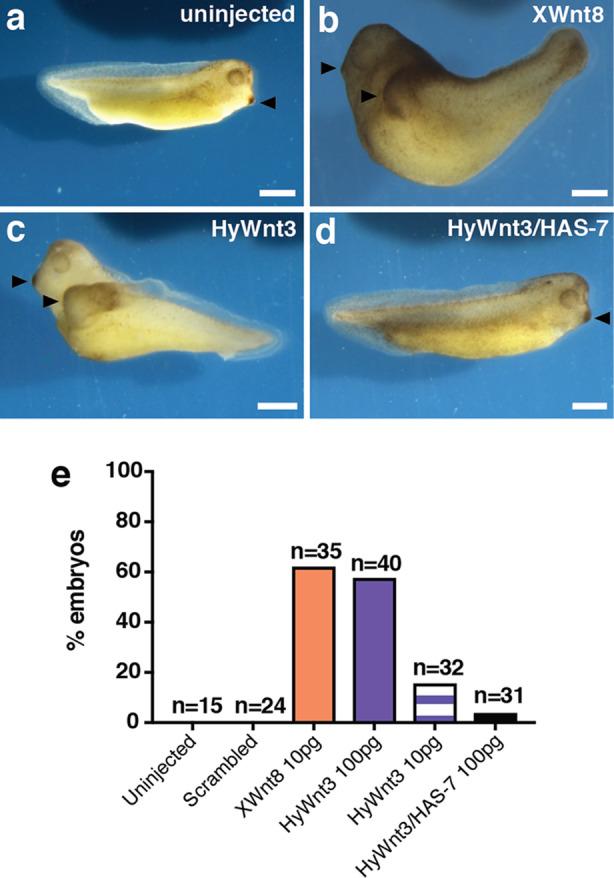
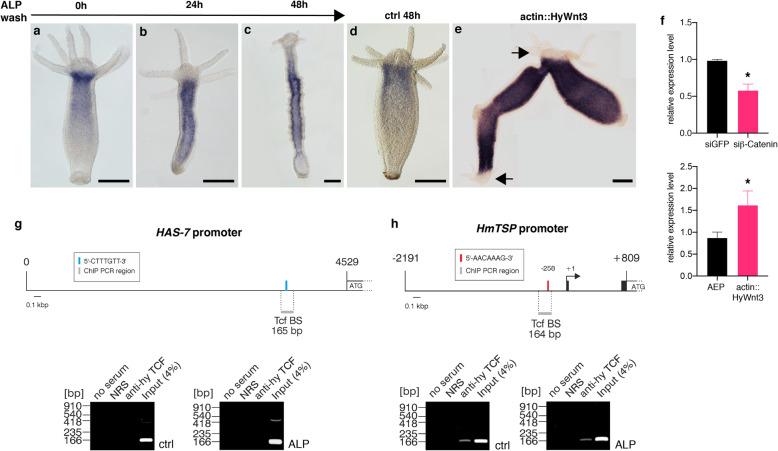
Hydra astacin-7 (HAS-7) is expressed from gland cells as an apical-distal gradient in the body column, peaking close beneath the tentacle zone. HAS-7 siRNA knockdown abrogates HyWnt3 proteolysis in the head tissue and induces a robust double axis phenotype, which is rescued by simultaneous HyWnt3 knockdown. Accordingly, double axes are also observed in conditions of increased Wnt activity as in transgenic actin::HyWnt3 and HyDkk1/2/4 siRNA treated animals. HyWnt3-induced double axes in Xenopus embryos could be rescued by coinjection of HAS-7 mRNA. Mathematical modelling combined with experimental promotor analysis indicate an indirect regulation of HAS-7 by beta-Catenin, expanding the classical Turing-type activator-inhibitor model.
CONCLUSIONS
We show the astacin family protease HAS-7 maintains a single head organizer through proteolysis of HyWnt3. Our data suggest a negative regulatory function of Wnt processing astacin proteinases in the global patterning of the oral-aboral axis in Hydra.
背景
Hydra 头组织者充当信号中心,在稳定状态的息肉和出芽或再生过程中启动和维持初级体轴。Wnt/β-连环蛋白信号作为控制该过程的主要线索起作用,但 Wnt 配体活性如何在蛋白质水平上受到局部限制知之甚少。在这里,我们报告了一项 Hydra 头组织的蛋白质组学分析,导致鉴定出一种 astacin 家族蛋白酶作为 Wnt 加工因子。
结果
Hydra astacin-7 (HAS-7) 作为一个顶端到尾端的梯度在体柱中从腺细胞表达,在触手区附近达到峰值。HAS-7 siRNA 敲低会破坏头部组织中的 HyWnt3 蛋白水解,并诱导强烈的双轴表型,同时敲低 HyWnt3 可挽救该表型。因此,在增加 Wnt 活性的条件下,如在转基因肌动蛋白::HyWnt3 和 HyDkk1/2/4 siRNA 处理的动物中,也观察到双轴。在 Xenopus 胚胎中,HyWnt3 诱导的双轴可以通过共注射 HAS-7 mRNA 来挽救。数学建模结合实验启动子分析表明,HAS-7 受到β-连环蛋白的间接调节,扩展了经典的 Turing 型激活剂-抑制剂模型。
结论
我们表明 astacin 家族蛋白酶 HAS-7 通过水解 HyWnt3 维持单个头组织者。我们的数据表明,Wnt 加工 astacin 蛋白酶在 Hydra 的口-肛轴的全局模式形成中具有负调节功能。

 Zotero 插件