
毕赤酵母中白细胞介素-15/白细胞介素-15 受体α 寿司结构域-IgG4 Fc 复合物的构建,具有强大的活性和延长的半衰期。
Development of IL-15/IL-15Rα sushi domain-IgG4 Fc complexes in Pichia pastoris with potent activities and prolonged half-lives.
机构信息
Department of Oncology of the First Affiliated Hospital, Division of Life Sciences and Medicine, University of Science and Technology of China, Hefei, 230027, Anhui, China.
Hefei National Laboratory for Physical Sciences at Microscale, the CAS Key Laboratory of Innate Immunity and Chronic Disease, School of Life Sciences, University of Science and Technology of China, Hefei, 230027, Anhui, China.
出版信息
Microb Cell Fact. 2021 Jun 9;20(1):115. doi: 10.1186/s12934-021-01605-3.
BACKGROUND
Interleukin-15 (IL-15) is a critical cytokine for the development, proliferation, and function of natural killer (NK) cells, NKT cells, and CD8 memory T cells and has become one of the most promising protein molecules for the treatment of cancer and viral diseases. However, there are several limitations in applying IL-15 in therapy, such as its low yield in vitro, limited potency, and short half-life in vivo. To date, there are several recombinant IL-15 agonists based on configurational modifications that are being pursued in the treatment of cancer, such as ALT-803, which are mainly produced from mammalian cells.
RESULTS
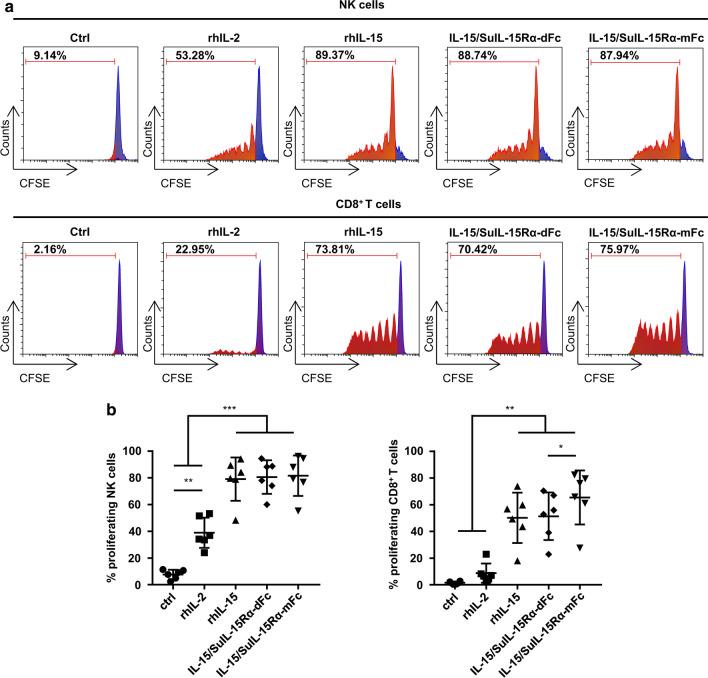
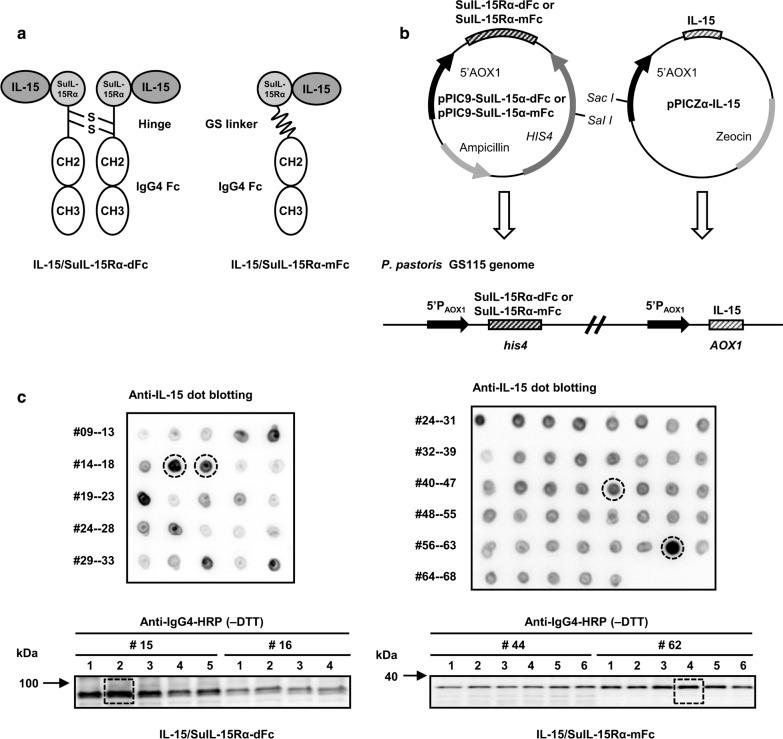
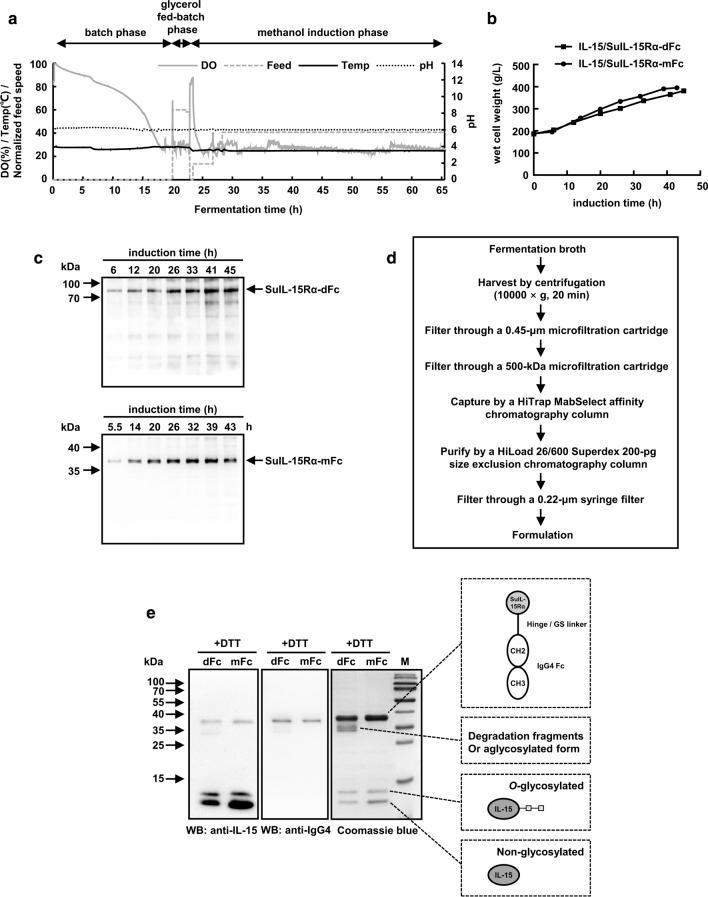
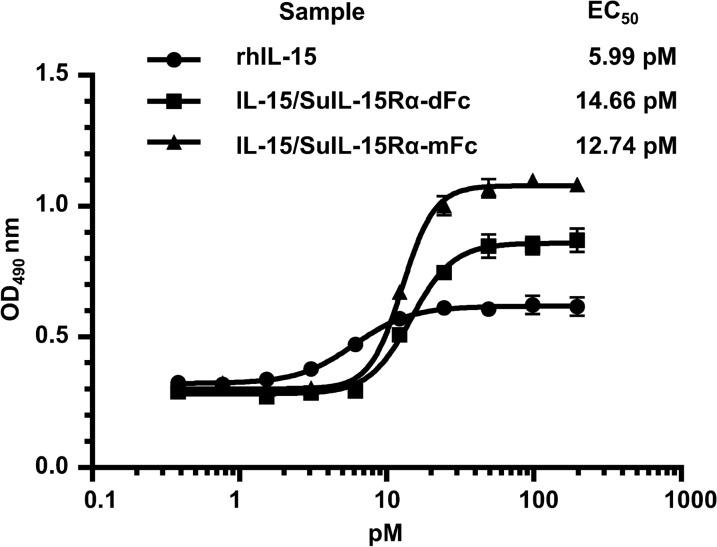
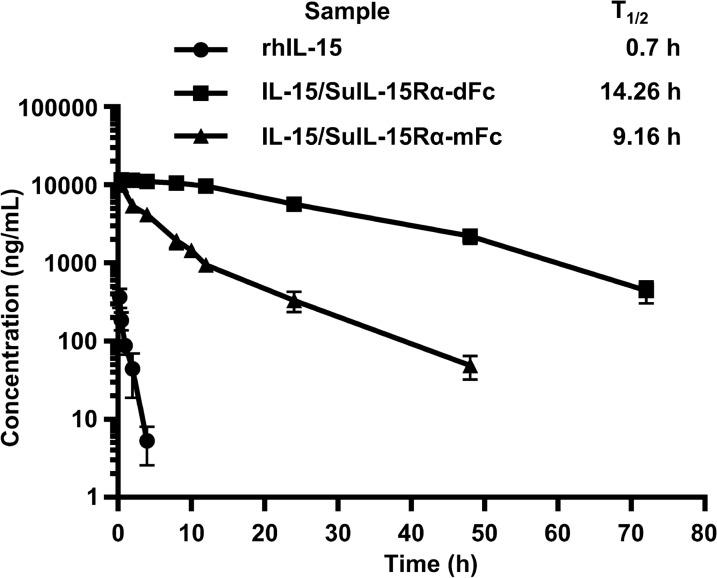
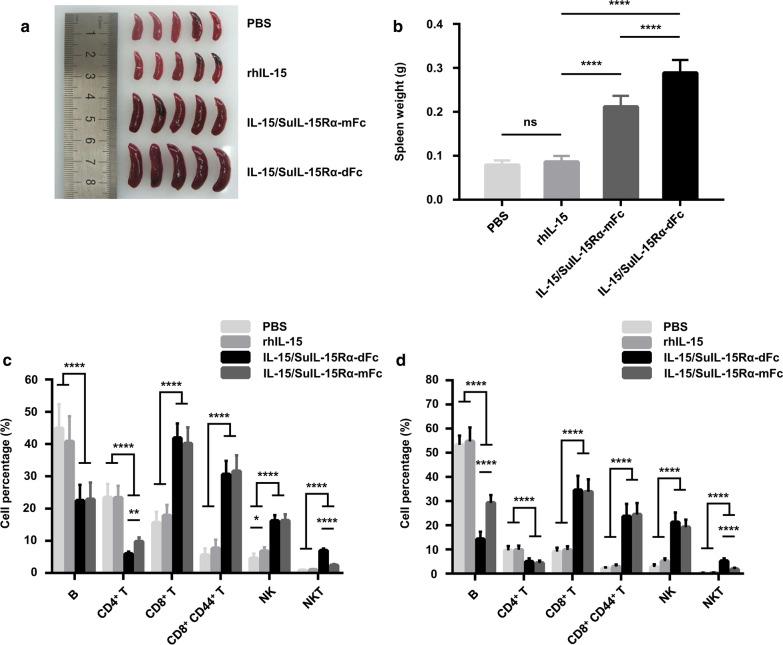
In this study, we designed two different forms of the IL-15 complex, which were formed by the noncovalent assembly of IL-15 with dimeric or monomeric sushi domain of IL-15 receptor α (SuIL-15Rα)-IgG4 Fc fusion protein and designated IL-15/SuIL-15Rα-dFc and IL-15/SuIL-15Rα-mFc, respectively. The two IL-15 complexes were expressed in Pichia pastoris (P. pastoris), and their activities and half-lives were evaluated and compared. Pharmacokinetic analysis showed that IL-15/SuIL-15Rα-dFc had a half-life of 14.26 h while IL-15/SuIL-15Rα-mFc had a half-life of 9.16 h in mice, which were much longer than the 0.7-h half-life of commercial recombinant human IL-15 (rhIL-15). Treatment of mice with intravenous injection of the two IL-15 complexes resulted in significant increases in NK cells, NKT cells, and memory CD8 T cells, which were not observed after rhIL-15 treatment. Treatment of human peripheral blood mononuclear cells (PBMCs) from healthy donors with the two IL-15 complexes yielded enhanced NK and CD8 T cell activation and proliferation, which was comparable to the effect of rhIL-15.
CONCLUSIONS
These findings indicate that the IL-15/SuIL-15Rα-dFc and IL-15/SuIL-15Rα-mFc produced in P. pastoris exhibit potent activities and prolonged half-lives and may serve as superagonists for immunotherapy in further research and applications.
背景
白细胞介素-15(IL-15)是一种关键的细胞因子,对于自然杀伤(NK)细胞、NKT 细胞和 CD8 记忆 T 细胞的发育、增殖和功能至关重要,已成为治疗癌症和病毒疾病最有前途的蛋白质分子之一。然而,在治疗中应用 IL-15 存在一些局限性,例如其在体外产量低、效力有限和体内半衰期短。迄今为止,已有几种基于构象修饰的重组 IL-15 激动剂被用于癌症治疗,如 ALT-803,主要由哺乳动物细胞产生。
结果
在这项研究中,我们设计了两种不同形式的 IL-15 复合物,它们通过非共价组装由 IL-15 与二聚体或单体 sushi 结构域的 IL-15 受体α(SuIL-15Rα)-IgG4 Fc 融合蛋白组成,并分别命名为 IL-15/SuIL-15Rα-dFc 和 IL-15/SuIL-15Rα-mFc。这两种 IL-15 复合物在毕赤酵母(Pichia pastoris)中表达,并对其活性和半衰期进行了评估和比较。药代动力学分析表明,IL-15/SuIL-15Rα-dFc 在小鼠体内的半衰期为 14.26 小时,而 IL-15/SuIL-15Rα-mFc 的半衰期为 9.16 小时,明显长于商业重组人白细胞介素-15(rhIL-15)的 0.7 小时半衰期。用静脉注射两种 IL-15 复合物治疗小鼠可显著增加 NK 细胞、NKT 细胞和记忆性 CD8 T 细胞,而用 rhIL-15 治疗则不会观察到这种情况。用两种 IL-15 复合物处理来自健康供体的人外周血单核细胞(PBMCs)可产生增强的 NK 和 CD8 T 细胞激活和增殖,与 rhIL-15 的效果相当。
结论
这些发现表明,毕赤酵母中产生的 IL-15/SuIL-15Rα-dFc 和 IL-15/SuIL-15Rα-mFc 具有强大的活性和延长的半衰期,可作为免疫治疗的超级激动剂,在进一步的研究和应用中具有重要意义。
 Zotero 插件